Anterior cruciate ligament reconstruction is associated with increased corticospinal excitability and rate of force development
Stefano Scarano, Antonio Caronni, Alessandra Menon, Viviana Rota, Maurizio Amadei, Laura Perucca, Elena Brevi, Alessio Maione, Paolo Ferrua, Luigi Tesio, Pietro Simone Randelli

TL;DR
After ACL reconstruction, the operated leg shows increased brain-to-muscle signaling and faster force production, possibly compensating for muscle loss.
Contribution
This study reveals increased corticospinal excitability and force development in the operated limb after ACLR, suggesting a compensatory neural adaptation.
Findings
The operated limb's quadriceps showed significant volume and circumference loss compared to the non-operated side.
Corticospinal excitability and rate of force development were higher in the operated limb's vastus medialis muscle.
No inter-limb differences were found in spinal excitability or intracortical inhibition.
Abstract
After anterior cruciate ligament reconstruction, asymmetries in central activation are suspected to prevent complete functional recovery. This cross-sectional study investigated the motor function of both lower limbs in ACLR patients using morphological, mechanical, and neurophysiological measures after surgical repair with a semitendinosus-gracilis graft. Ten male patients (age 20–31 years; 6/4 right/left knee surgery; 6–12 months after ACLR) were recruited. Muscle trophism was quantified through ultrasound estimates of quadriceps volume and mid-thigh circumference; knee extensors’ rate of force development (RFD), maximum torque and voluntary activation (interpolated twitch technique, ITT) were assessed through dynamometry during maximal isometric effort; spinal excitability was measured with the Soleus H-reflex; transcranial magnetic stimulation was used to assess corticospinal…
Genes, proteins, chemicals, diseases, species, mutations and cell lines named across the full text — each resolved to its canonical identifier and authoritative record.
Click any figure to enlarge with its caption.
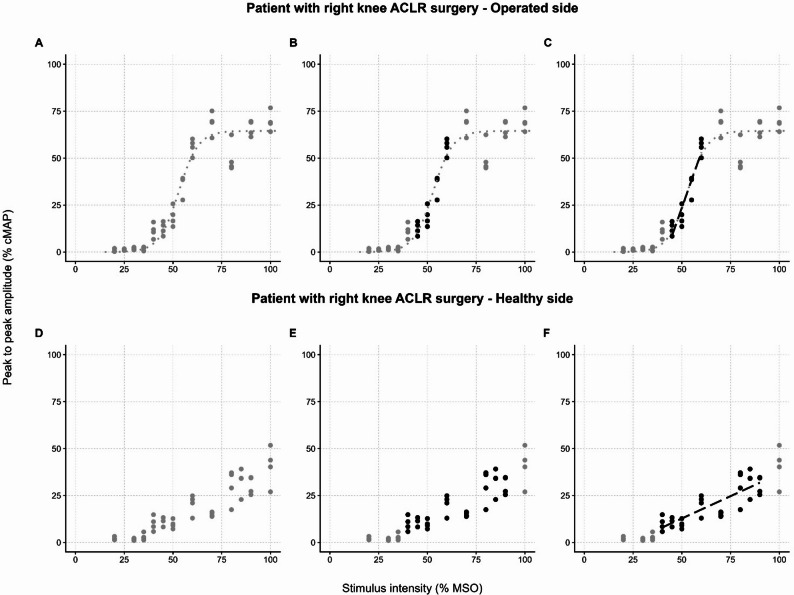 Figure 1
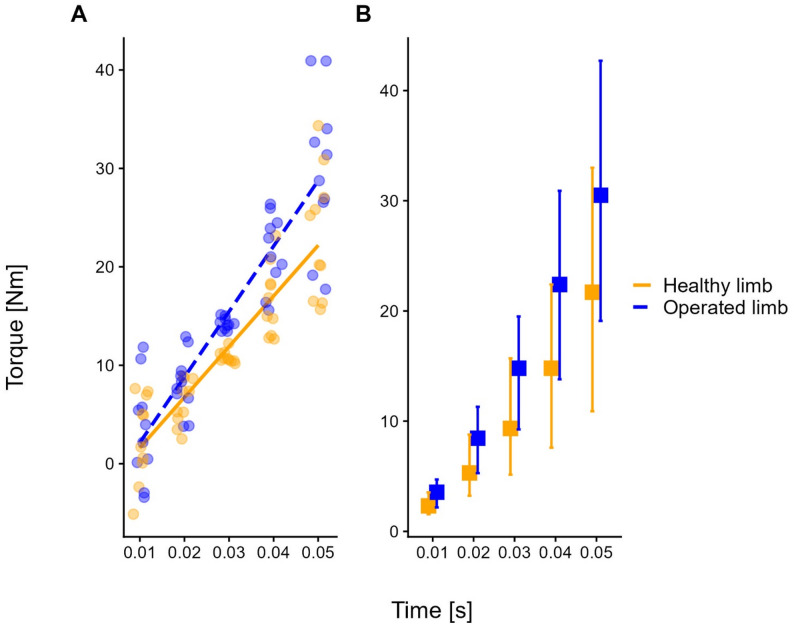 Figure 2
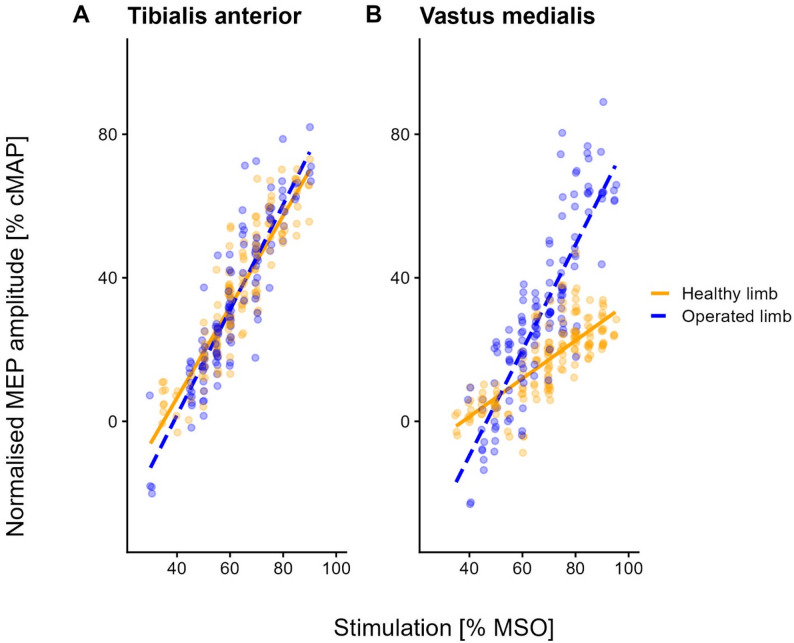 Figure 3
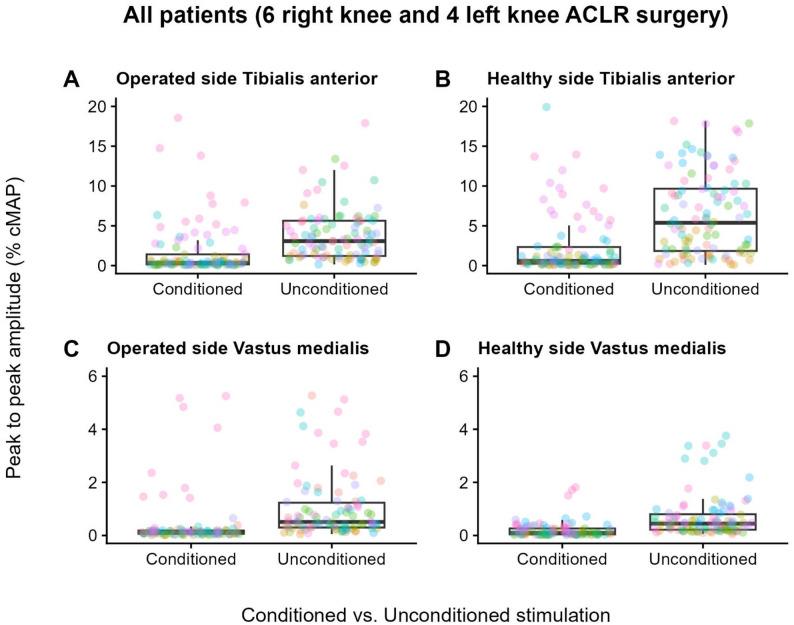 Figure 4
Peer Reviews
No public reviews on file for this paper yet. If you reviewed it on a platform where reviews are public (OpenReview, ICLR, NeurIPS, ICML), you can paste yours below so the community can read it here.
Videos
No videos yet. Explain this paper in a talk, walkthrough, or lecture? Add one.
Taxonomy
TopicsKnee injuries and reconstruction techniques · Muscle activation and electromyography studies · Transcranial Magnetic Stimulation Studies