Comparison Between Phenotypic Profile and Functional Aspects of IL‐9‐Producing Lymphocytes, Th17 and Tfh of Individuals From Endemic and Non‐Endemic Areas for Hookworm Infection
Yvanna Louise Di Christine Oliveira, Marcelo Eduardo Cardozo, Luisa Mourão Dias Magalhães, Carlos Thailan de Jesus Santos, Ramayana Morais de Medeiros Brito, Luciana Maria de Oliveira, Ana Carolina Amado Gomes, Vinícius Torres Castro Campos, Ricardo Toshio Fujiwara

TL;DR
The study compares immune cell profiles in people from hookworm-endemic and non-endemic areas, finding differences in T cell responses and immune adaptation.
Contribution
The study identifies how Tfh, Th17, and IL-9-producing lymphocytes differ in individuals from endemic and non-endemic areas, both infected and uninfected.
Findings
Infected individuals showed immune changes like anaemia and increased Tfh cells.
Tfh cells from non-endemic areas had higher activation, suggesting immune adaptation.
Treatment reshaped immune profiles, with IL-9 and IL-10 playing key roles.
Abstract
Hookworm infections remain a major public health concern in endemic areas, modulating both the adaptive and innate immune systems. While the type 2 response is well‐characterised, the roles of T follicular helper (Tfh), Th17, and IL‐9‐producing lymphocytes remain poorly defined. Here, we characterised these T cell subsets in individuals naturally infected with hookworms. From 1500 faecal samples screened, 60 were positive for hookworms, and peripheral blood was collected from 10 uninfected controls from endemic (NEG END) and non‐endemic (NEG NE) areas, as well as from 7 infected individuals before (HKW BT) and after (HKW PT) treatment. Infected individuals displayed haematological alterations, including anaemia (n = 2), eosinophilia (n = 1), monocytosis (n = 4), and lymphocytosis (n = 3), along with an expansion of PBMCs, particularly Tfh cells, during infection. Expression of IL‐9 and…
Genes, proteins, chemicals, diseases, species, mutations and cell lines named across the full text — each resolved to its canonical identifier and authoritative record.
Click any figure to enlarge with its caption.
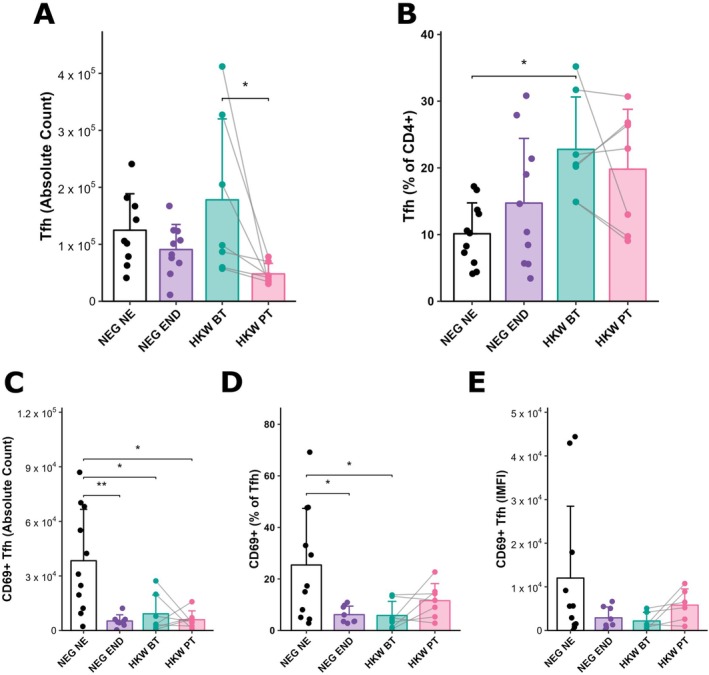 Figure 1
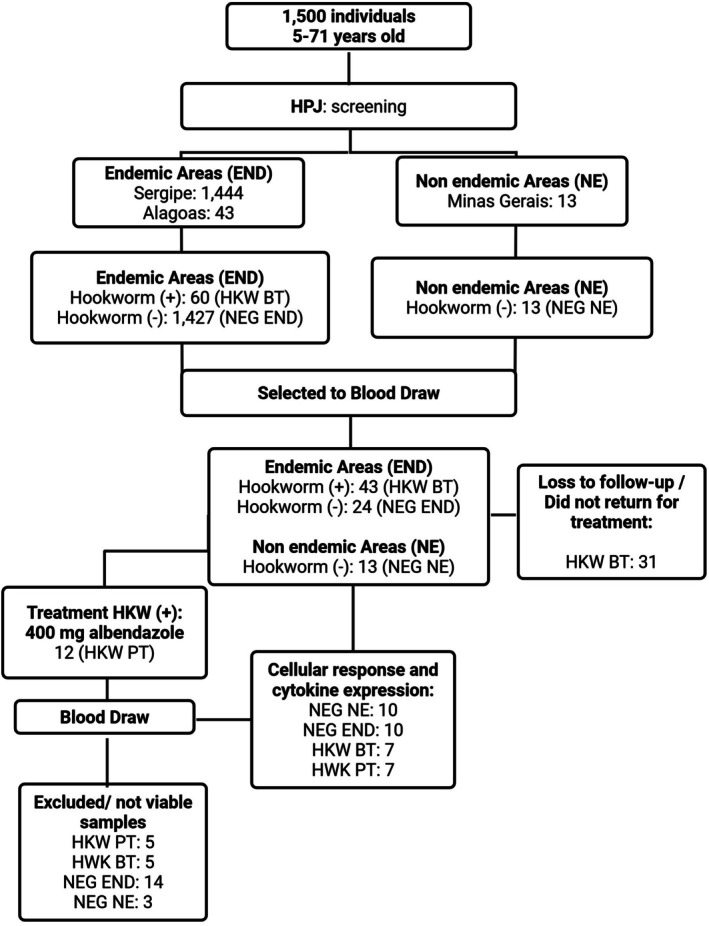 Figure 2
 Figure 3
 Figure 4
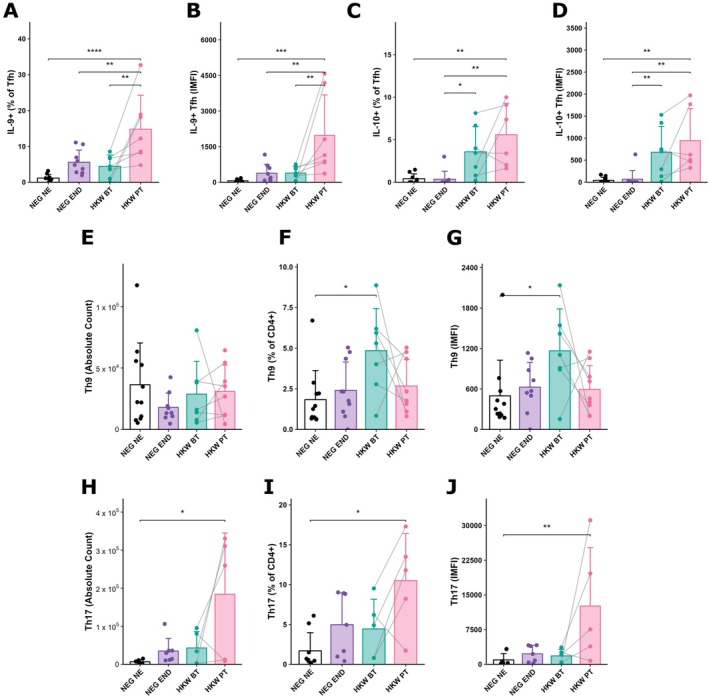 Figure 5
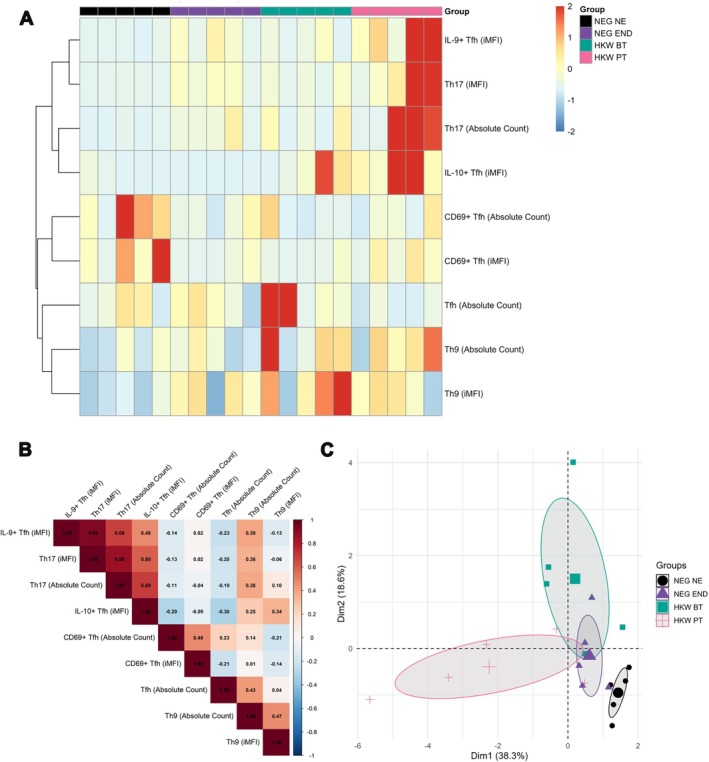 Figure 6
Peer Reviews
No public reviews on file for this paper yet. If you reviewed it on a platform where reviews are public (OpenReview, ICLR, NeurIPS, ICML), you can paste yours below so the community can read it here.
Videos
No videos yet. Explain this paper in a talk, walkthrough, or lecture? Add one.
Taxonomy
TopicsParasites and Host Interactions · Invertebrate Immune Response Mechanisms · Parasitic Diseases Research and Treatment