Automated Ultrasound‐Based Analysis of Urethral Kinematics in Stress Urinary Incontinence: A Pilot Study
Kourosh Kalayeh, J. Brian Fowlkes, Stephanie Daignault‐Newton, Payton Schmidt, James A. Ashton‐Miller, John O. DeLancey

TL;DR
This pilot study explores using automated ultrasound to analyze urethral movement in women with stress urinary incontinence, revealing mobility differences compared to controls.
Contribution
The study introduces an automated ultrasound-based method to objectively assess urethral kinematics in stress urinary incontinence.
Findings
Women with SUI showed significantly larger urethral displacement, especially at the proximal segment during Valsalva.
Displacement between upper and lower urethra was larger in SUI, indicating localized hypermobility.
Urethral kinematics showed high variability within and between groups, suggesting heterogeneous mobility patterns.
Abstract
Stress urinary incontinence (SUI) has been linked to excessive urethral mobility, yet clinical evaluation has been largely limited to assessing maximal excursion rather than capturing the full dynamics of visible urethral movement. In this study, we hypothesize that an automated, ultrasound‐based method can objectively differentiate urethral mobility patterns between women with SUI and continent controls. We used a previously validated optical flow‐based algorithm to automatically track urethral motion from transperineal ultrasound images during cough, Valsalva maneuver, and pelvic muscle contraction (PMC) in 11 women with SUI and 10 continent controls. Urethral motion was assessed by defining three regions of interest along the urethra (proximal, mid, and distal). Segmental urethral kinematics were computed and statistically compared between groups. Substantial variability and…
Genes, proteins, chemicals, diseases, species, mutations and cell lines named across the full text — each resolved to its canonical identifier and authoritative record.
Click any figure to enlarge with its caption.
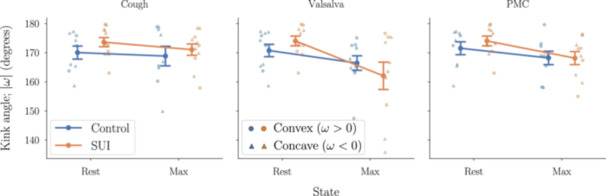 Figure 1
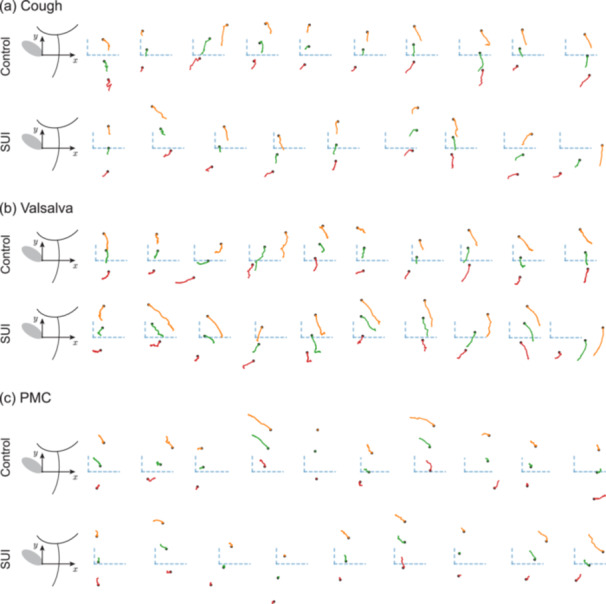 Figure 2
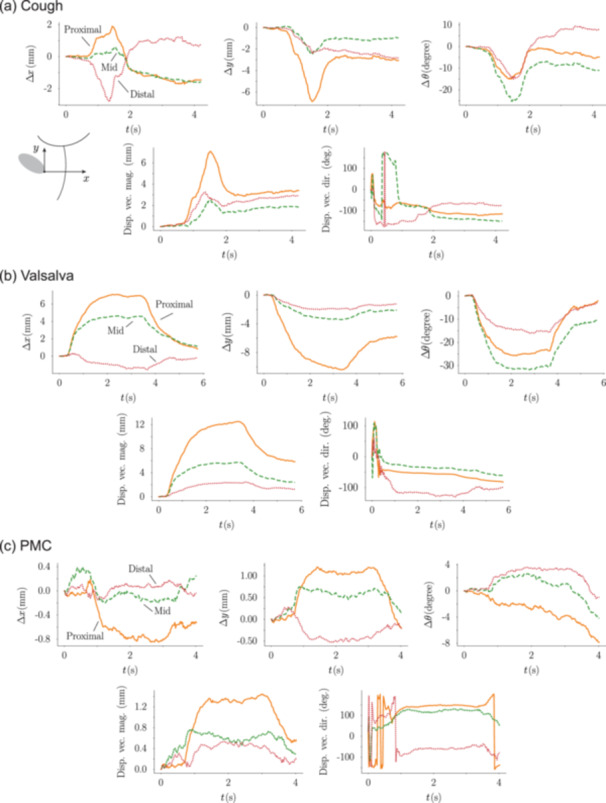 Figure 3
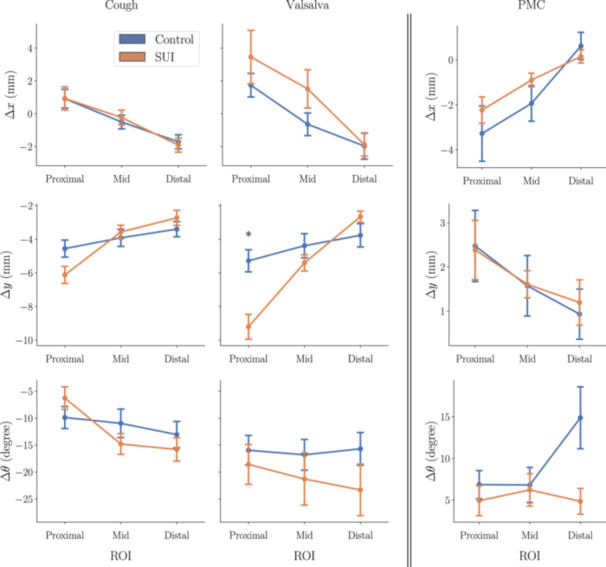 Figure 4
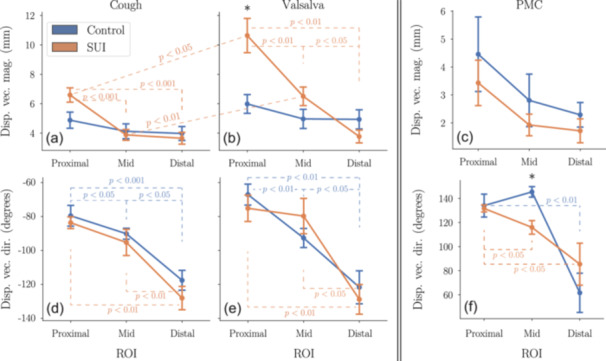 Figure 5
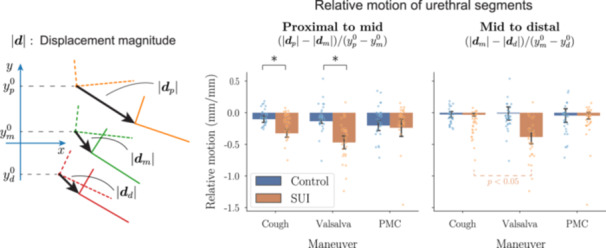 Figure 6
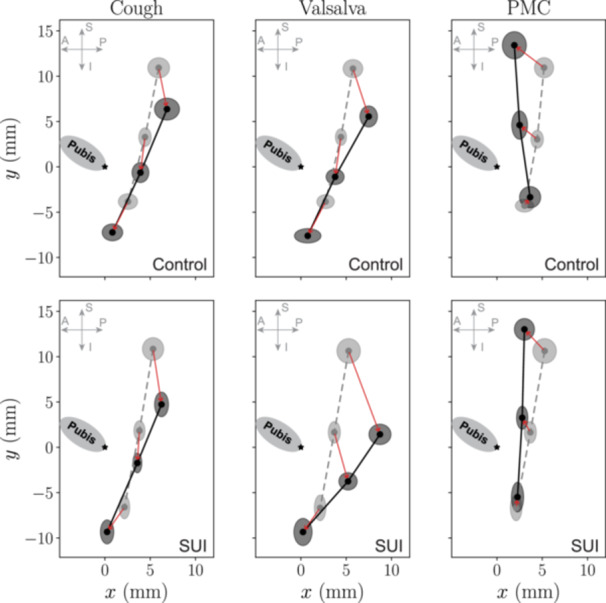 Figure 7
 Figure 8
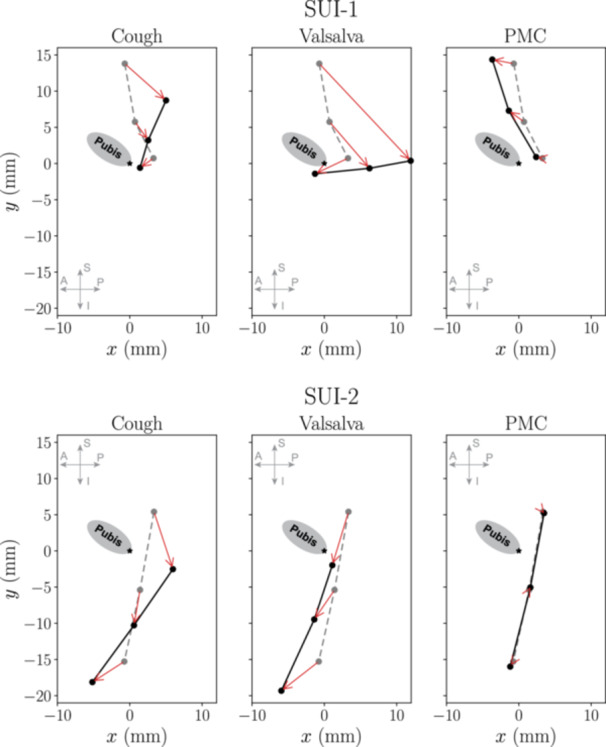 Figure 9
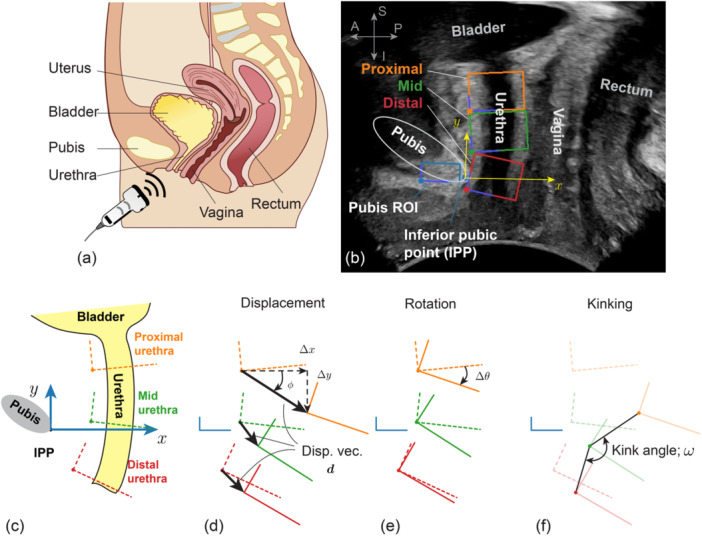 Figure 10
Peer Reviews
No public reviews on file for this paper yet. If you reviewed it on a platform where reviews are public (OpenReview, ICLR, NeurIPS, ICML), you can paste yours below so the community can read it here.
Videos
No videos yet. Explain this paper in a talk, walkthrough, or lecture? Add one.
Taxonomy
TopicsPelvic floor disorders treatments · Urinary Bladder and Prostate Research · Pressure Ulcer Prevention and Management