Directed pterygomaxillary disjunction versus direct downfracture in Le Fort I osteotomy: Application of a fracture quality framework using bilateral ten-point cone-beam computed tomography in a retrospective cohort of 205 patients
Íñigo Aragón-Niño, José Luis del-Castillo-Pardo-de-Vera, José Luis Cebrián-Carretero, Clara López-Martinez, Blanca Tapia-Salinas, Chongyang Zheng, Carlos Navarro-Cuellar

TL;DR
Directed PMJ disjunction in Le Fort I osteotomy improves fracture quality and symmetry compared to direct downfracture, based on a study of 205 patients.
Contribution
The study introduces a fracture quality framework using cone-beam CT to compare directed disjunction and direct downfracture techniques in Le Fort I osteotomy.
Findings
Directed disjunction significantly improved fracture quality, with higher rates of 'excellent' outcomes and fewer 'poor' outcomes.
Directed disjunction achieved better symmetry and alignment, with over 49% showing perfect symmetry compared to 1.3% in the direct downfracture group.
Maxillary tuberosity involvement was significantly reduced with directed disjunction compared to direct downfracture.
Abstract
Control of the pterygomaxillary junction (PMJ) fracture is critical in Le Fort I osteotomy. We tested whether a directed PMJ disjunction (osteotome-assisted intermediate release) improves fracture quality, symmetry, and alignment versus direct downfracture. Single-center retrospective comparative cohort (January 2019-April 2025). Two hundred five consecutive patients underwent Le Fort I: directed disjunction (n=127) or direct downfracture (n=78). Postoperative cone-beam computed tomography at day 90-110 was scored with a bilateral ten-point map. Primary outcomes were per-side quality (poor/good/excellent) and a patient-level overall quality status (poor/fair/good/very good/excellent). Inclusive and strict "clean-cut," symmetry, and alignment were predefined. Group comparisons used chi-square or Fisher's exact tests (two-sided =0.05). Directed disjunction shifted side-level quality…
Genes, proteins, chemicals, diseases, species, mutations and cell lines named across the full text — each resolved to its canonical identifier and authoritative record.
Click any figure to enlarge with its caption.
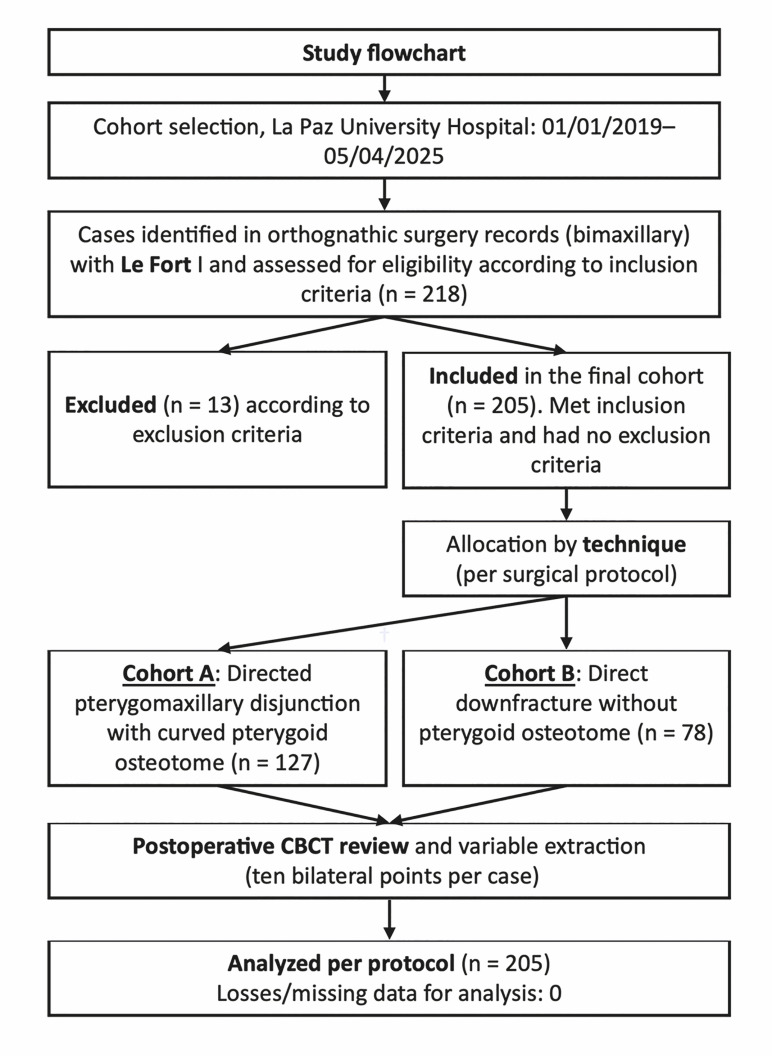 Figure 1
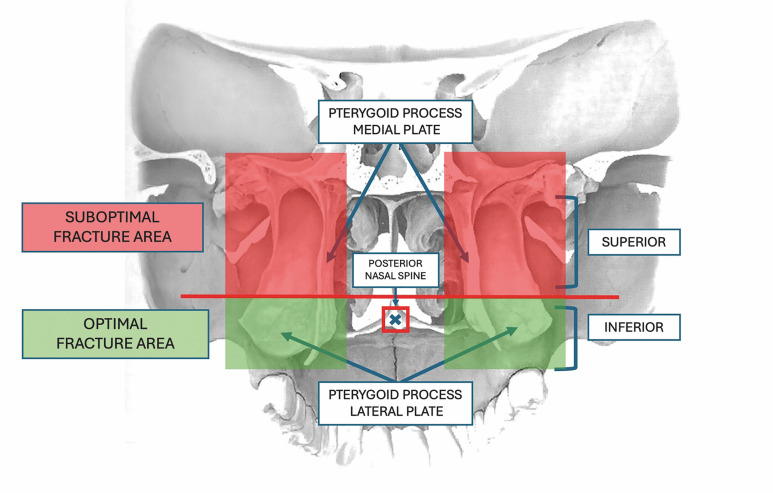 Figure 2
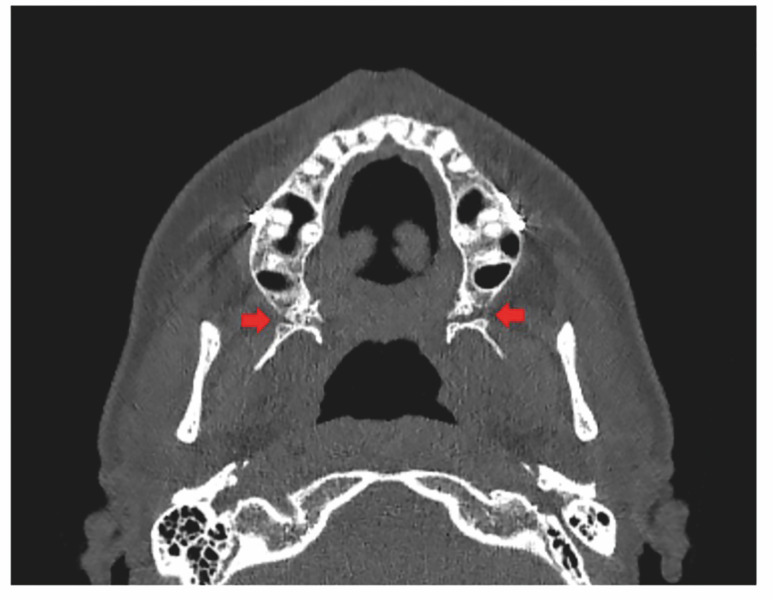 Figure 3
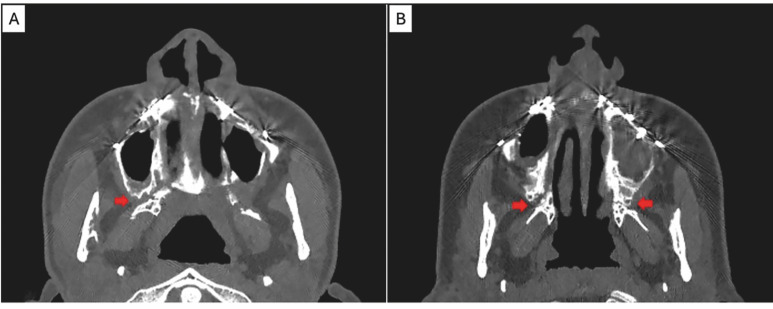 Figure 4
Peer Reviews
No public reviews on file for this paper yet. If you reviewed it on a platform where reviews are public (OpenReview, ICLR, NeurIPS, ICML), you can paste yours below so the community can read it here.
Videos
No videos yet. Explain this paper in a talk, walkthrough, or lecture? Add one.
Taxonomy
TopicsFacial Trauma and Fracture Management · Ocular Disorders and Treatments · Craniofacial Disorders and Treatments