Clinicopathological spectrum of non-sinonasal intestinal-type adenocarcinomas of the head and neck: Systematic review of case reports, case series, and cross-sectional studies
Gustavo de-S Vieira, Moisés W A Gonçalves, Priscila C Tincani, Alfio J Tincani, Carlos T Chone, Arthur Antolini-Tavares, Albina Altemani, Fernanda V Mariano

TL;DR
This study reviews rare non-sinonasal intestinal-type adenocarcinomas in the head and neck, highlighting their aggressive nature and distinct features compared to similar cancers in the sinonasal region.
Contribution
The study systematically characterizes the clinicopathological and molecular profile of non-sinonasal ITACs, revealing distinct features compared to sinonasal ITACs.
Findings
Non-sinonasal ITACs commonly occur in the oral cavity, especially the mobile tongue, and are more prevalent in males.
These tumors show distinct immunohistochemical and molecular profiles, including mutations in MLL3, TP53, and upregulation of EMT-related genes.
They are aggressive, with high rates of metastasis and disease-specific mortality, necessitating improved diagnostic and treatment approaches.
Abstract
Intestinal-type adenocarcinomas (ITACs) most often arise in the sinonasal tract, typically associated with occupational exposures, but they rarely occur in other head and neck sites. When present in extra-sinonasal regions, their clinicopathological and molecular characteristics remain poorly understood. This systematic review aimed to clarify the clinicopathological, immunohistochemical, and molecular features of non-sinonasal intestinal-type adenocarcinomas (ITACs) of the head and neck. This review was conducted according to PRISMA 2020 guidelines and registered in PROSPERO (CRD42022309841). Two reviewers independently screened, extracted data, and assessed risk of bias using the Joanna Briggs Institute tools. Sources included PubMed/MEDLINE, Scopus, Embase, Web of Science, Google Scholar, and OpenGrey. A comprehensive search identified 1,376 records. After applying eligibility…
Genes, proteins, chemicals, diseases, species, mutations and cell lines named across the full text — each resolved to its canonical identifier and authoritative record.
Click any figure to enlarge with its caption.
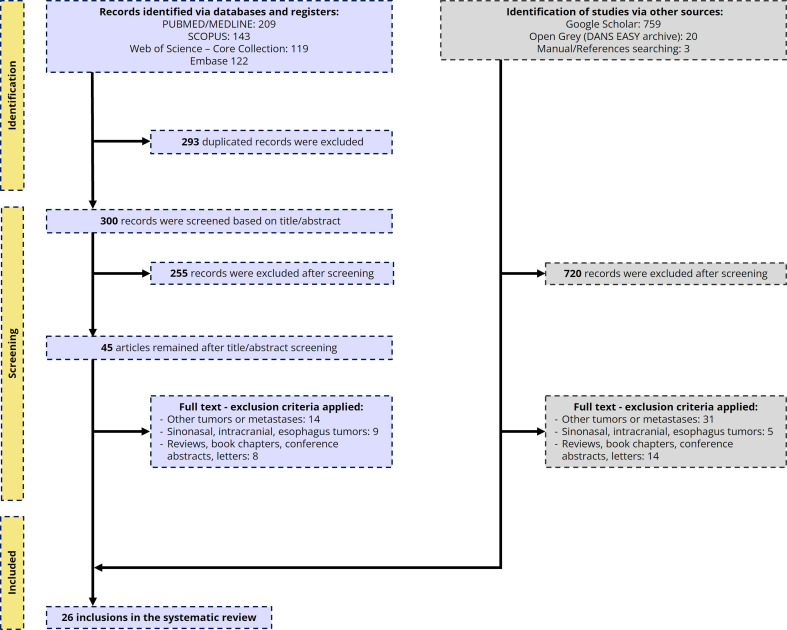 Figure 1
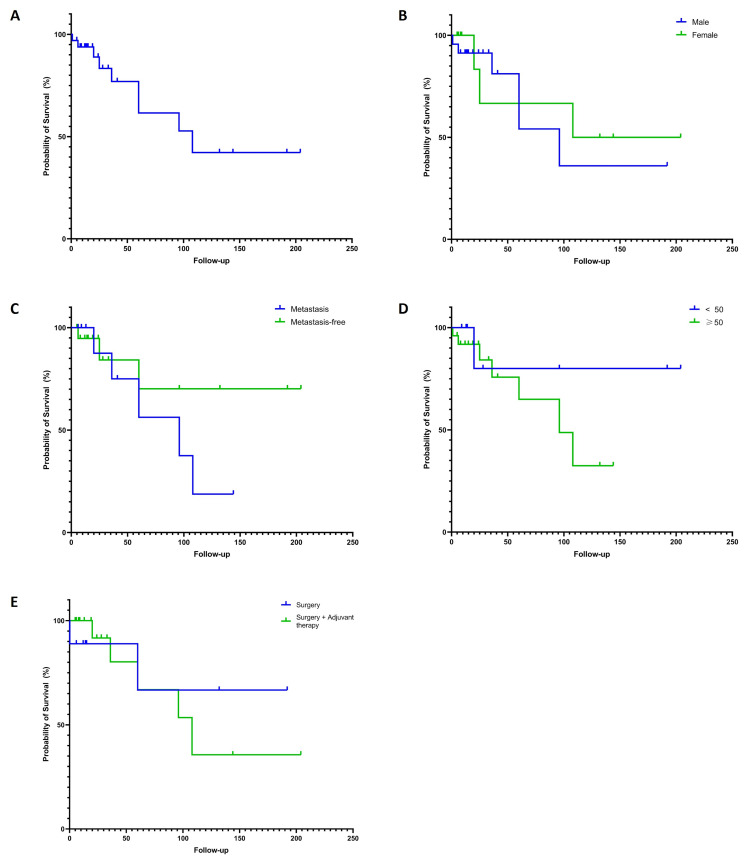 Figure 2
Peer Reviews
No public reviews on file for this paper yet. If you reviewed it on a platform where reviews are public (OpenReview, ICLR, NeurIPS, ICML), you can paste yours below so the community can read it here.
Videos
No videos yet. Explain this paper in a talk, walkthrough, or lecture? Add one.
Taxonomy
TopicsHead and Neck Surgical Oncology · Salivary Gland Tumors Diagnosis and Treatment · Sinusitis and nasal conditions