Atomistic Origin of Photoluminescence Quenching in Colloidal MoS2 and WS2 Nanoplatelets
Surender Kumar, Markus Fröhlich, Stefan Velja, Marco Kögel, Onno Strolka, André Niebur, Samuell Ginzburg, Muhammad Sufyan Ramzan, Jannik C. Meyer, Jannika Lauth, Caterina Cocchi

TL;DR
This paper investigates why certain nanostructures lose their light-emitting properties and finds that edge structures play a key role in this process.
Contribution
The study identifies edge-located hole traps as the origin of ultrafast exciton decay in TMD nanoplatelets.
Findings
Edge-located optically bright hole traps from metal d-orbitals cause sub-picosecond exciton decay.
WS2 has more localized and optically active edge states compared to MoS2.
Nanoplatelet size influences the competition between edge-trapping and core–exciton recombination.
Abstract
Large chemical tunability and strong light–matter interactions make colloidal transition metal dichalcogenide (TMD) nanostructures particularly suitable for light-emitting applications. However, ultrafast exciton decay and quenched photoluminescence (PL) limit their potential. Combining femtosecond transient absorption spectroscopy with first-principles calculations on MoS2 and WS2 nanoplatelets, we reveal that the observed sub-picosecond exciton decay originates from edge-located optically bright hole traps. These intrinsic trap states stem from the metal d-orbitals and persist even when the sulfur-terminated edges are hydrogen-passivated. Notably, WS2 nanostructures show more localized and optically active edge states than their MoS2 counterparts, and zigzag edges exhibit a higher trap density than armchair edges. The nanoplatelet size dictates the competition between ultrafast…
Genes, proteins, chemicals, diseases, species, mutations and cell lines named across the full text — each resolved to its canonical identifier and authoritative record.
Click any figure to enlarge with its caption.
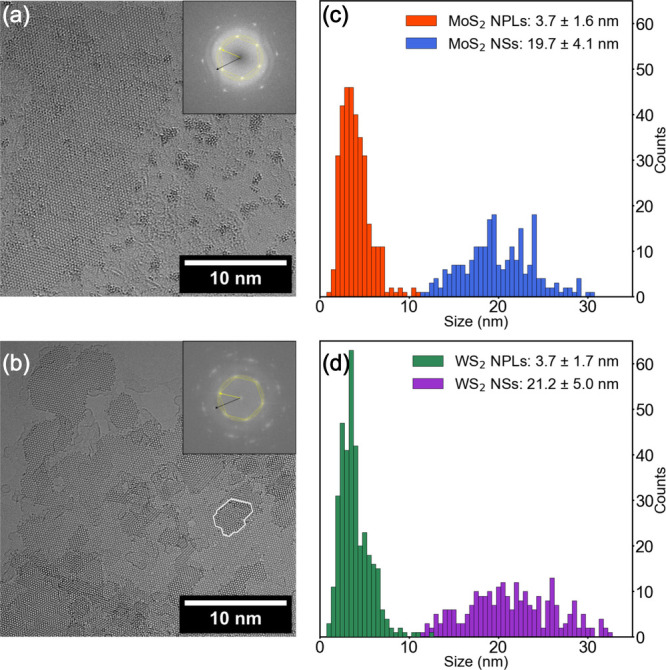 Figure 1
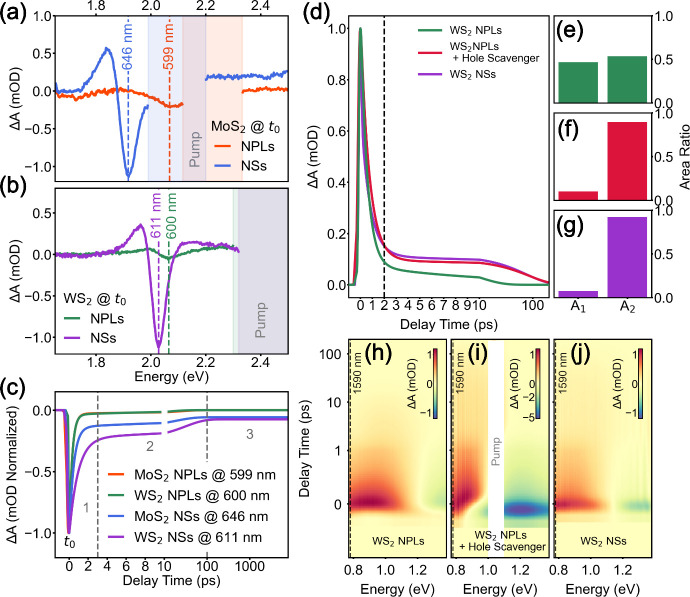 Figure 2
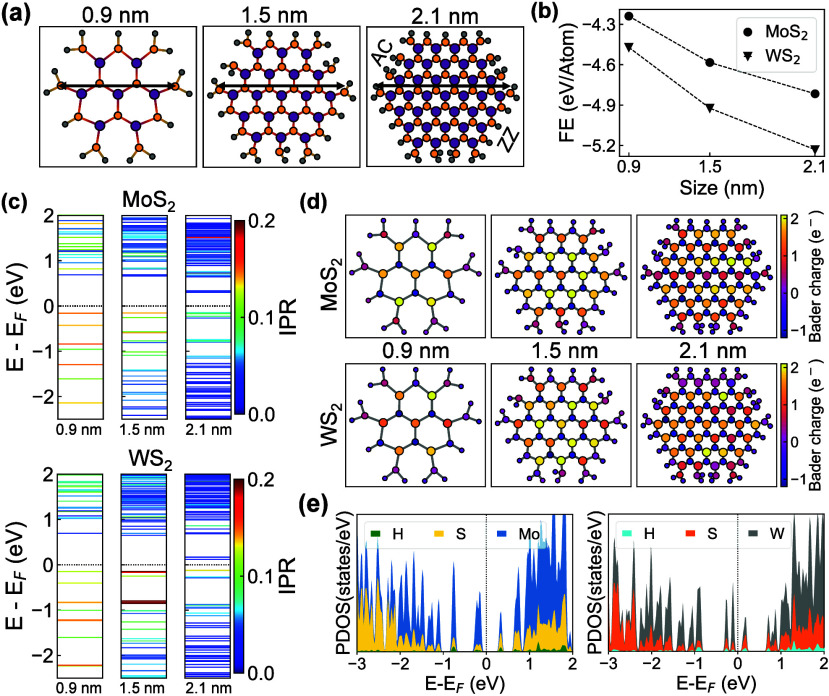 Figure 3
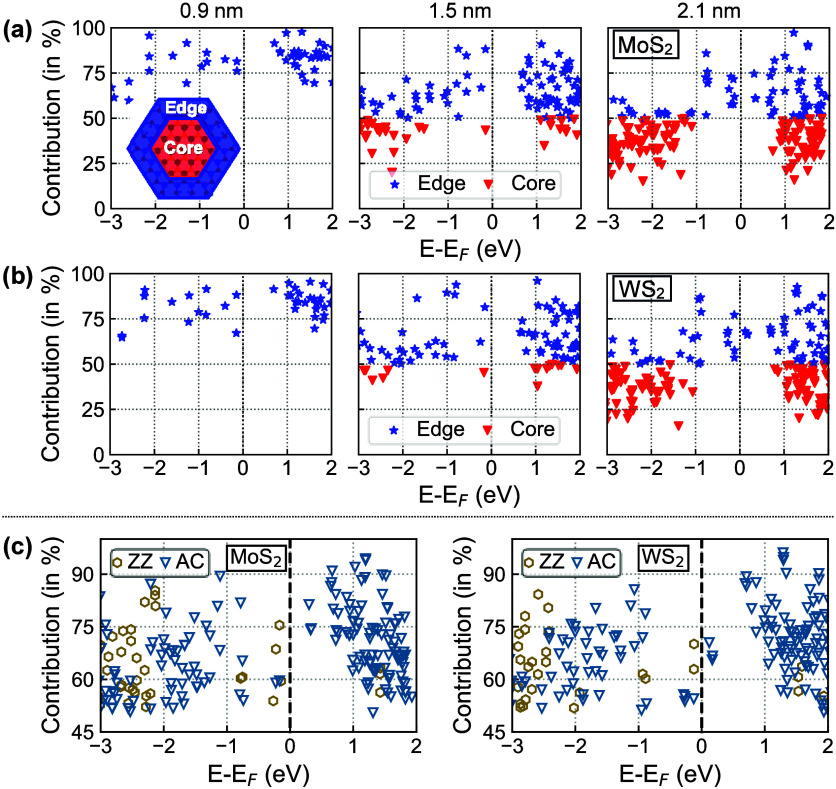 Figure 4
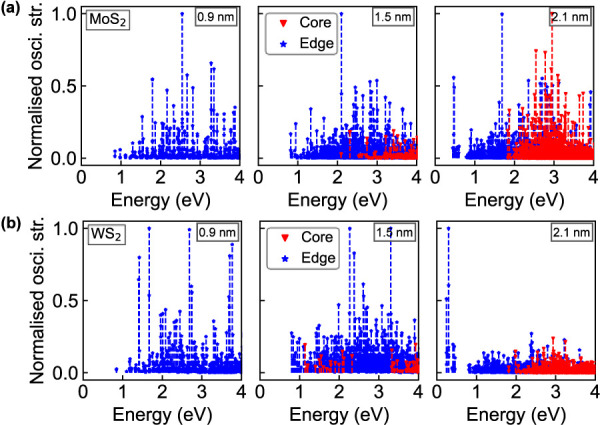 Figure 5
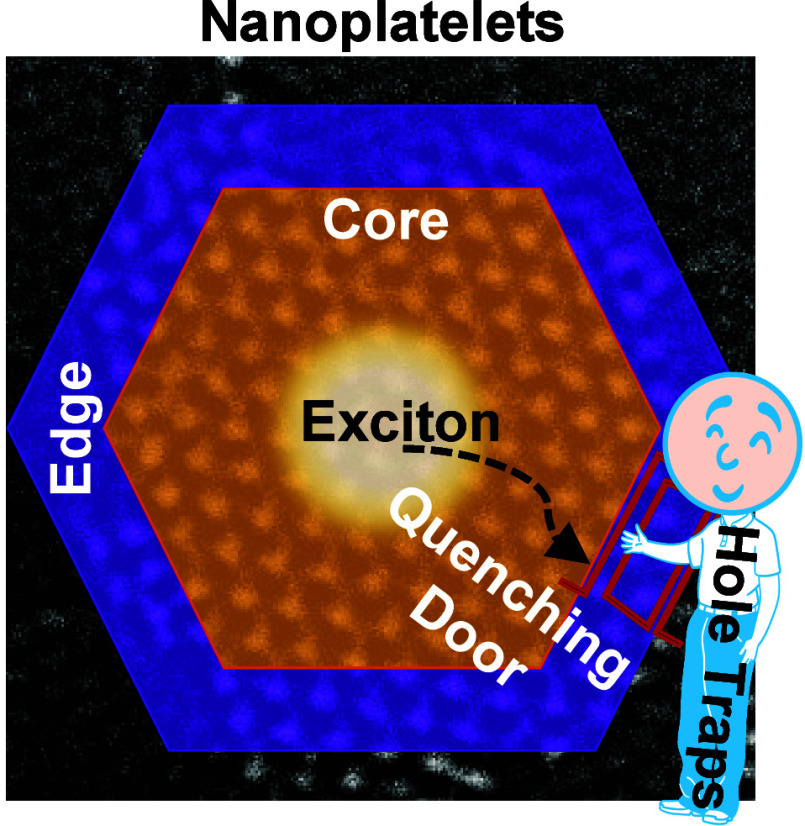 Figure 6
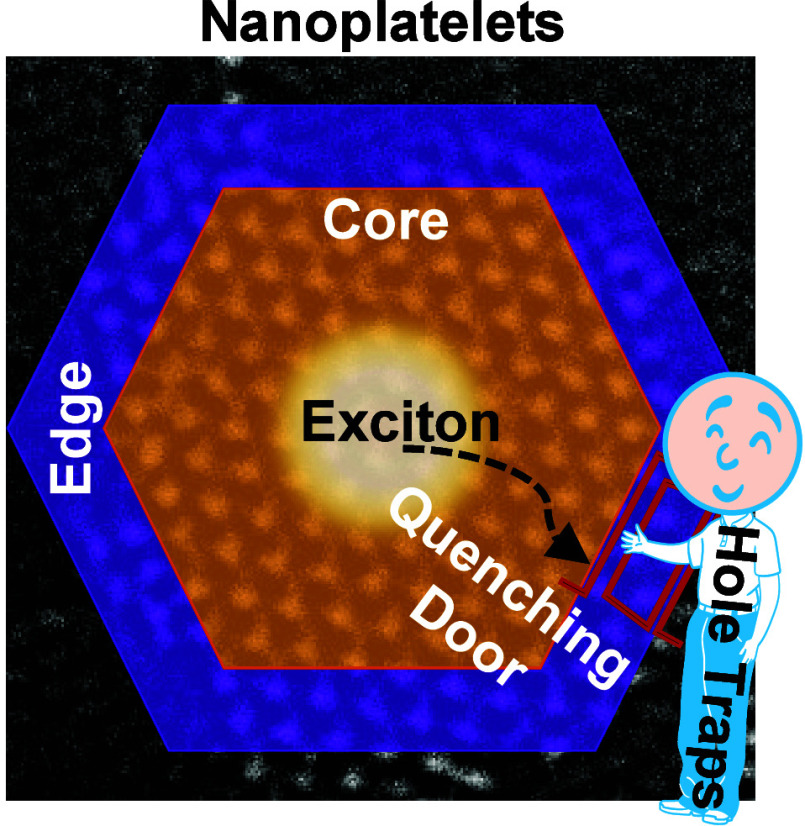 Figure 7
Peer Reviews
No public reviews on file for this paper yet. If you reviewed it on a platform where reviews are public (OpenReview, ICLR, NeurIPS, ICML), you can paste yours below so the community can read it here.
Videos
No videos yet. Explain this paper in a talk, walkthrough, or lecture? Add one.
Taxonomy
Topics2D Materials and Applications · Quantum Dots Synthesis And Properties · Advanced Photocatalysis Techniques