Dosimetric Impact of Artificial Intelligence (AI)-Based Autocontouring Software, OncoStudio, in High-Risk Prostate Cancer Treatment Planning: A Three-Group Comparative Study on the Slice Ranges of Seminal Vesicles
Masumi Kawaguchi, Masataka Hoshina, Shinji Sugahara, Kousuke Fujioka, Masato Takanashi, Masaya Noguchi, Ayaka Oosato, Kouichi Masuda, Yoshiaki Katada, Kazuhiro Saito

TL;DR
This study compared AI-generated and manual contouring for prostate cancer treatment planning and found no significant dosimetric differences between the two methods.
Contribution
The study evaluates the dosimetric impact of AI-based autocontouring for seminal vesicles in prostate cancer treatment planning.
Findings
No statistically significant differences were observed in dose coverage between AI autocontoured and manually contoured plans.
Effect size assessments showed moderate effects in AI-based contouring, but differences were less than 1% of the prescription dose.
Results suggest AI autocontouring may be comparable to manual contouring, though larger studies are needed for confirmation.
Abstract
Objective: This pilot study investigated the dosimetric impact of artificial intelligence (AI)-generated seminal vesicle (SV) autocontouring (AC) compared with manual contouring (MC) in high-risk prostate cancer volumetric-modulated arc therapy planning. Methods: We retrospectively analyzed treatment plans for 15 patients with high-risk prostate cancer who received 76 Gy in 38 fractions in intensity-modulated radiation therapy. Three plans were created for each patient: MC, AC with slice-adjustment to a clinical standard (2 cm from the prostate base), and unadjusted AC. Subsequently, three groups were made for each contouring method: the adjusted AC group, the unadjusted AC group, and the MC group, each including 15 plans. Primary endpoints were dose coverage of the planning target volume (PTV) and clinical target volume (CTV), evaluated by Dmax, Dmin, Dmean, D95, D98, D99, and V95%.…
Genes, proteins, chemicals, diseases, species, mutations and cell lines named across the full text — each resolved to its canonical identifier and authoritative record.
Click any figure to enlarge with its caption.
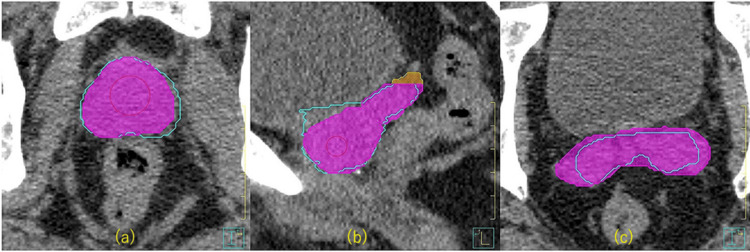 Figure 1
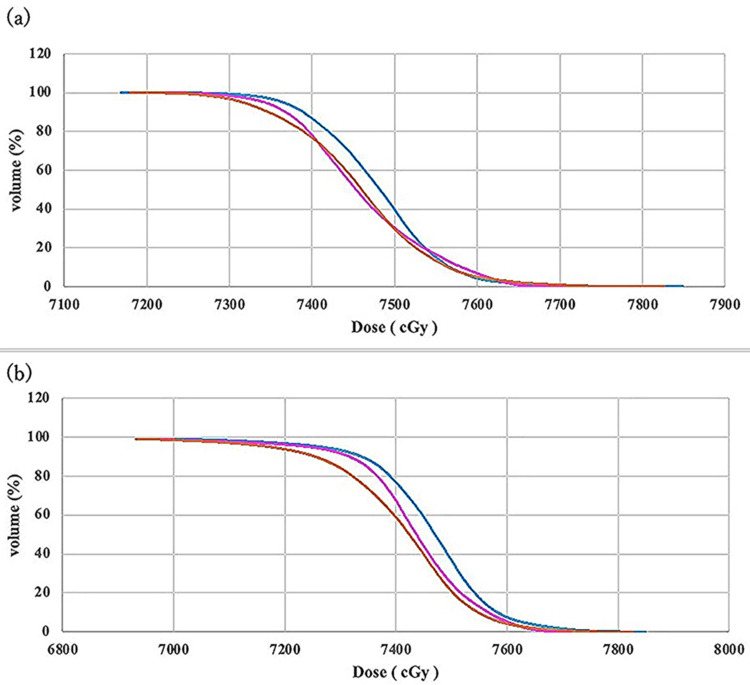 Figure 2
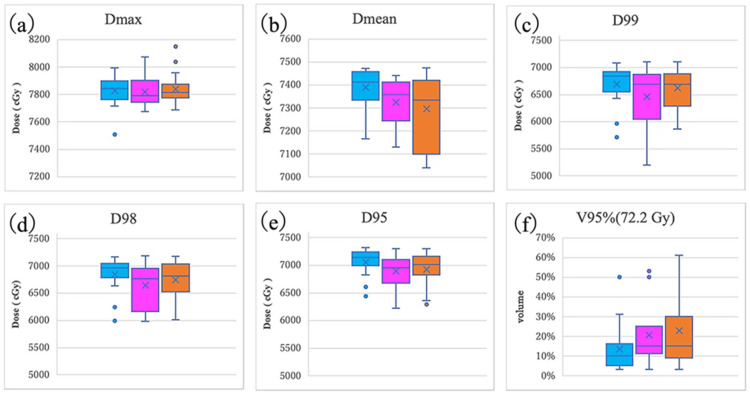 Figure 3
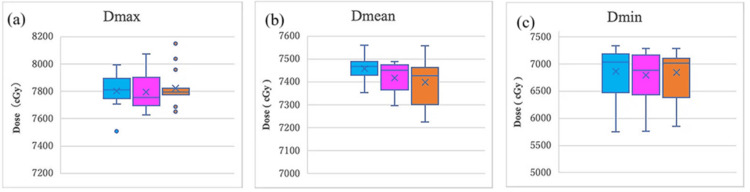 Figure 4
Peer Reviews
No public reviews on file for this paper yet. If you reviewed it on a platform where reviews are public (OpenReview, ICLR, NeurIPS, ICML), you can paste yours below so the community can read it here.
Videos
No videos yet. Explain this paper in a talk, walkthrough, or lecture? Add one.
Taxonomy
TopicsProstate Cancer Diagnosis and Treatment · Advanced Radiotherapy Techniques · Prostate Cancer Treatment and Research