Desymmetrization of meso-Pyrrolidines via Oxoammonium-Catalyzed Enantioselective Hydride Transfer
Jonas Rein, Bartosz Górski, Ayça M. Keskin, Minh Hoang Le, Song Lin

TL;DR
A new catalytic method enables the efficient and selective conversion of symmetrical pyrrolidines into chiral compounds useful for drug development.
Contribution
A novel oxoammonium-catalyzed enantioselective hydride transfer method for desymmetrizing meso-pyrrolidines with high enantiomeric excess.
Findings
An oxoammonium–peptide conjugate catalyst achieved over 90% enantiomeric excess in hydride transfer reactions.
Key catalytic intermediates were isolated, revealing the mechanism of stereochemical induction.
A tight hydrogen bond between the urea group and the peptide was identified as directing asymmetric hydride transfer.
Abstract
We report the oxidative desymmetrization of urea-protected pyrrolidines via site-selective hydride transfer from enantiotopic C–H bonds. The optimal oxoammonium–peptide conjugate catalyst provided over 90% ee across all tested pyrrolidines, providing products that can readily undergo subsequent N-deprotection and other derivatization reactions to form medicinally relevant compounds. We isolated key on-cycle catalytic intermediates, which allowed us to elucidate both the mechanism of catalytic activation and the origin of stereochemical induction in detail. In particular, a stereochemical model for asymmetric induction emerged from analyzing a covalent catalyst–substrate adduct, which served as an isolable analog of the enantiodetermining transition state. In this model, a tight hydrogen bond between the urea protecting group and the peptide directs the asymmetric hydride transfer.
Genes, proteins, chemicals, diseases, species, mutations and cell lines named across the full text — each resolved to its canonical identifier and authoritative record.
Click any figure to enlarge with its caption.
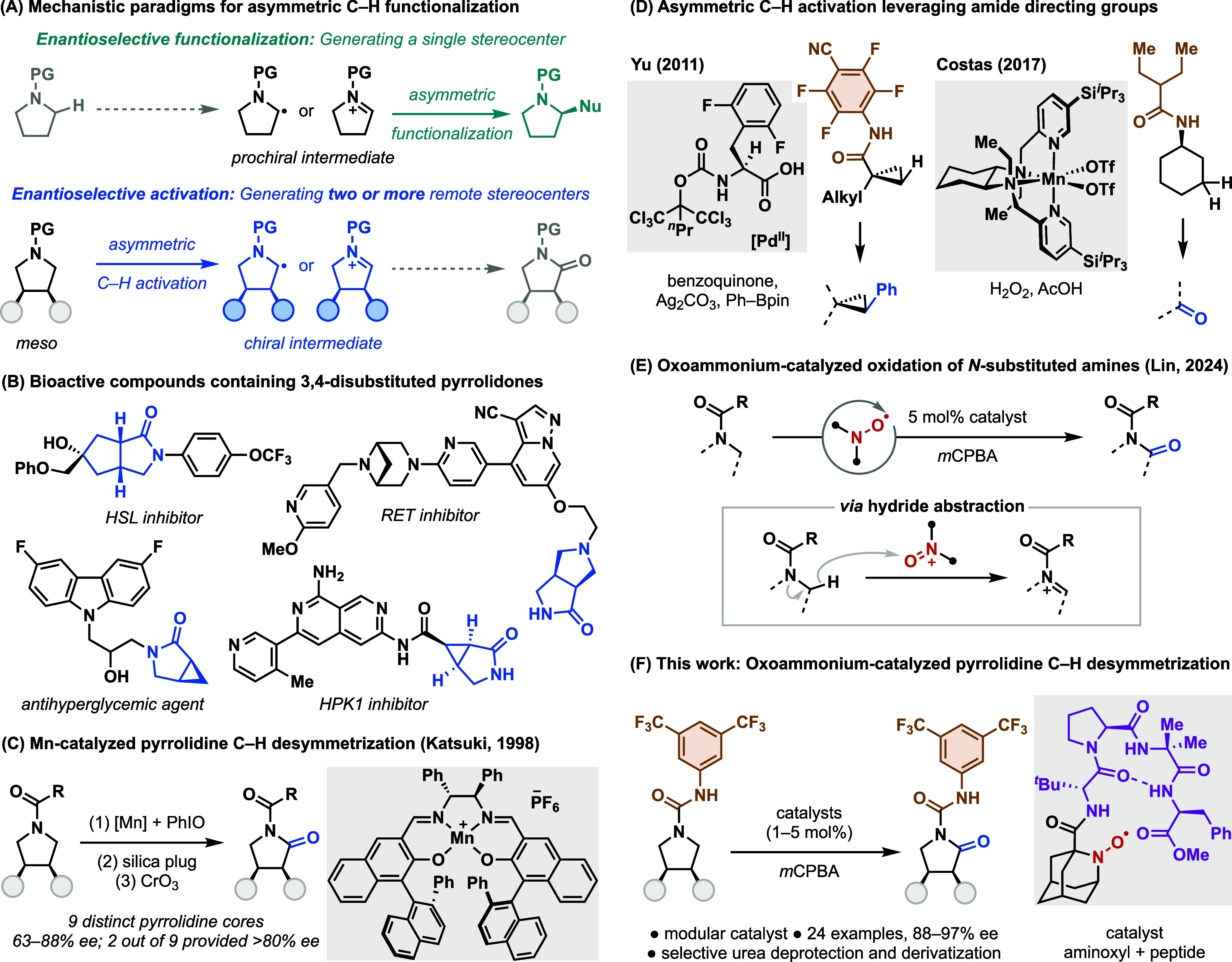 Figure 1
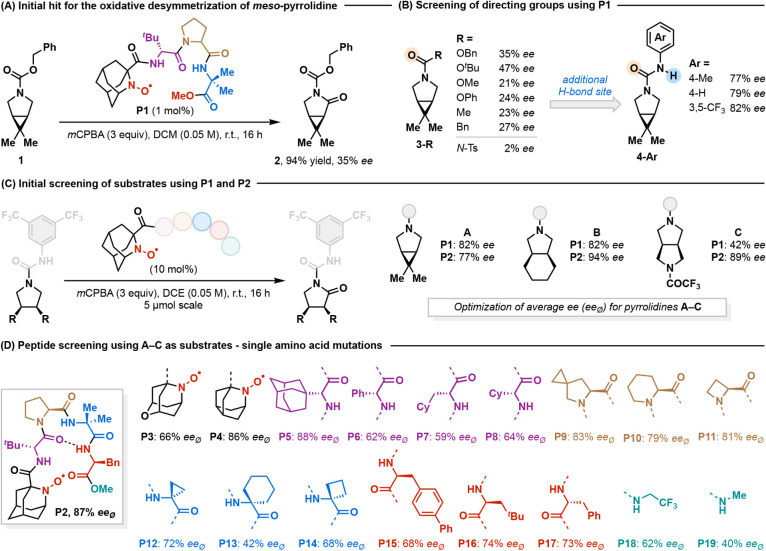 Figure 2
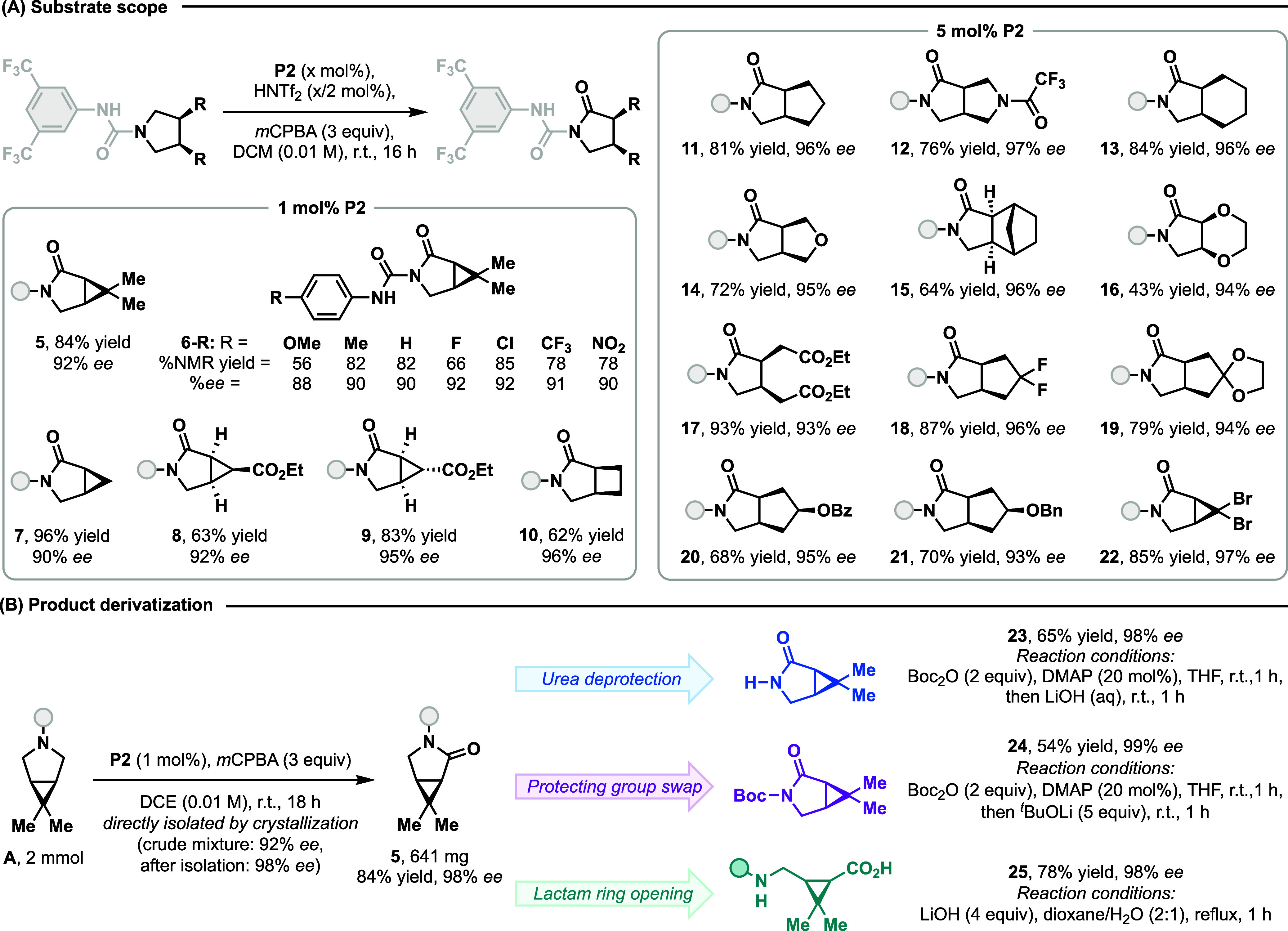 Figure 3
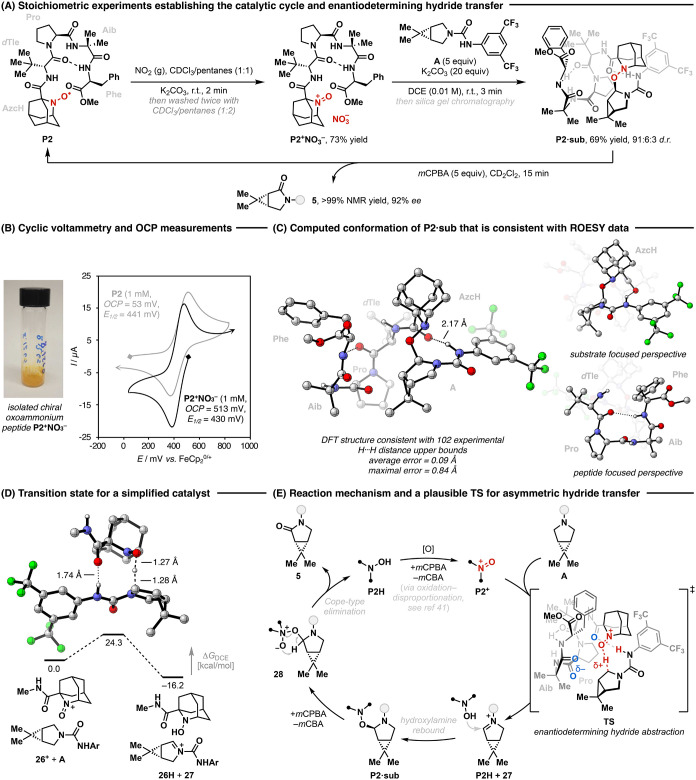 Figure 4
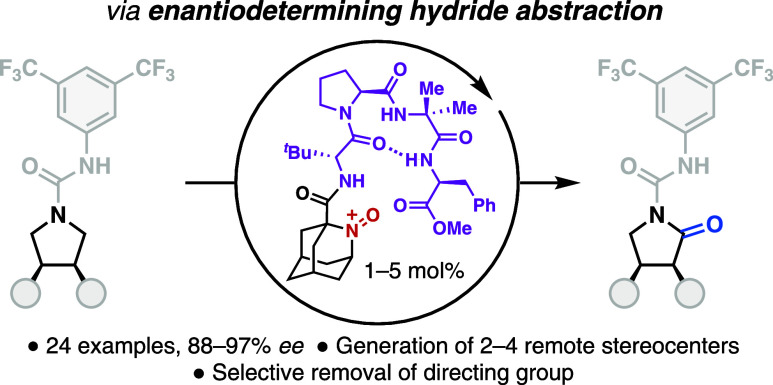 Figure 5
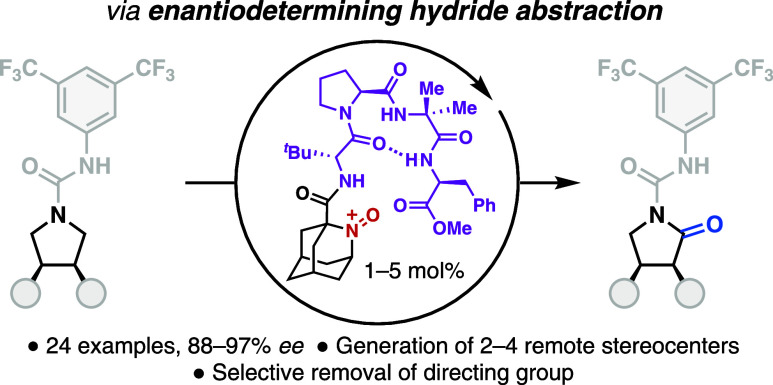 Figure 6
Peer Reviews
No public reviews on file for this paper yet. If you reviewed it on a platform where reviews are public (OpenReview, ICLR, NeurIPS, ICML), you can paste yours below so the community can read it here.
Videos
No videos yet. Explain this paper in a talk, walkthrough, or lecture? Add one.
Taxonomy
TopicsAsymmetric Synthesis and Catalysis · Coordination Chemistry and Organometallics · Asymmetric Hydrogenation and Catalysis