Side-Chain Free Semiconducting Polymer for High-Performance n‑Type Organic Electrochemical Transistors
Yuyun Yao, Mustafeez Bashir Shah, Wanpeng Lu, Xian’e Li, Rushil Vasant, Zeinab Hamid, Keren Ai, Junfu Tian, Maryam Alsufyani, Jonathan Rawle, Malina Gaşpar, Qingpei Wan, Rachael Found, Wesley Chen, Tomaž Kotnik, Thuc-Quyen Nguyen, Achilleas Savva, James Durrant, Iain McCulloch

TL;DR
A new method to improve n-type organic electrochemical transistors by modifying polymer films with thermal treatment.
Contribution
A novel post-deposition ester pyrolysis strategy to enhance OECT performance through increased porosity and conductivity.
Findings
The polymer film shows increased porosity, hydrophilicity, and crystallinity after side-chain cleavage.
The μC* figure of merit reaches 158.85 F cm–1 V–1 s–1 with improved transconductance.
Device switching speed and stability are enhanced due to nanoscale porosity.
Abstract
The development of organic electrochemical transistors (OECTs) critically depends on the design and characterization of mixed-conducting, high-performance conjugated polymers (CPs) as channel materials, particularly for n-type OECTs. In this study, we present a novel strategy to enhance the OECT performance of a semiconducting polymer film via a postdeposition ester pyrolysis of thermally cleavable side chains, thus facilitating ion incorporation and transport within the bulk. Our approach relies on the synthesis of a high glass-transition, rigid-rod polymer, able to withstand the pyrolysis temperature without deformation and maintain the voids formed from the pyrolysis reaction which removes the thermally cleavable ester side chains. After side-chain cleavage, the resulting film exhibits increased porosity, hydrophilicity, and crystallinity. By creating bulk porosity in thin films via…
Genes, proteins, chemicals, diseases, species, mutations and cell lines named across the full text — each resolved to its canonical identifier and authoritative record.
Click any figure to enlarge with its caption.
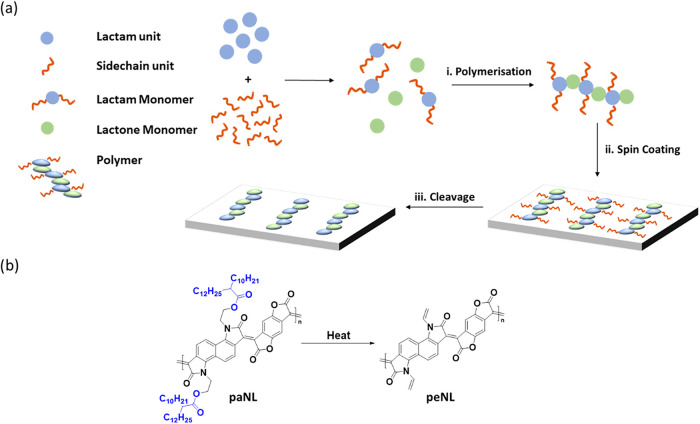 Figure 1
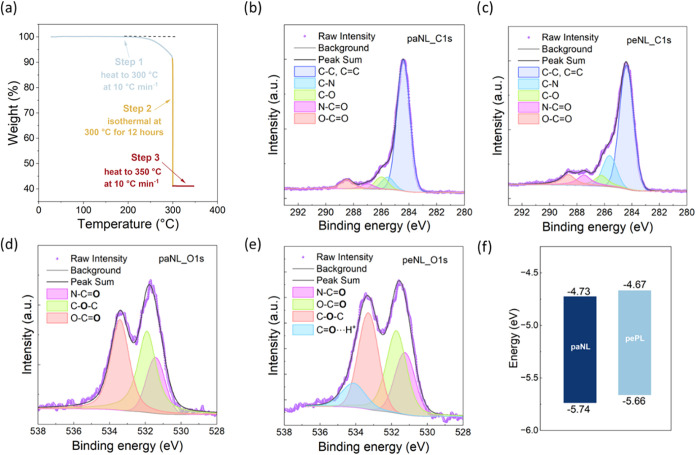 Figure 2
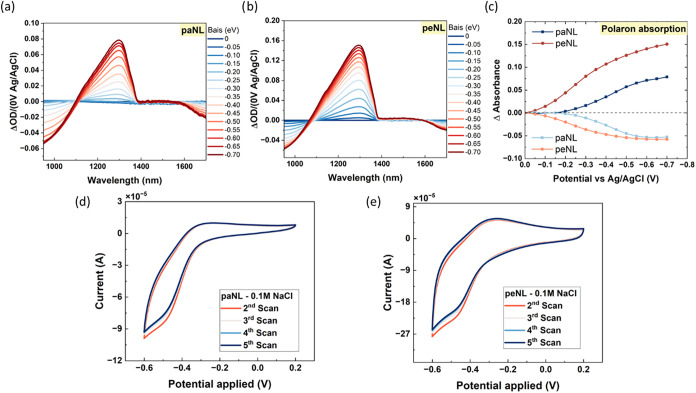 Figure 3
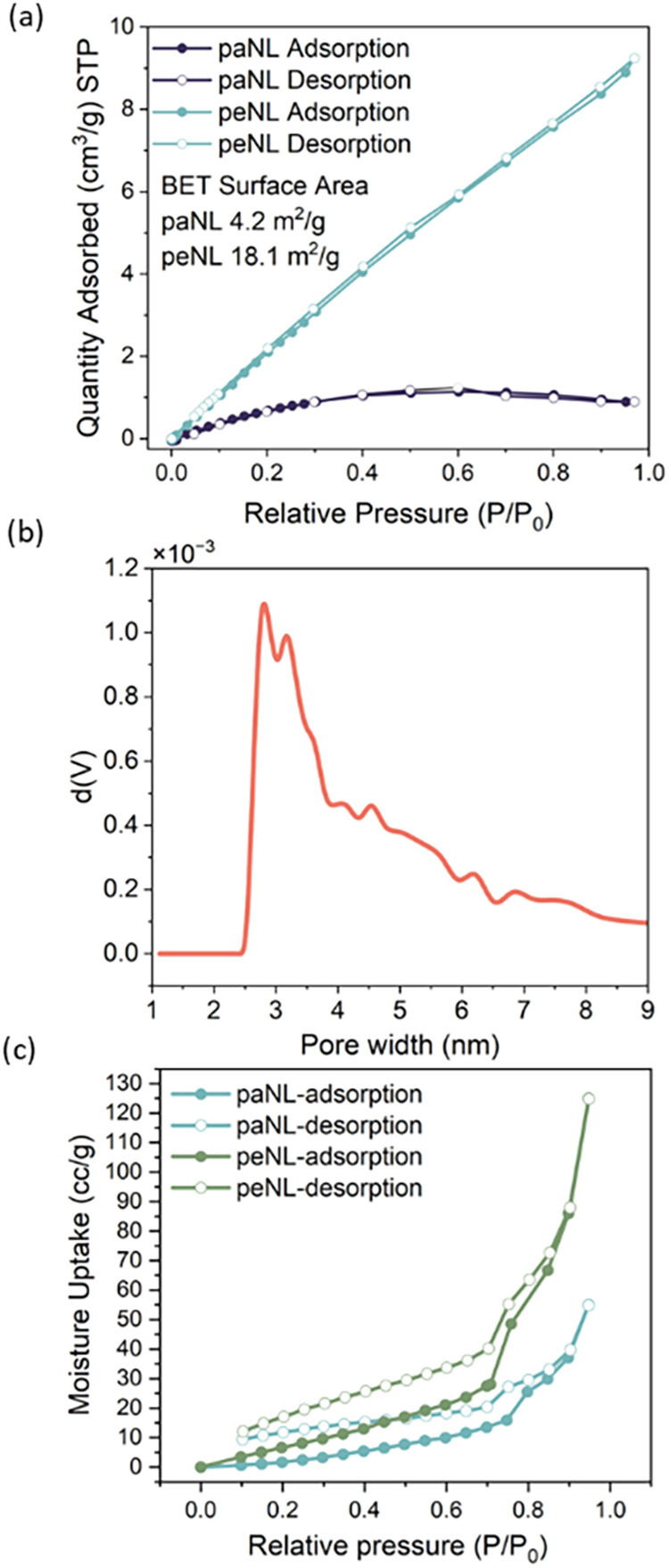 Figure 4
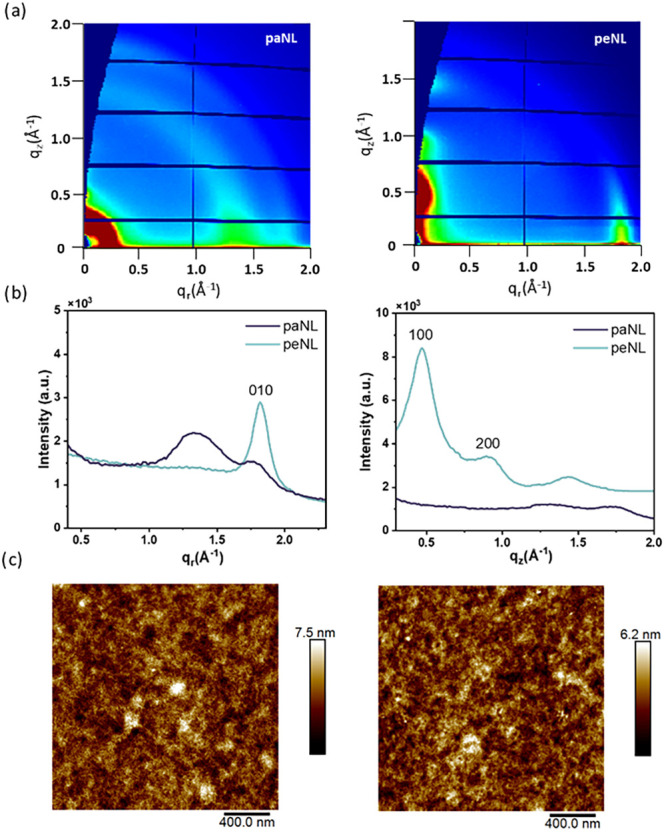 Figure 5
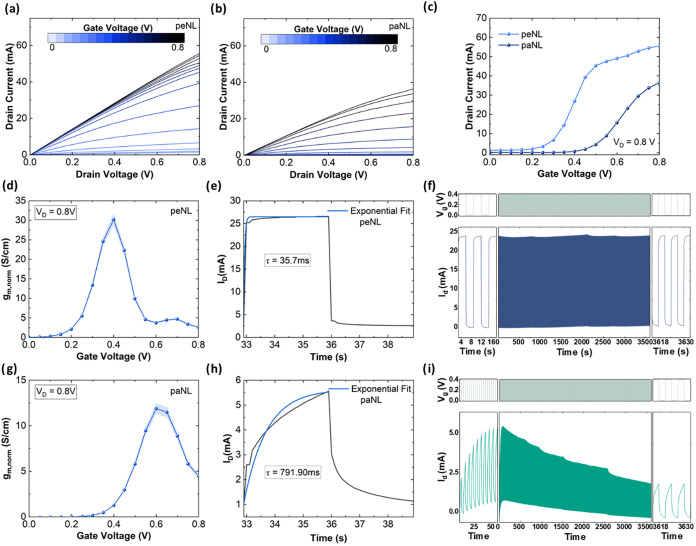 Figure 6
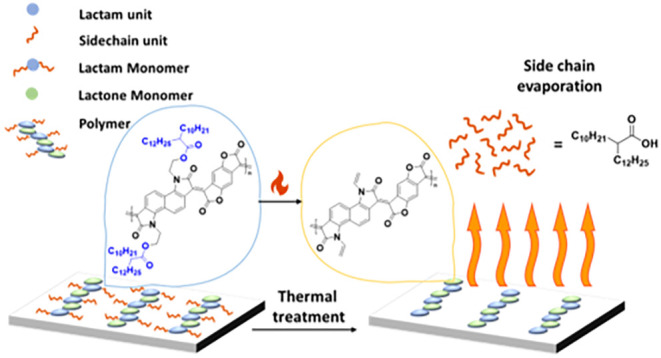 Figure 7
 Figure 8
 Figure 9
Peer Reviews
No public reviews on file for this paper yet. If you reviewed it on a platform where reviews are public (OpenReview, ICLR, NeurIPS, ICML), you can paste yours below so the community can read it here.
Videos
No videos yet. Explain this paper in a talk, walkthrough, or lecture? Add one.
Taxonomy
TopicsConducting polymers and applications · Organic Electronics and Photovoltaics · Supercapacitor Materials and Fabrication