A Mixed-Valent and High-Spin Vanadium Phosphide
Aswin Chandran, Christian Sandoval-Pauker, Balazs Pinter, Tom Vosch, Fabrice Wilhelm, Andrei Rogalev, Kasper S. Pedersen, Anders Reinholdt

TL;DR
This paper reports the synthesis of a high-spin and mixed-valent vanadium phosphide complex with unique structural and electronic properties.
Contribution
The study introduces a novel high-spin, mixed-valent vanadium phosphide complex with an S=3/2 ground state.
Findings
A VII complex [(pyrNdipp)2V(L)2] is formed via reductive elimination of the PCO– moiety.
Photolysis leads to a high-spin and mixed-valent vanadium phosphide [(pyrNdipp)2V=P=V(pyrNdipp)2].
Theoretical analysis shows the complex avoids spin-pairing due to weak ligand-field splitting.
Abstract
Accessing high-spin configurations of transition metal phosphides defines a dividing line that prevents common properties of solid-state materials from being replicated within multiple-bonded molecular analogs. Here, we report the synthesis of a VIII phosphaethynolate complex, [(pyrNdipp)2V(PCO)] (2) in a halide metathesis with Na(OCP). Exposure of 2 to Lewis-basic ligands induces a one-electron reductive elimination of the PCO– moiety, generating VII complexes [(pyrNdipp)2V(L)2] (L = THF, DMAP; 3 THF , 3 DMAP ). When 2 is instead photolyzed, a cascade of reduction, decarbonylation, and multiple-bond formation steps affords a high-spin and mixed-valent vanadium phosphide, [(pyrNdipp)2VPV(pyrNdipp)2] (4) comprising formal [V2 III, IV] nodes. Structural characterization coupled with vibrational, UV–visible, and X-ray spectroscopic studies reveals an S 4 symmetrical [VPV]…
Genes, proteins, chemicals, diseases, species, mutations and cell lines named across the full text — each resolved to its canonical identifier and authoritative record.
Click any figure to enlarge with its caption.
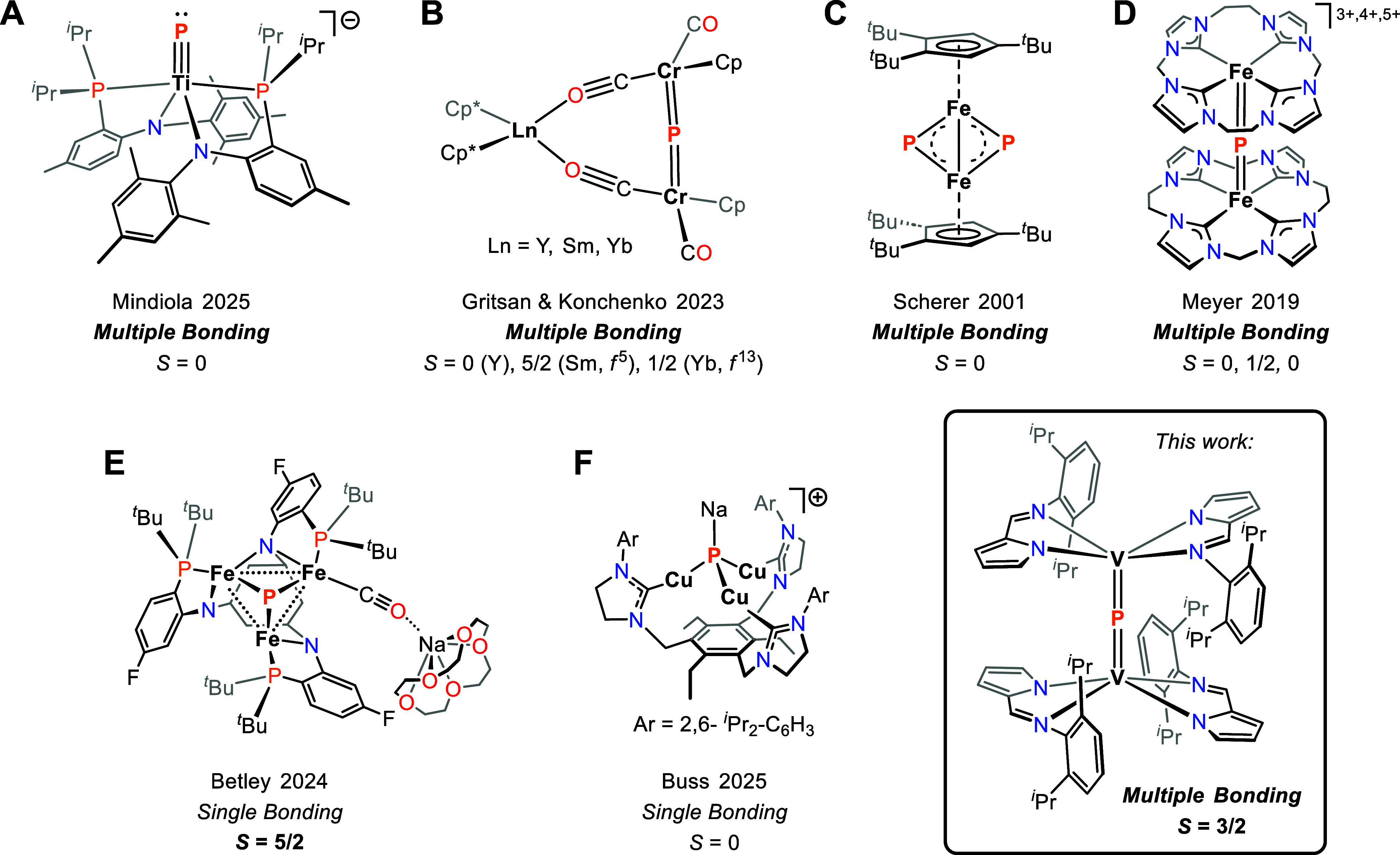 Figure 1
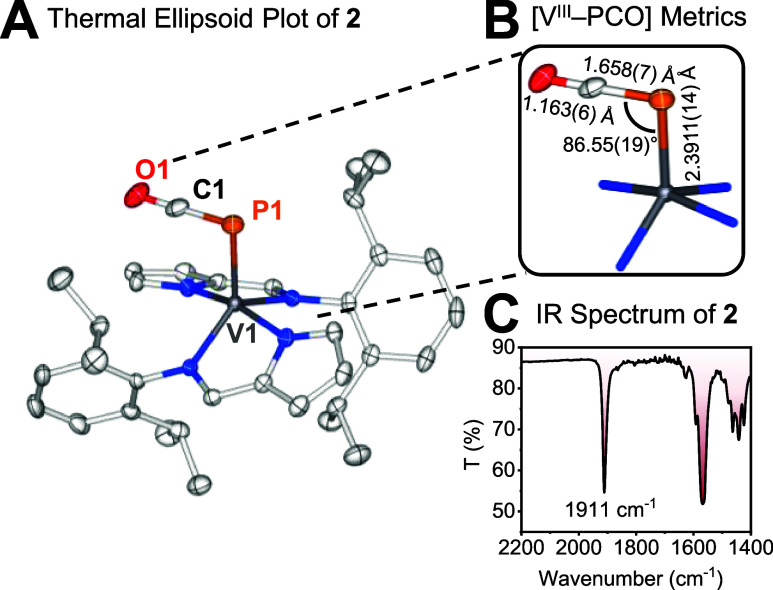 Figure 2
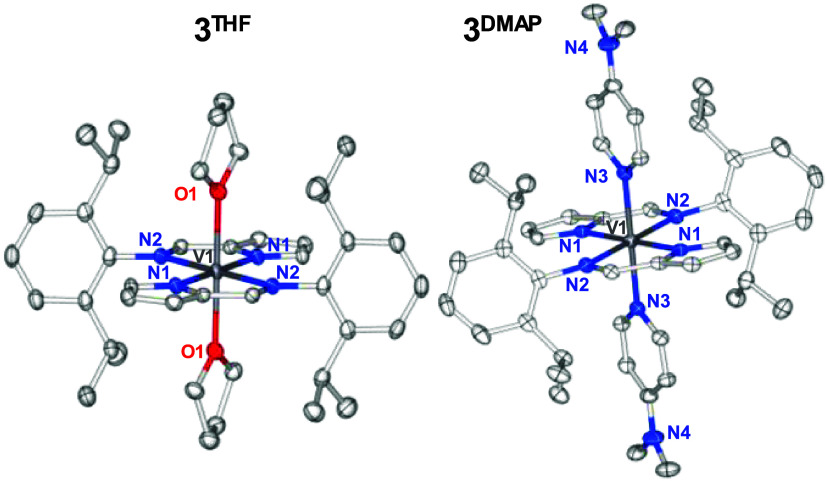 Figure 3
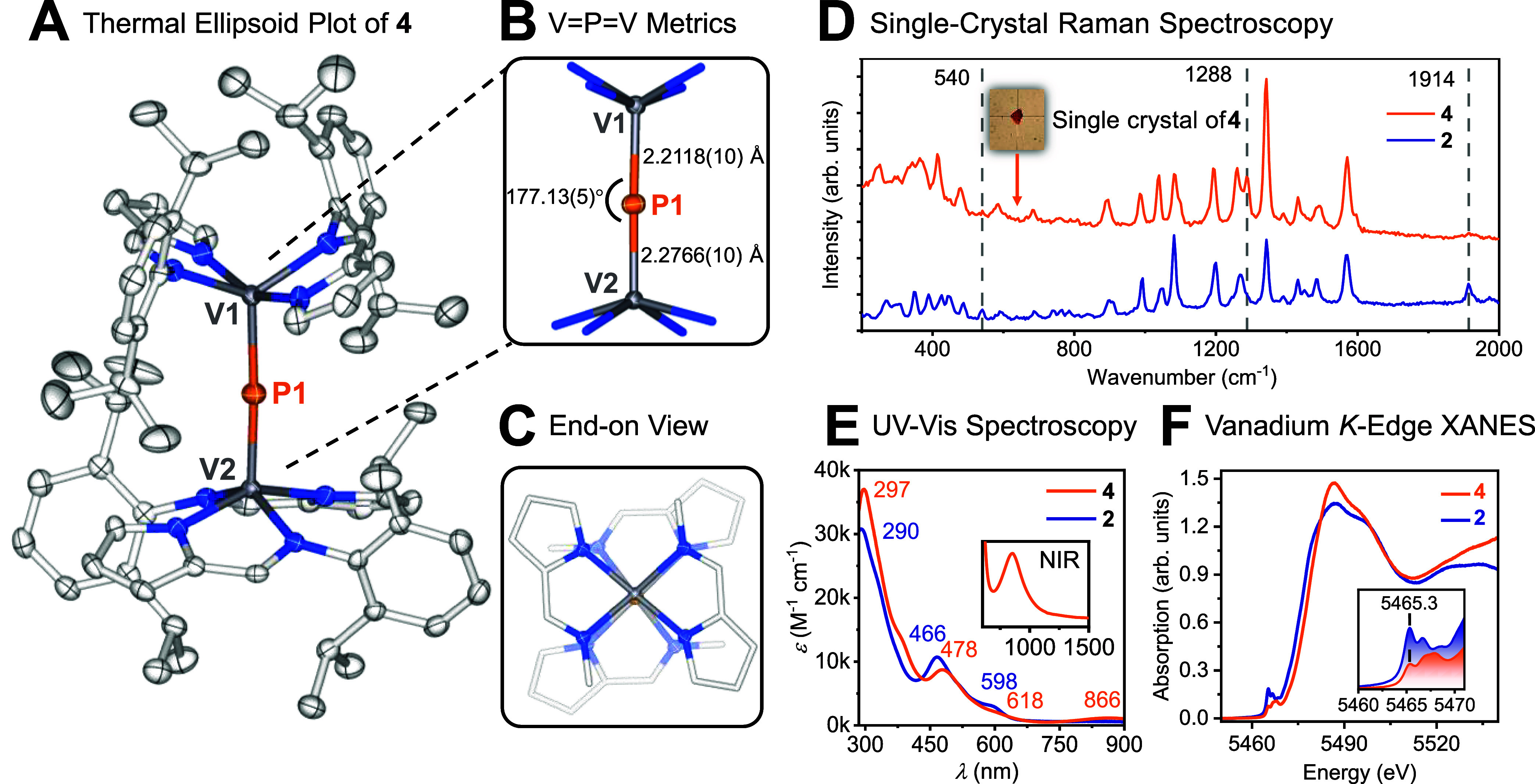 Figure 4
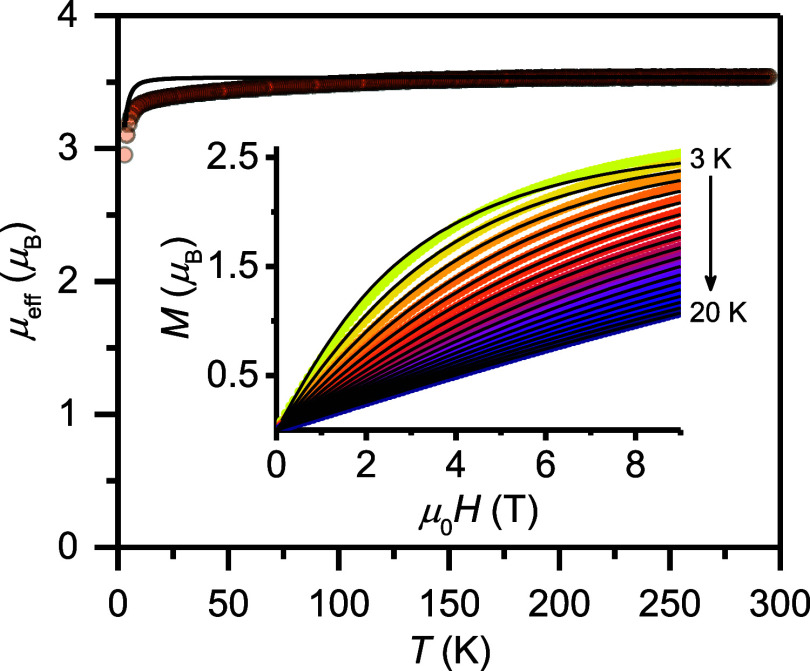 Figure 5
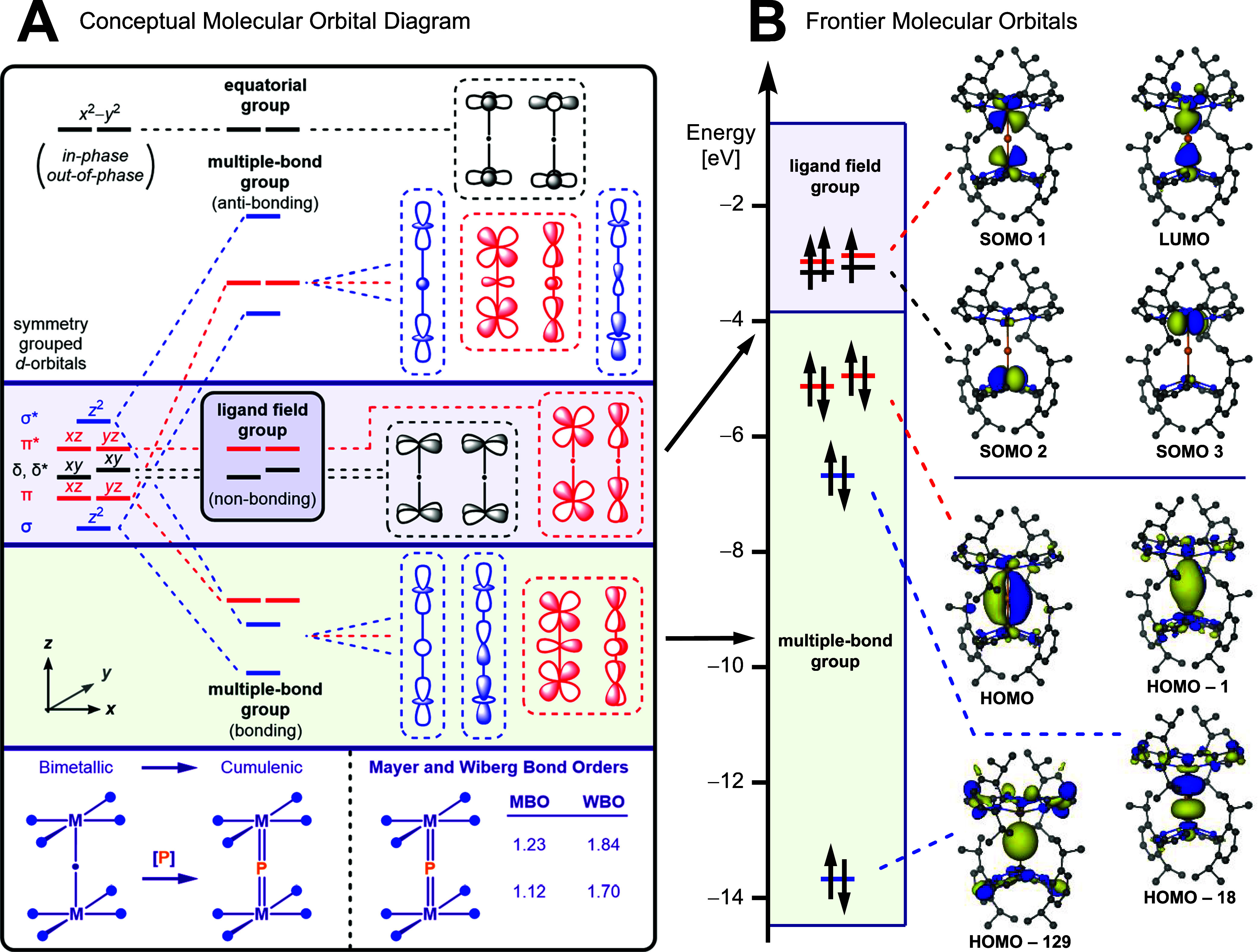 Figure 6
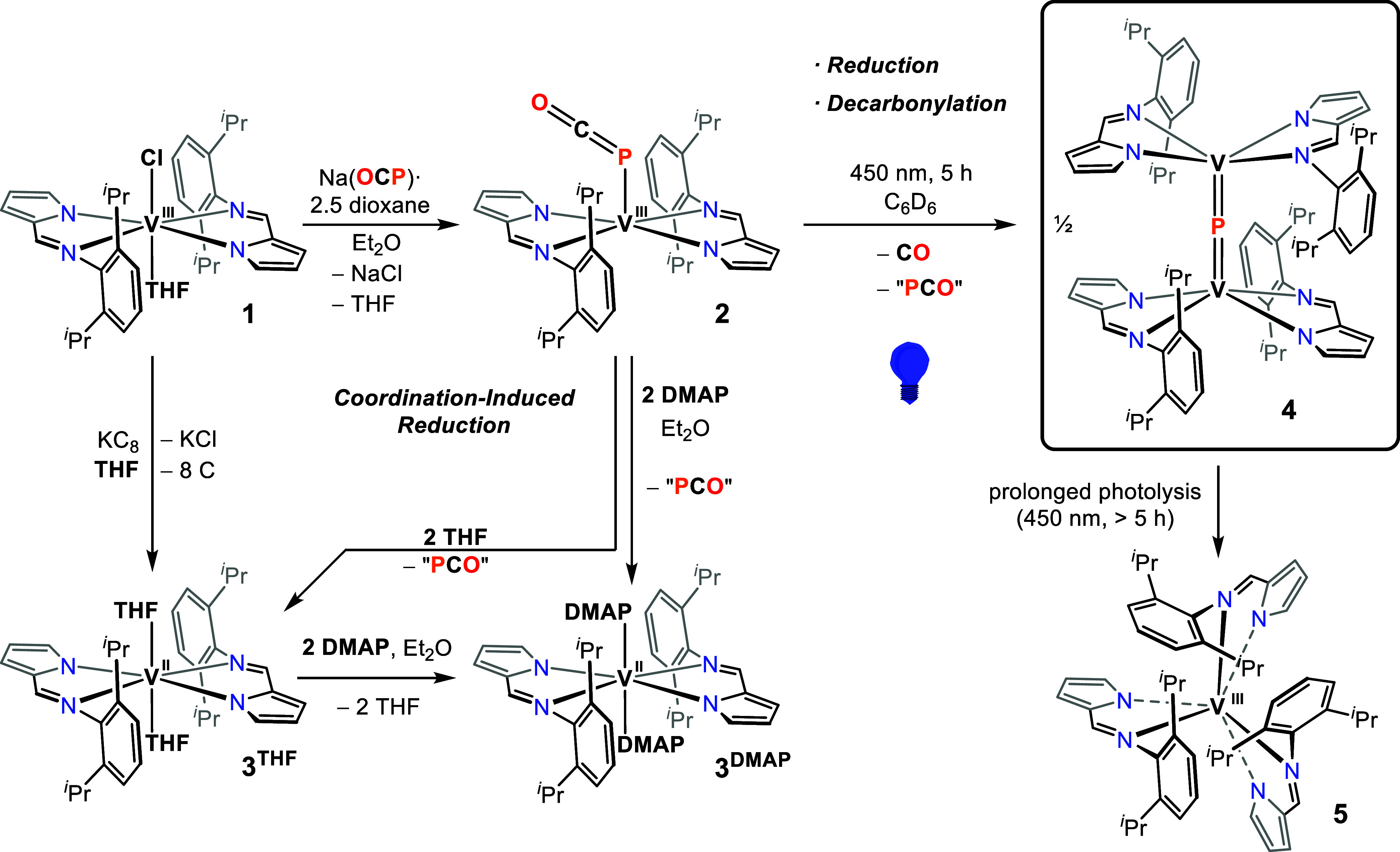 Figure 7
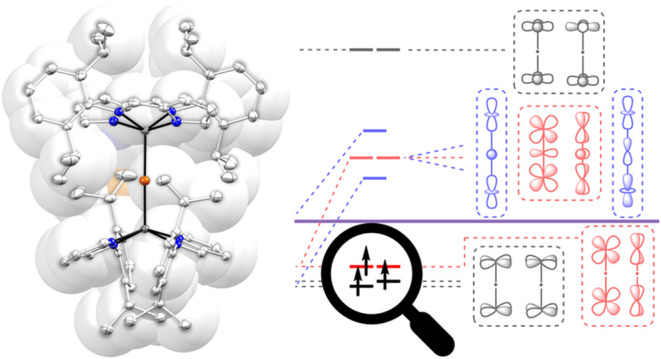 Figure 8
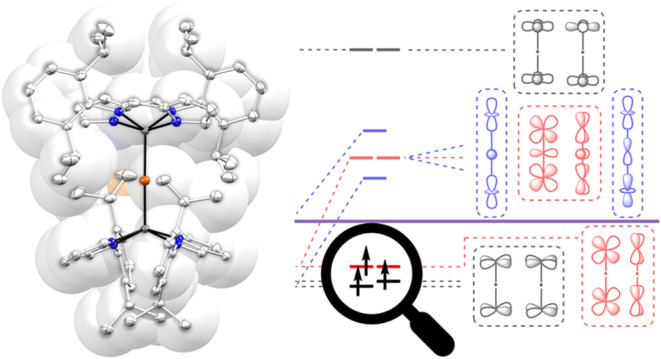 Figure 9
Peer Reviews
No public reviews on file for this paper yet. If you reviewed it on a platform where reviews are public (OpenReview, ICLR, NeurIPS, ICML), you can paste yours below so the community can read it here.
Videos
No videos yet. Explain this paper in a talk, walkthrough, or lecture? Add one.
Taxonomy
TopicsOrganometallic Complex Synthesis and Catalysis · Synthesis and characterization of novel inorganic/organometallic compounds · Inorganic Chemistry and Materials