Reaction Network and Kinetics Model for Neutral Hydrolysis of Poly(ethylene terephthalate)
Patrícia Pereira, Peter M. Guirguis, Christian W. Pester, Phillip E. Savage

TL;DR
This paper introduces a detailed model explaining how PET plastic breaks down in water at neutral pH, including byproduct formation and reaction conditions.
Contribution
A novel reaction network and kinetic model for PET hydrolysis that includes autocatalysis and byproduct generation is presented.
Findings
The model accurately fits experimental data with a mean absolute error of 0.023 M.
The highest predicted terephthalic acid yield is 94% under specific high-temperature conditions.
100% terephthalic acid yield is unachievable due to decomposition and equilibrium reactions.
Abstract
We present a reaction network and kinetic model that describes the hydrolytic depolymerization of poly(ethylene terephthalate) (PET) in water with neutral pH. The network comprises seven reaction pathways. It includes autocatalysis of PET depolymerization by terephthalic acid (TPA) and the generation of monohydroxyethyl terephthalate, bis(2-hydroxyethyl) terephthalate, benzoic acid, and decomposition products of TPA and ethylene glycol as byproducts. The model can handle PET hydrolysis in the solid state and in the molten state. Parameter estimation was performed by fitting the model to product concentrations from literature for PET hydrolysis over a wide range of times (15 s to 25 h) and nominal reaction temperatures (170–570 °C). The model fits the entire set of experimental concentrations with a mean absolute error of 0.023 M. It also demonstrated the ability to predict product…
Genes, proteins, chemicals, diseases, species, mutations and cell lines named across the full text — each resolved to its canonical identifier and authoritative record.
Click any figure to enlarge with its caption.
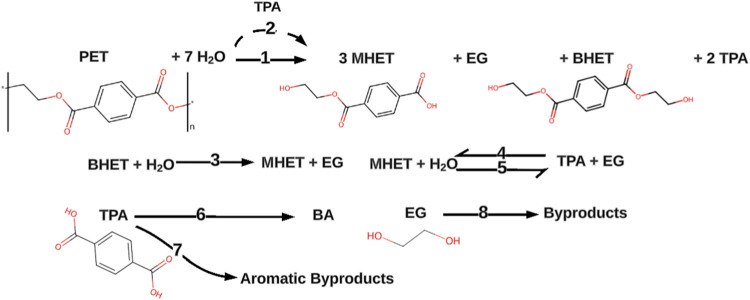 Figure 1
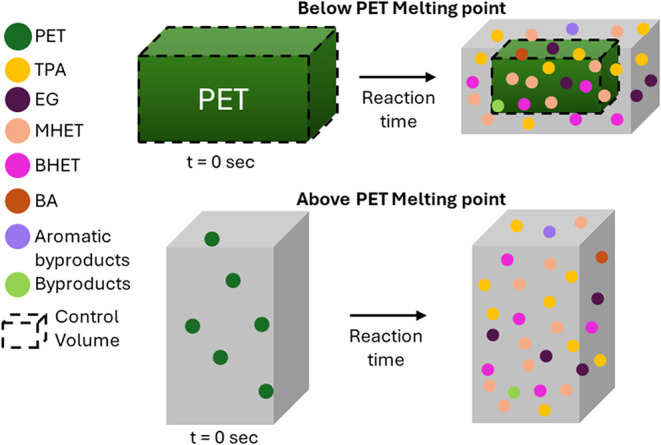 Figure 2
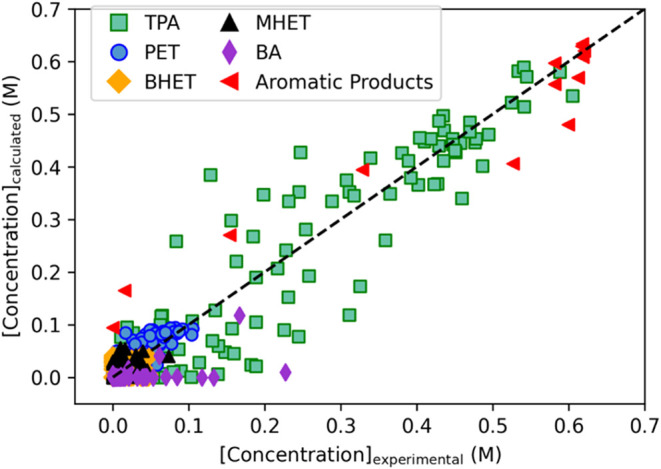 Figure 3
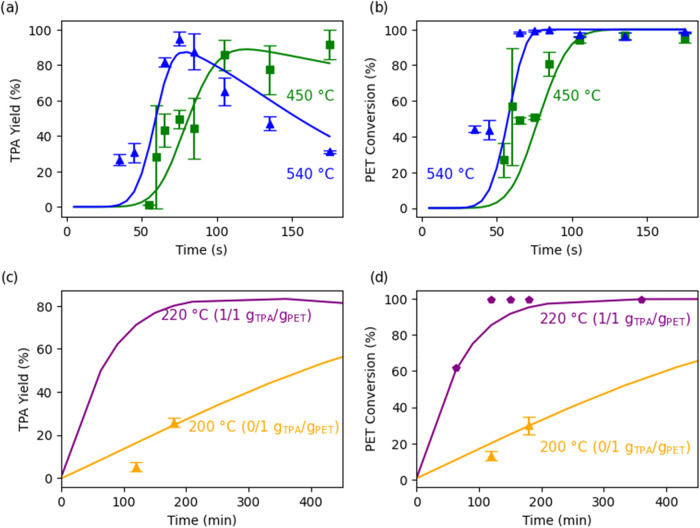 Figure 4
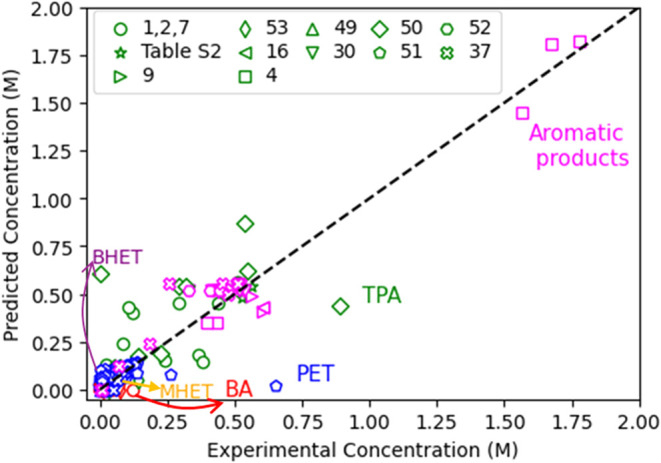 Figure 5
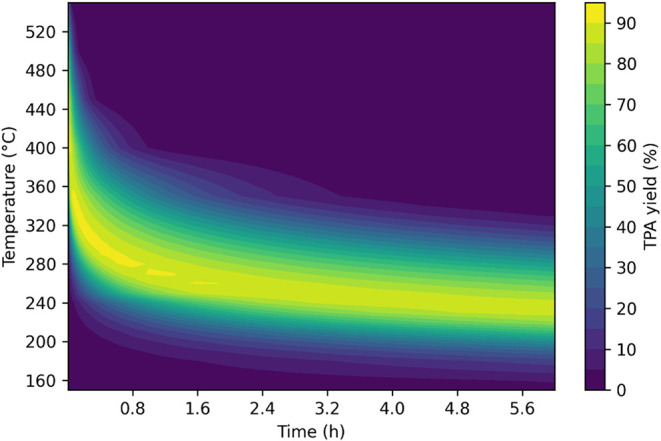 Figure 6
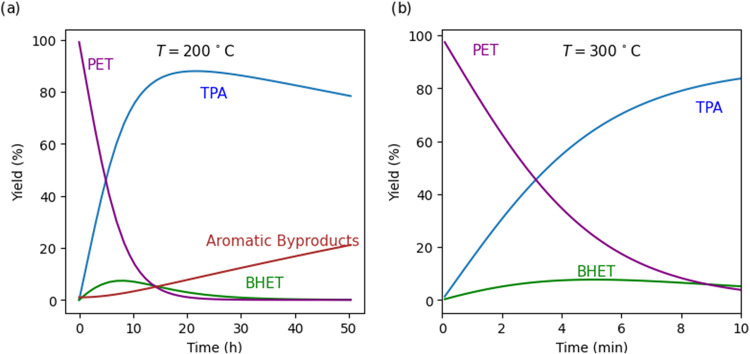 Figure 7
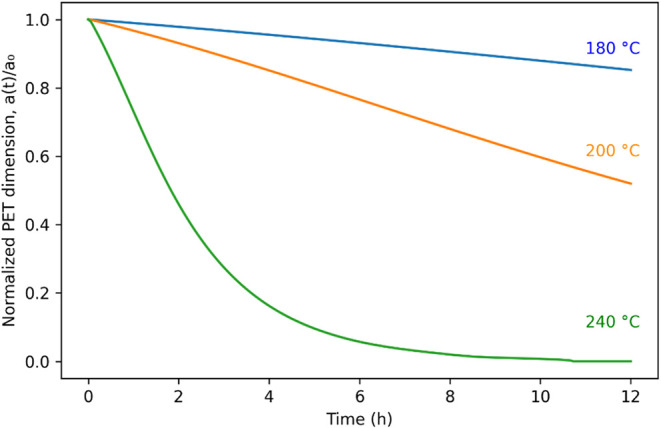 Figure 8
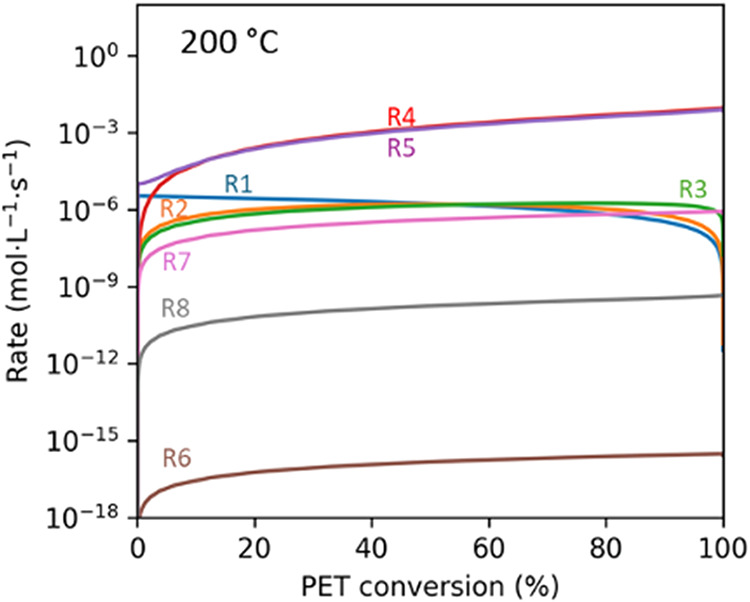 Figure 9
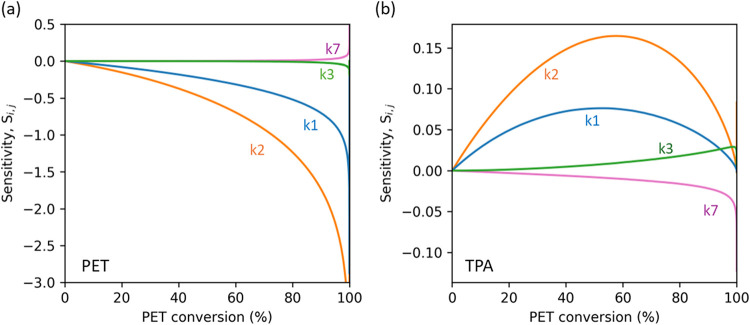 Figure 10
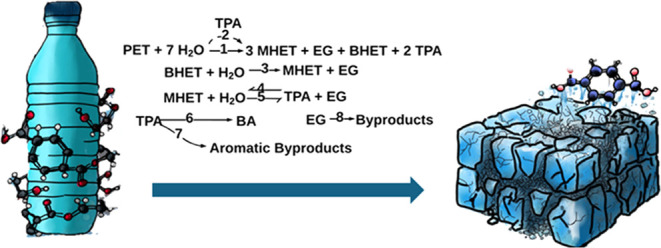 Figure 11
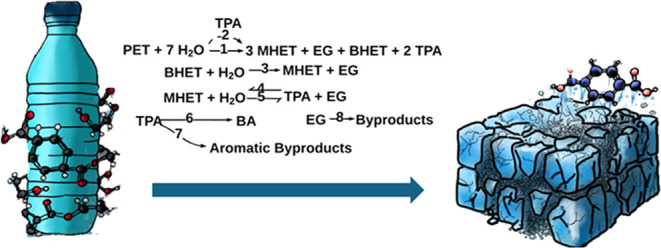 Figure 12
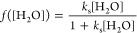 Figure 13
 Figure 14
 Figure 15
 Figure 16
 Figure 17
 Figure 18
 Figure 19
 Figure 20
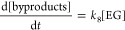 Figure 21
 Figure 22
 Figure 23
 Figure 24
Peer Reviews
No public reviews on file for this paper yet. If you reviewed it on a platform where reviews are public (OpenReview, ICLR, NeurIPS, ICML), you can paste yours below so the community can read it here.
Videos
No videos yet. Explain this paper in a talk, walkthrough, or lecture? Add one.
Taxonomy
TopicsPolymer crystallization and properties · Advanced Physical and Chemical Molecular Interactions · Polymer Science and PVC