Ni- and Zn-Doping Effects on Cu/SiO2 Catalysts in Nonoxidative Ethanol Dehydrogenation
Tomas Pokorny, Petr Machac, Zdenek Moravec, Lucie Simonikova, Lucie Leonova, Zuzana Hlavenkova, David Skoda, Katerina Pacultova, Katerina Karaskova, Ales Styskalik

TL;DR
This paper studies how adding Ni and Zn to Cu/SiO2 catalysts affects their performance in converting ethanol to acetaldehyde and butadiene at lower temperatures.
Contribution
The study introduces Ni- and Zn-doped Cu/SiO2 catalysts that improve activity and stability in ethanol dehydrogenation.
Findings
Ni-doped catalysts showed higher activity at lower temperatures but deactivated faster.
Zn-doped catalysts improved high-temperature stability and maintained high acetaldehyde selectivity.
Zn-doped catalysts produced 3.63 g g–1 h–1 acetaldehyde at 290 °C with reduced coke formation.
Abstract
Nonoxidative ethanol dehydrogenation opens a pathway for the sustainable production of acetaldehyde and butadiene. One crucial aspect of producing butadiene by the Lebedev process is the high-temperature stability of ethanol to acetaldehyde conversion. However, copper-based catalysts, despite exhibiting high activity and selectivity, suffer from sintering and coking and need to be improved for successful industrial applications. Herein, we show Cu-based (∼2.5 wt %) catalysts doped with Ni and Zn (0.028–0.36 wt %) to improve the catalytic performance of nanoparticles. The catalysts were prepared by hydrolytic sol–gel and dry impregnation methods. STEM analysis determined the nanoparticle sizes in the 1.9–2.8 nm range. Ni-doped catalysts outperformed the parent Cu catalysts in ethanol dehydrogenation activity at lower temperatures (185–220 °C) but suffered from faster deactivation. The…
Genes, proteins, chemicals, diseases, species, mutations and cell lines named across the full text — each resolved to its canonical identifier and authoritative record.
Click any figure to enlarge with its caption.
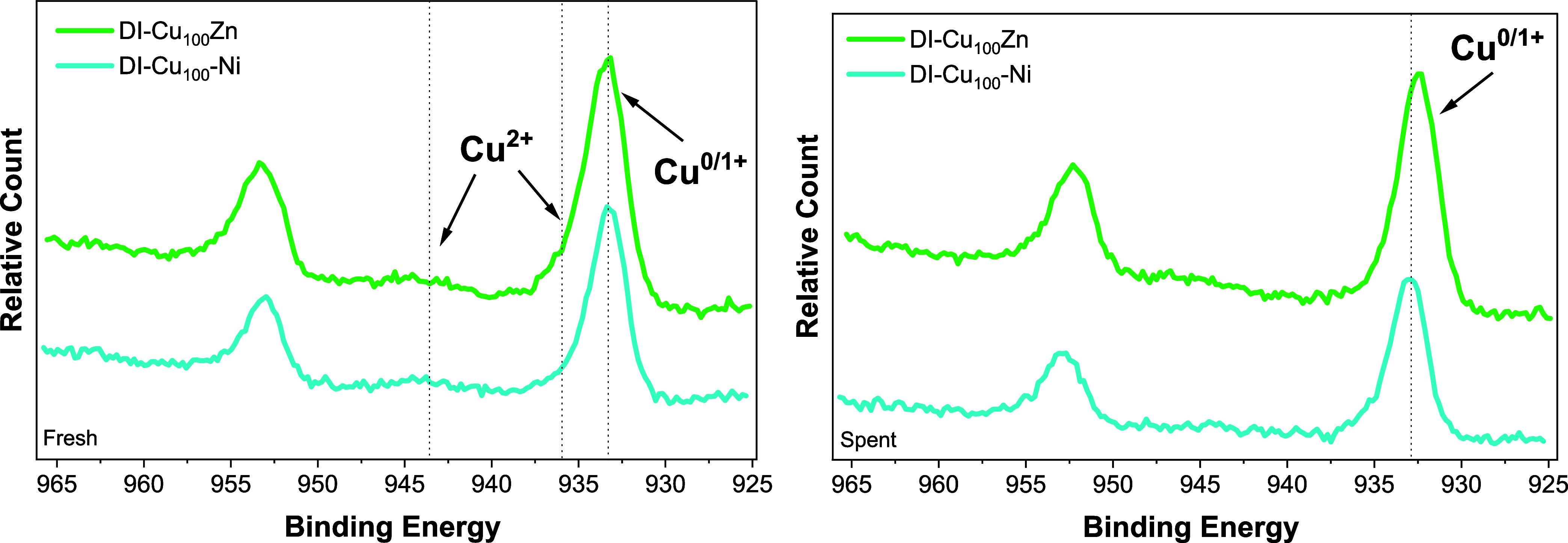 Figure 1
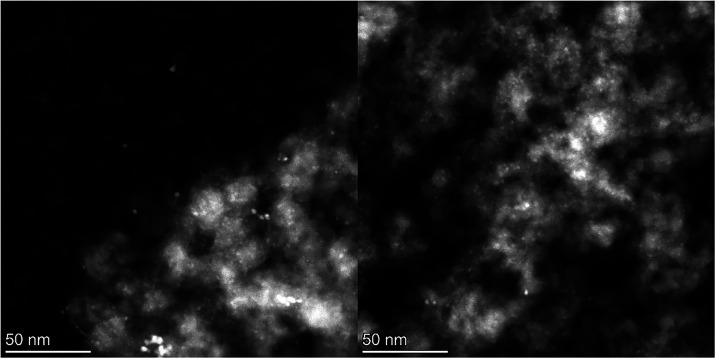 Figure 2
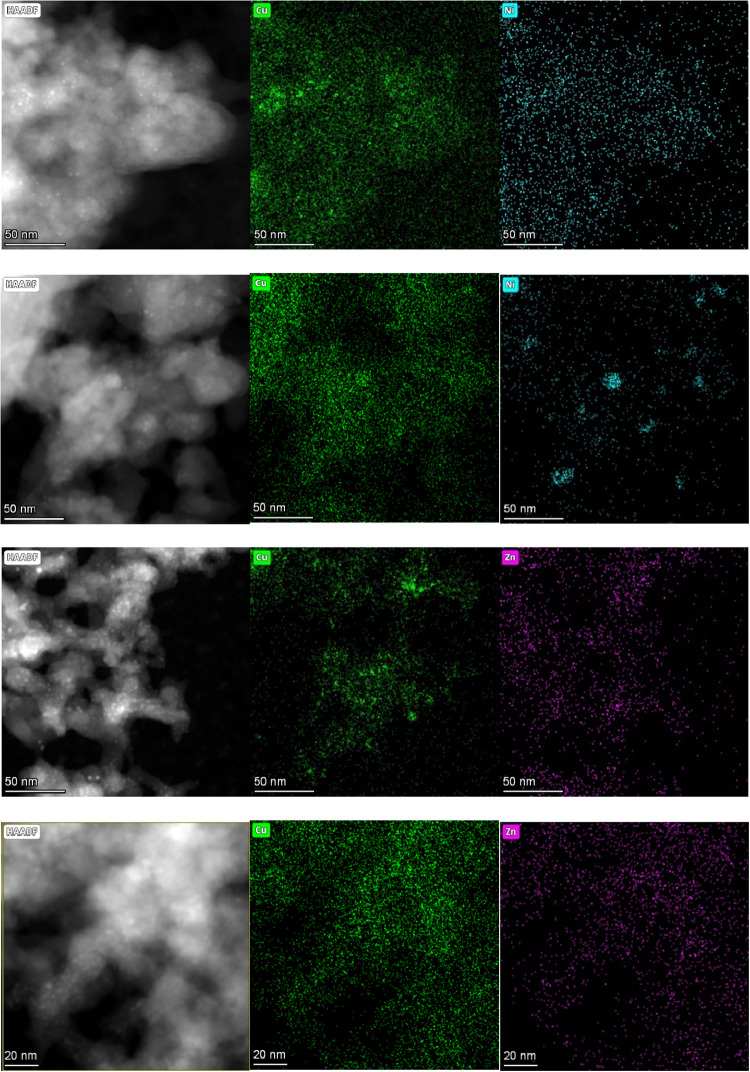 Figure 3
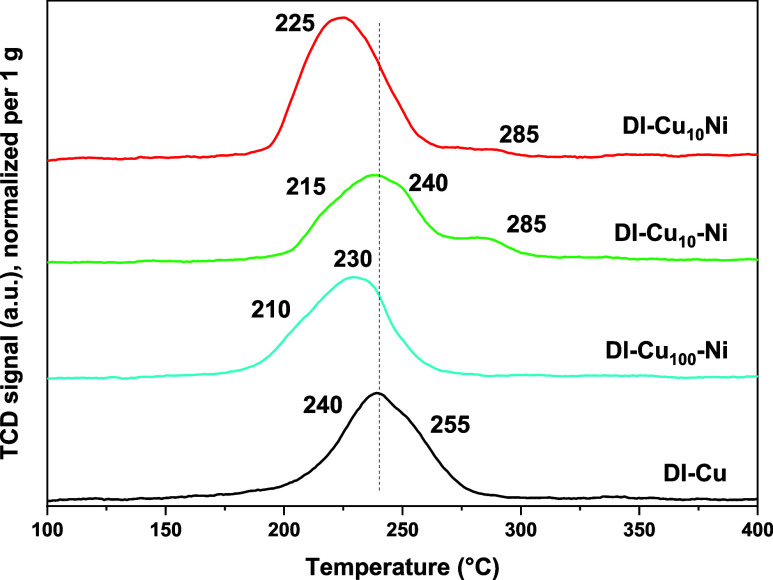 Figure 4
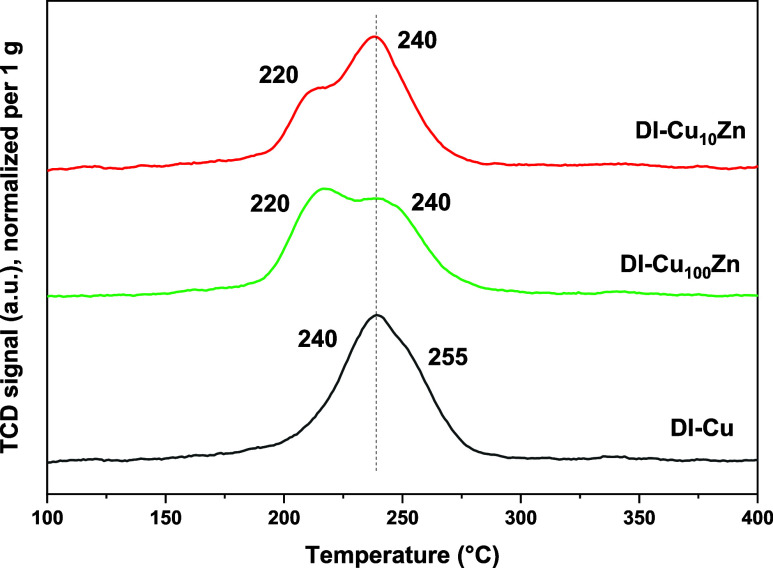 Figure 5
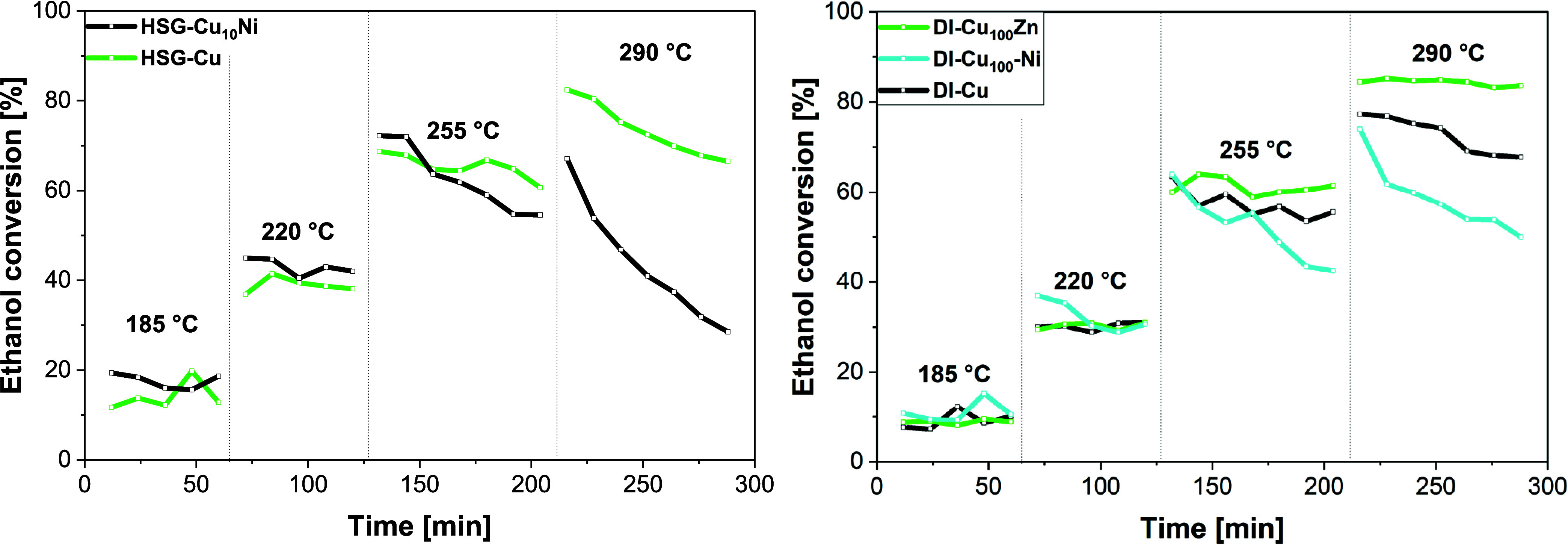 Figure 6
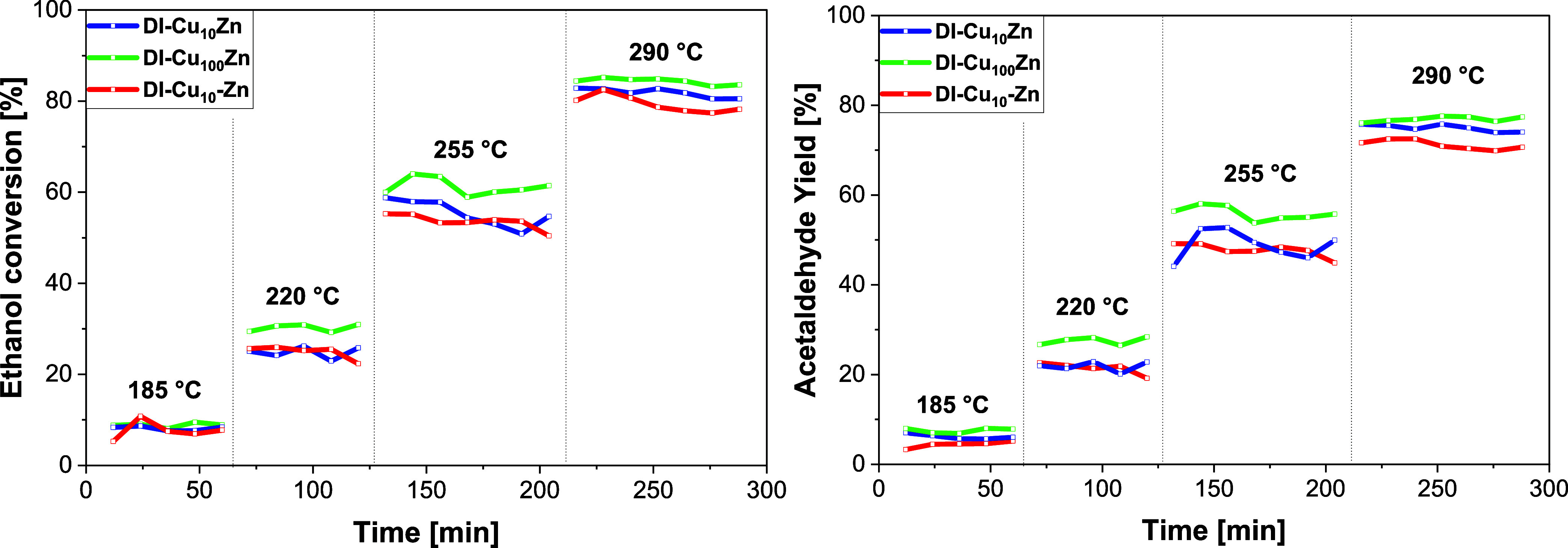 Figure 7
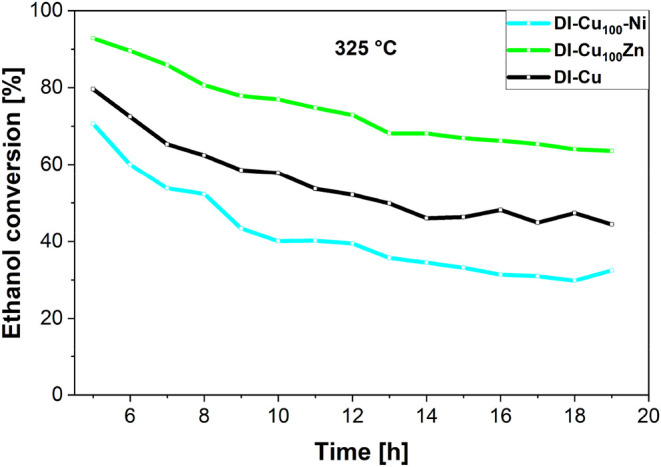 Figure 8
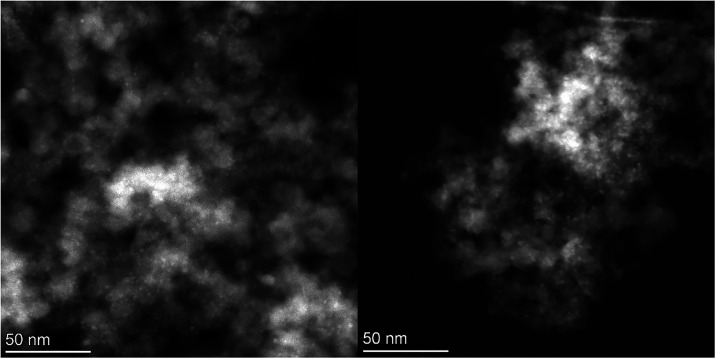 Figure 9
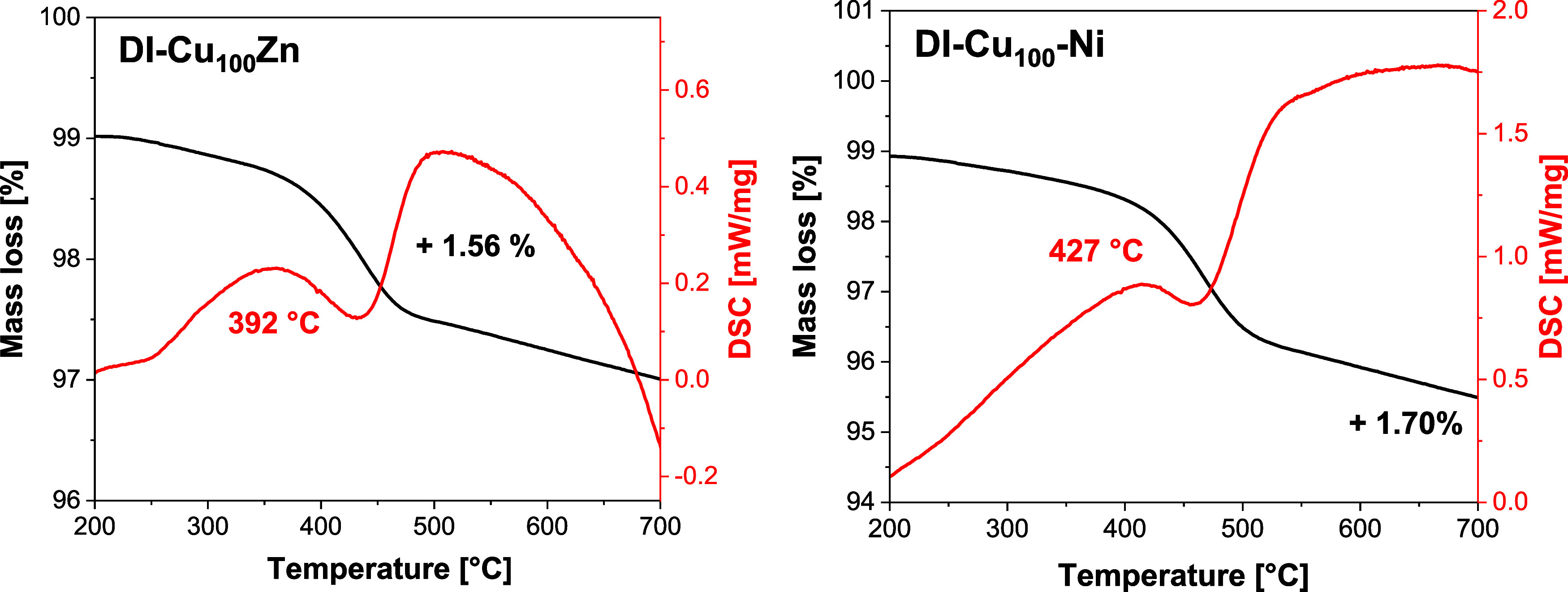 Figure 10
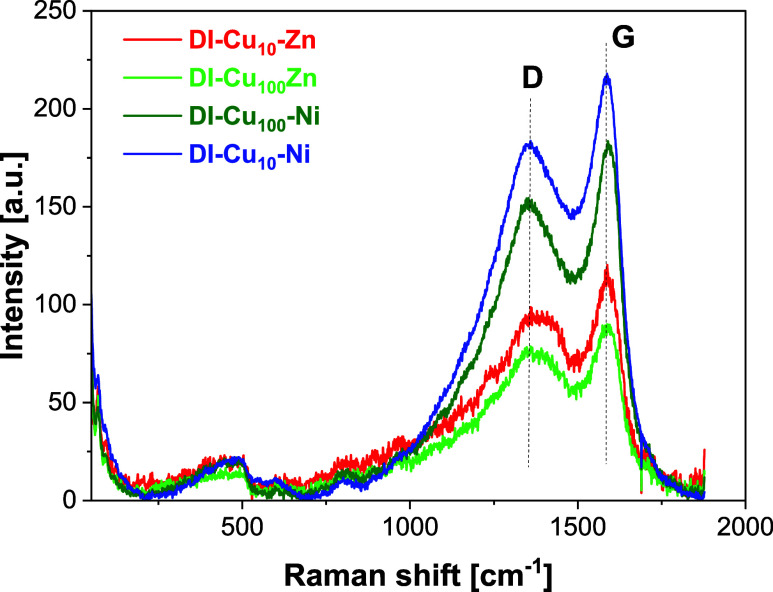 Figure 11
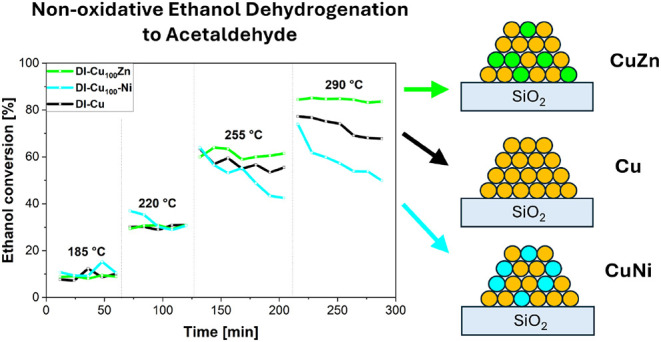 Figure 12
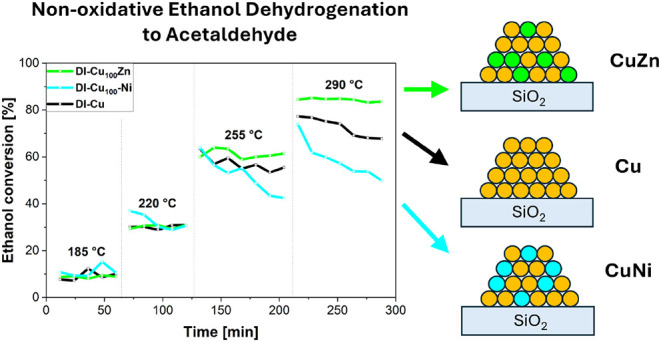 Figure 13
 Figure 14
 Figure 15
 Figure 16
 Figure 17
Peer Reviews
No public reviews on file for this paper yet. If you reviewed it on a platform where reviews are public (OpenReview, ICLR, NeurIPS, ICML), you can paste yours below so the community can read it here.
Videos
No videos yet. Explain this paper in a talk, walkthrough, or lecture? Add one.
Taxonomy
TopicsCatalysts for Methane Reforming · Catalysis and Oxidation Reactions · Catalysis for Biomass Conversion