Peptidic Catalysts Conformationally Tuned for Fluoride Binding and Delivery
Gabija Poškaitė, Thomas Schlatzer, Zijun Chen, Mihai V. Popescu, Robert S. Paton, Véronique Gouverneur

TL;DR
Researchers discovered that certain peptides can bind and deliver fluoride, enabling new fluorination reactions and offering insights into early enzyme-like catalysts.
Contribution
The first experimental demonstration of peptide-based fluorination catalysis and the role of peptides as fluoride and cesium chelators.
Findings
Peptides can bind fluoride and cesium ions, acting as chelators.
Peptide-catalyzed fluorination reactions were successfully developed.
This work opens new possibilities for fluorination chemistry using peptide catalysts.
Abstract
Knowledge on how fluoride interacts with peptides is currently limited to in silico studies. Here, we report an experimental investigation on the ability of peptidic scaffolds to bind fluoride using TBAF·3H2O or CsF. For CsF, in-depth NMR and GOAT-DFT studies shed light on peptides acting as chelators to both fluoride and cesium ions. This finding led to the development of the first peptide-catalyzed fluorination reactions. These advances open a new avenue to investigate fluorination chemistry with peptide-based catalysts that are considered as the possible ancestors to enzymes.
Genes, proteins, chemicals, diseases, species, mutations and cell lines named across the full text — each resolved to its canonical identifier and authoritative record.
Click any figure to enlarge with its caption.
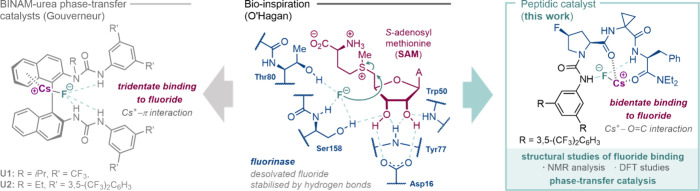 Figure 1
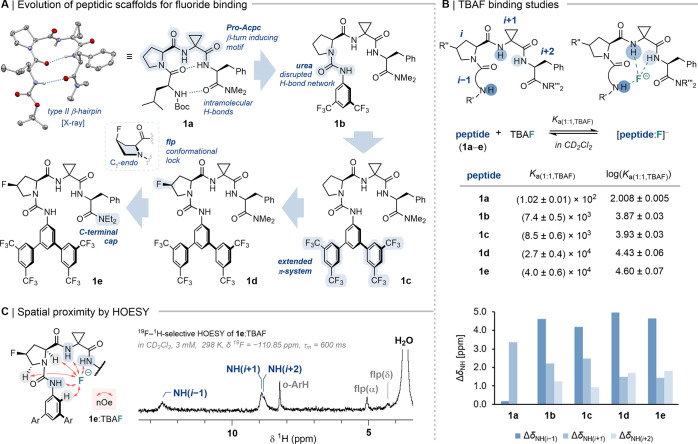 Figure 2
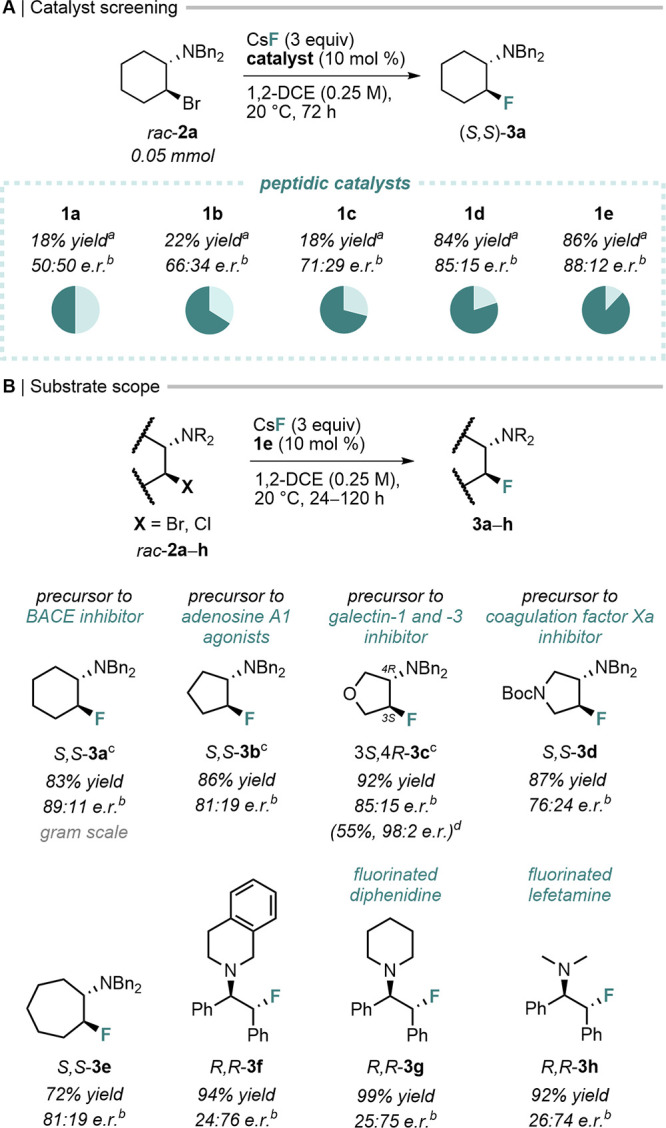 Figure 3
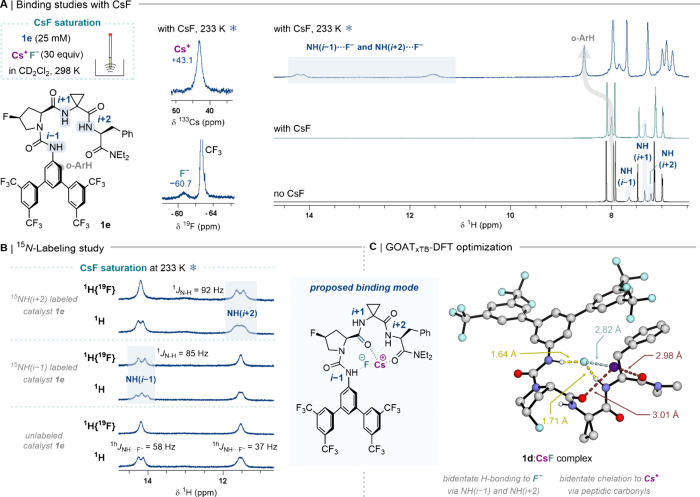 Figure 4
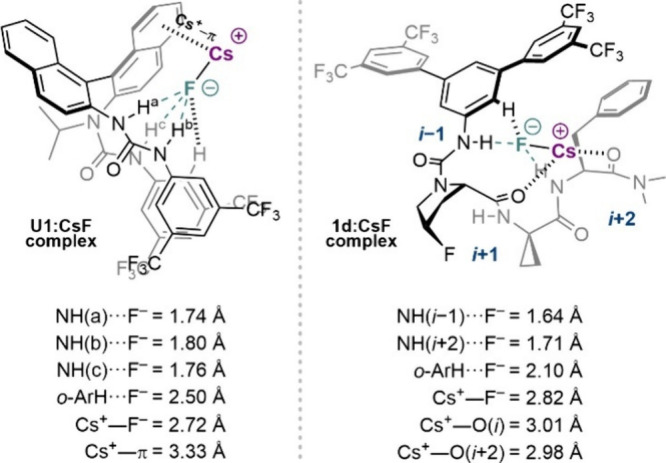 Figure 5
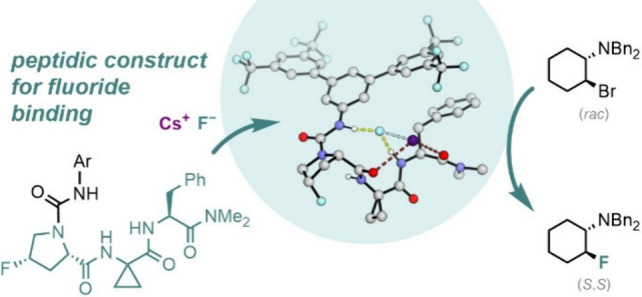 Figure 6
Peer Reviews
No public reviews on file for this paper yet. If you reviewed it on a platform where reviews are public (OpenReview, ICLR, NeurIPS, ICML), you can paste yours below so the community can read it here.
Videos
No videos yet. Explain this paper in a talk, walkthrough, or lecture? Add one.
Taxonomy
TopicsSupramolecular Self-Assembly in Materials · Fluorine in Organic Chemistry · Chemical Synthesis and Analysis