Elucidation of the Verrucofortine Biosynthetic Pathway Enables Identification of a Cyclodipeptide Prenyltransferase with High Catalytic Efficiency
Hui-Ling Wei, Li-Dan Pang, Xiao-Ling Chen, Shu-Ming Li

TL;DR
Scientists discovered how a fungus makes a compound called verrucofortine and found a highly efficient enzyme that could be useful for modifying small molecules.
Contribution
Identification of a cyclodipeptide prenyltransferase with high catalytic efficiency for biocatalytic applications.
Findings
The biosynthetic pathway of verrucofortine was elucidated using gene deletion and biochemical analysis.
VftPT exhibits higher catalytic efficiency than known homologues for prenylation of tryptophan-containing cyclodipeptides.
VftPS assembles the cyclodipeptide scaffold, followed by modifications by VftPT and VftAT.
Abstract
Penicillium polonicum, a common spoilage fungus affecting stored grains, nuts, and dried fruits, produces diverse secondary metabolites, including the indole-diketopiperazine derivative verrucofortine. Here, we elucidate its biosynthetic pathway through targeted gene deletion in a constructed low-metabolite-background strain and biochemical characterization with recombinant proteins. A nonribosomal peptide synthetase (VftPS) is responsible for assembling the cyclodipeptide scaffold, which is then modified by the prenyltransferase VftPT and the acetyltransferase VftAT. Notably, VftPT shows higher catalytic efficiency toward all the tested tryptophan-containing cyclodipeptides for C3ß-prenylation at the indole ring than its known homologues, highlighting its potential for biocatalysis and small molecule modification.
Genes, proteins, chemicals, diseases, species, mutations and cell lines named across the full text — each resolved to its canonical identifier and authoritative record.
Click any figure to enlarge with its caption.
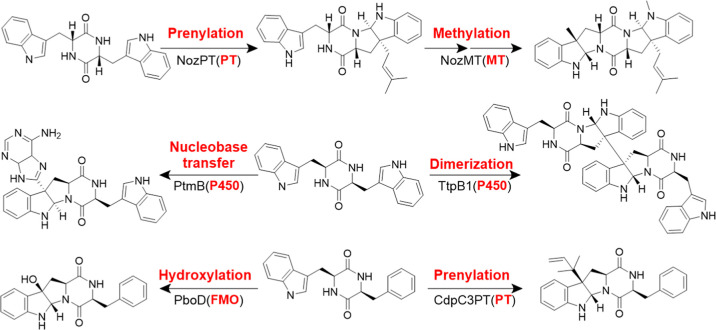 Figure 1
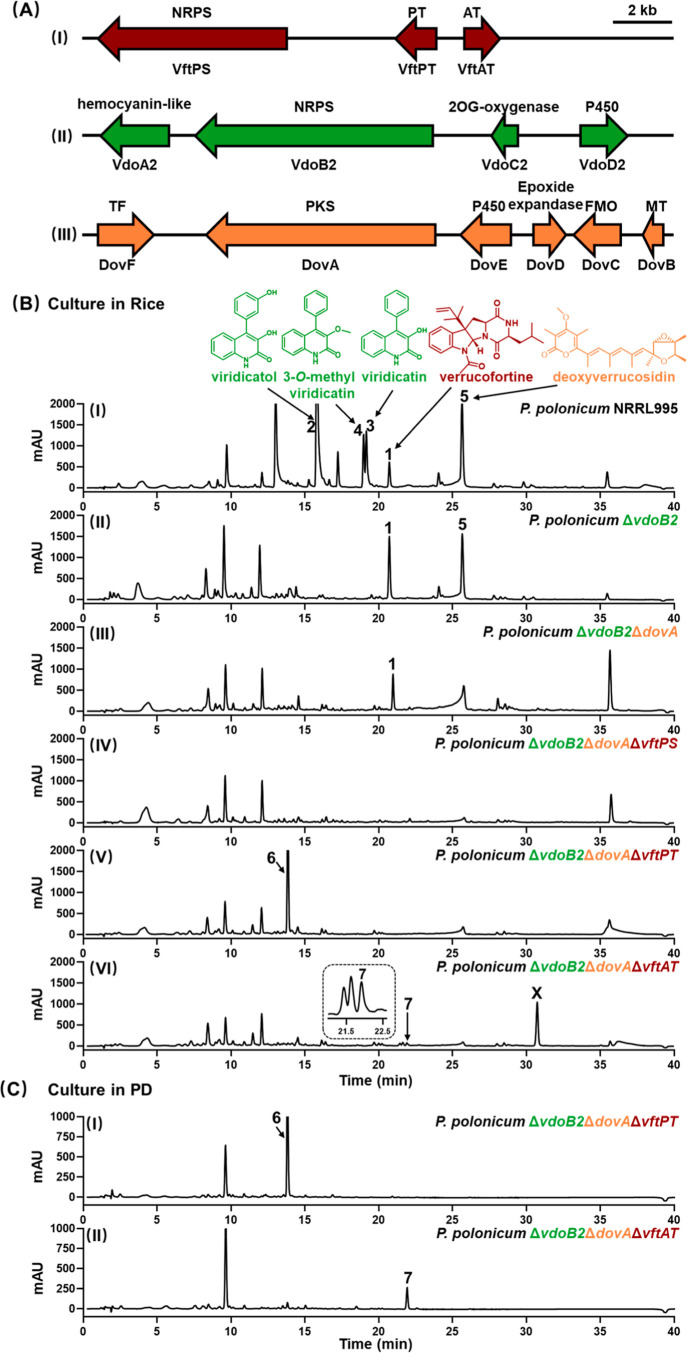 Figure 2
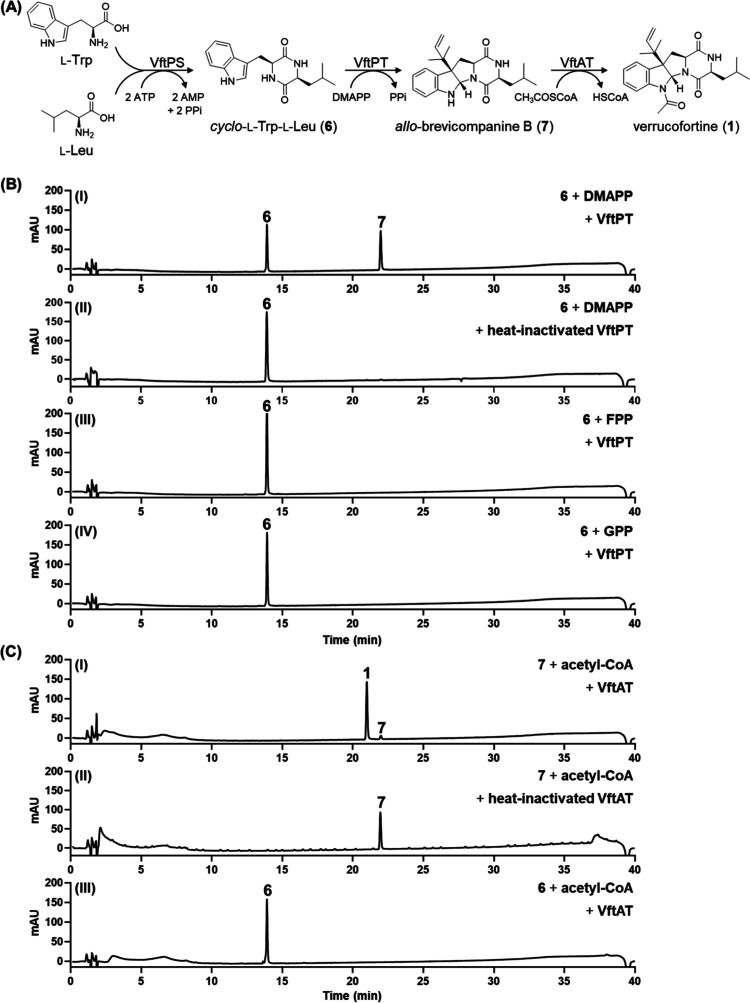 Figure 3
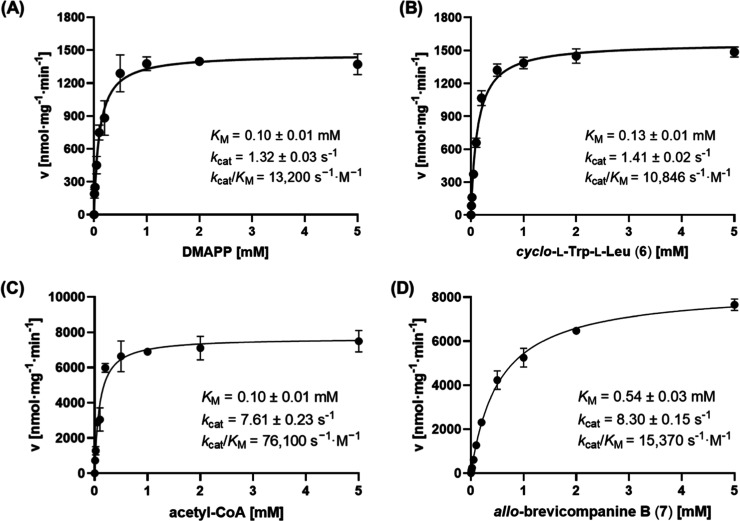 Figure 4
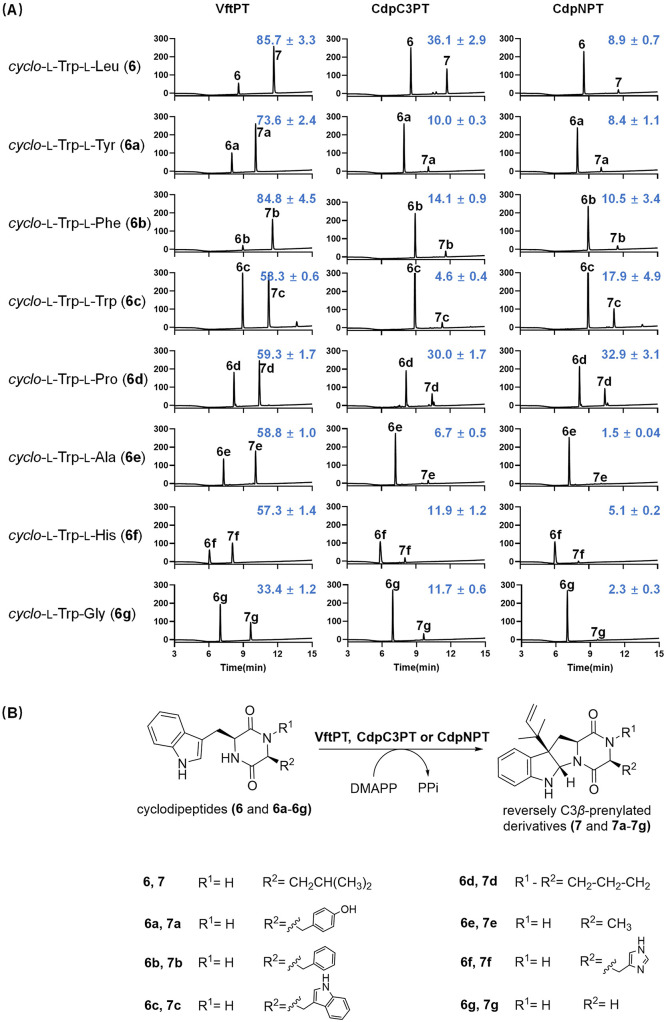 Figure 5
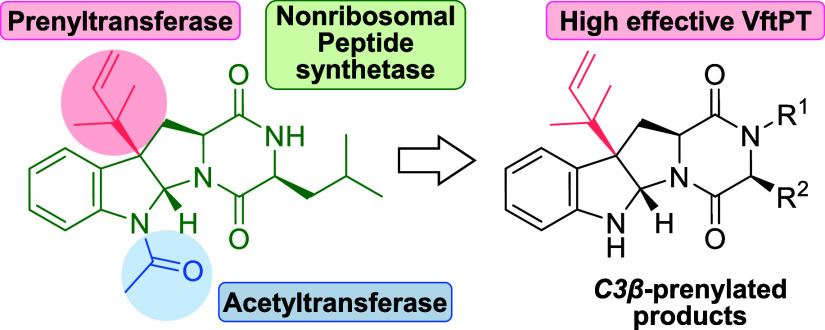 Figure 6
Peer Reviews
No public reviews on file for this paper yet. If you reviewed it on a platform where reviews are public (OpenReview, ICLR, NeurIPS, ICML), you can paste yours below so the community can read it here.
Videos
No videos yet. Explain this paper in a talk, walkthrough, or lecture? Add one.
Taxonomy
TopicsMicrobial Natural Products and Biosynthesis · Plant biochemistry and biosynthesis · Biochemical and Structural Characterization