Use of the Perceval Sutureless Valve in Patients with a Type 0 Bicuspid Aortic Valve
Ryaan EL-Andari, Sabin J. Bozso, Liang Cao, Zhaoyun Cheng, Shaohua Wang

TL;DR
This paper shows that the Perceval sutureless valve can be safely used in patients with a specific type of bicuspid aortic valve.
Contribution
A modified technique using three guiding sutures for implanting the Perceval valve in type 0 bicuspid aortic valves is described.
Findings
Six patients with type 0 BAV underwent successful aortic valve replacement using the Perceval valve.
No perivalvular leak or in-hospital mortality was observed in the cohort.
Surgical modifications based on patient anatomy are necessary for safe implantation.
Abstract
The valve implantation technique for using a Perceval valve in a type 0 bicuspid aortic valve (BAV) is modified with 3 guiding sutures being placed 120˚ apart, creating 3 neo-sinuses. Six patients with a type 0 BAV underwent aortic valve replacement with the Perceval sutureless valve. The mean age was 68.0 years, and 3 patients were male. No perivalvular leak occurred postoperatively, and no in-hospital mortality occurred in this cohort. The Perceval valve can be implanted safely in patients with a type 0 BAV, although careful consideration of patient anatomy intraoperatively is required to determine the required surgical modifications.
Genes, proteins, chemicals, diseases, species, mutations and cell lines named across the full text — each resolved to its canonical identifier and authoritative record.
Click any figure to enlarge with its caption.
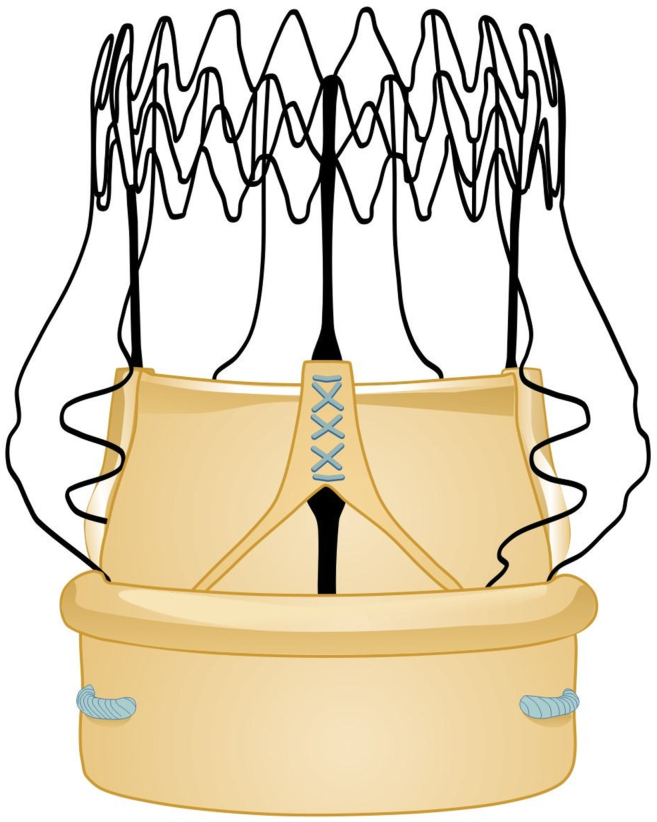 Figure 1
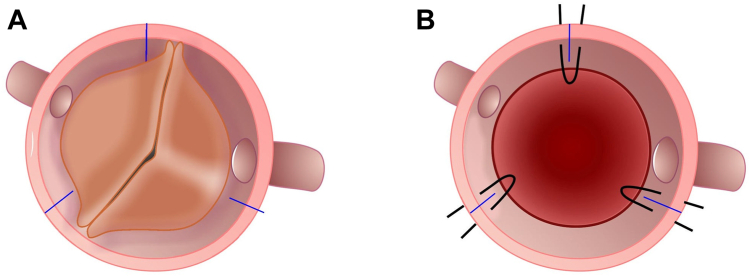 Figure 2
Peer Reviews
No public reviews on file for this paper yet. If you reviewed it on a platform where reviews are public (OpenReview, ICLR, NeurIPS, ICML), you can paste yours below so the community can read it here.
Videos
No videos yet. Explain this paper in a talk, walkthrough, or lecture? Add one.
Taxonomy
TopicsCardiac Valve Diseases and Treatments · Aortic Disease and Treatment Approaches · Congenital Heart Disease Studies