Electronically Driven Magnetoelectric Coupling in Co/La:Hf0.5Zr0.5O2 Heterostructures for Energy-Efficient Neuromorphic Computing
Alberto Quintana, Cesar Magen, Mehrdad Ghiasabadi Farahani, Wenjing Dong, Jingye Zou, Nico Dix, Zheng Ma, Enric Menéndez, Michael Foerster, Miguel Angel Niño, Claudio Cazorla, Jordi Sort, Florencio Sánchez, Ignasi Fina

TL;DR
This paper shows how electric fields can efficiently control magnetism in a material system compatible with modern electronics, enabling energy-efficient computing.
Contribution
The novel contribution is demonstrating electrically driven magnetoelectric coupling in a CMOS-compatible Co/La:Hf0.5Zr0.5O2 system with low energy consumption and multilevel response.
Findings
Electric field induces a 5% modulation of saturation magnetization in cobalt via ferroelectric switching.
Energy consumption is as low as 6 nJ with minimal leakage current (10 nA/cm² at 500 mV).
Multilevel magnetoelectric response suggests potential for neuromorphic computing applications.
Abstract
Magnetoelectric materials enable low-power memory devices by leveraging the electric control of magnetization. The discovery of ferroelectricity in doped hafnia has unlocked further opportunities since the distinct ferroelectric switching mechanism in this material can enable robust and multilevel modulation of magnetization by electric field, if combined with appropriate magnetic materials. Here, we demonstrate a 5% electric field-induced modulation of the saturation magnetization in a cobalt layer, driven by ferroelectric switching of an adjacent epitaxial La(1%):Hf0.5Zr0.5O2 film. Dichroic imaging with synchrotron radiation confirms that ferroelectric switching induces a magnetic change. We show that the response time is faster than 500 ns (limited by the setup time resolution threshold) and that energy consumption is 6 nJ. This low energy consumption is mainly enabled by the…
Genes, proteins, chemicals, diseases, species, mutations and cell lines named across the full text — each resolved to its canonical identifier and authoritative record.
Click any figure to enlarge with its caption.
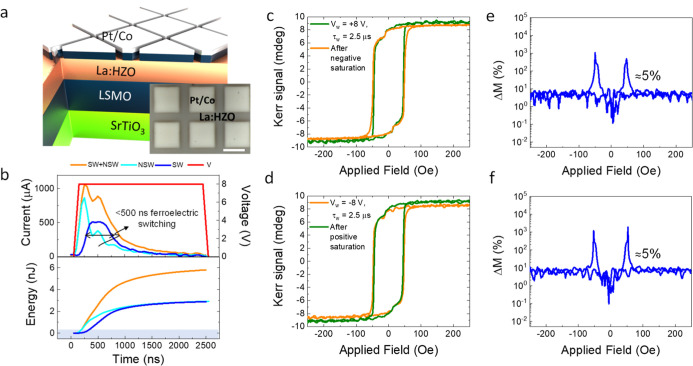 Figure 1
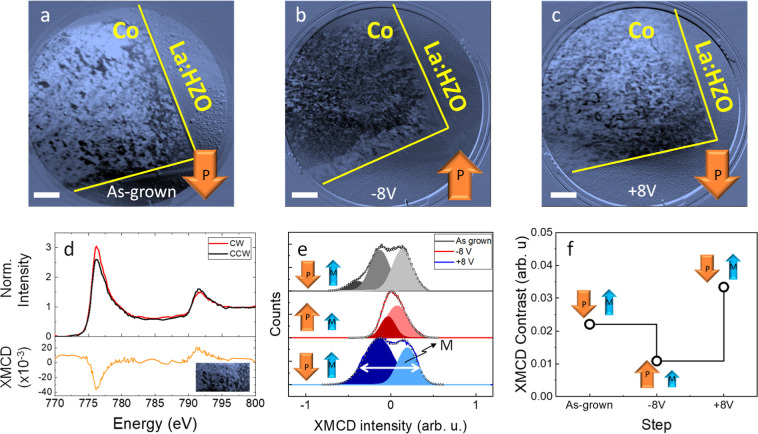 Figure 2
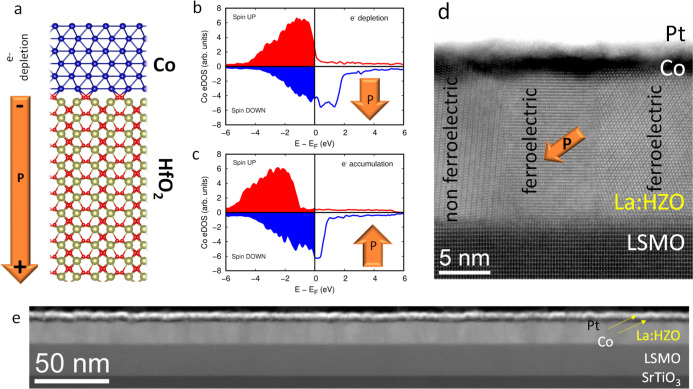 Figure 3
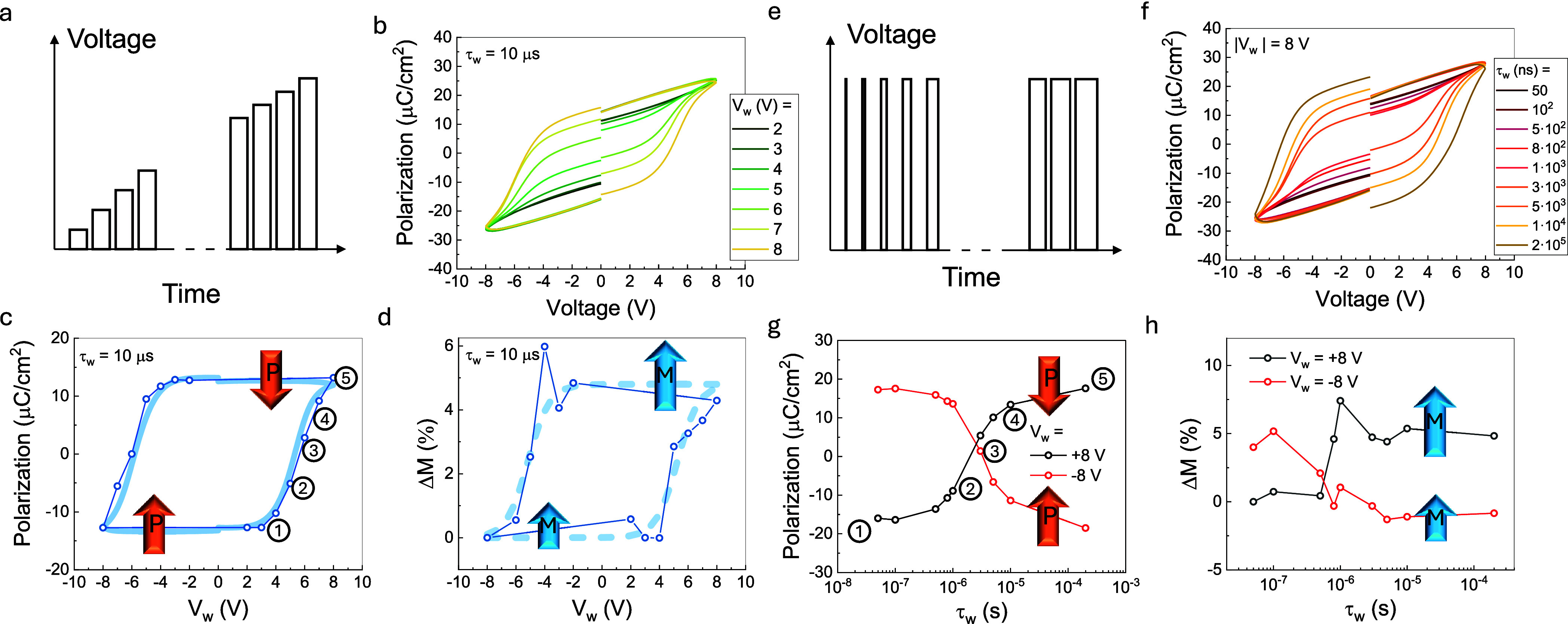 Figure 4
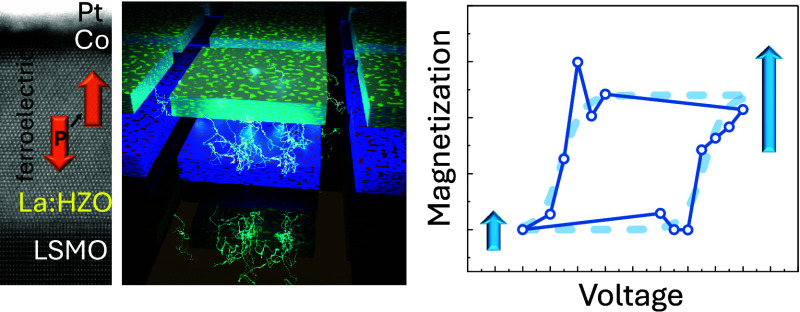 Figure 5
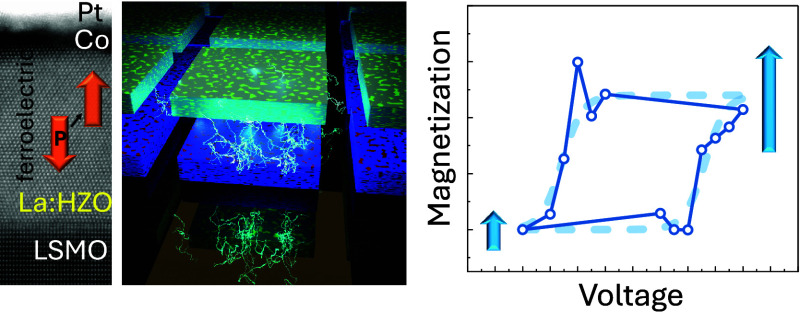 Figure 6
Peer Reviews
No public reviews on file for this paper yet. If you reviewed it on a platform where reviews are public (OpenReview, ICLR, NeurIPS, ICML), you can paste yours below so the community can read it here.
Videos
No videos yet. Explain this paper in a talk, walkthrough, or lecture? Add one.
Taxonomy
TopicsMultiferroics and related materials · Magnetic properties of thin films · Ferroelectric and Negative Capacitance Devices