Elemental Composition and Degradation Rate Impact the Biocompatibility of Copper Chalcogenide Nanocrystals
Xingjian Zhong, G. Perry Katsarakes, Savani Nagarkar, Allison M. Dennis

TL;DR
This paper studies how the composition and degradation of copper-based nanocrystals affect their toxicity in biological systems.
Contribution
The study introduces a quantitative degradation assay and shows how modifying coatings can reduce nanocrystal toxicity.
Findings
CuInS2 and CuFeS2 degrade rapidly in artificial lysosomal fluid, releasing indium and iron ions.
CuInS2 shows higher cytotoxicity due to indium-induced necrosis compared to Cu2–xS and CuFeS2.
A modified polymer coating reduces both degradation and toxicity of CuInS2.
Abstract
Copper chalcogenide nanocrystals (NCs) are promising candidates for biophotonic applications due to their tunable optical properties. Concrete methods to examine the relationship between their degradation and toxicity are necessary to enable the development of nanoconstructs with reduced toxicity. This study compares the degradation and acute cytotoxicity of three compositions of micelle-coated copper chalcogenide NCs: the fluorescent semiconductor copper indium sulfide (CuInS2), and two plasmonic semiconductors, copper sulfide (Cu2–x S) and chalcopyrite copper iron sulfide (CuFeS2). We developed a quantitative degradation assay to assess ion release from these ultrasmall nanocrystals, revealing that while all three particles biodegrade, CuInS2 and CuFeS2 undergo rapid degradation in an artificial lysosomal fluid, leading to a burst release of indium and iron ions. In cellular toxicity…
Genes, proteins, chemicals, diseases, species, mutations and cell lines named across the full text — each resolved to its canonical identifier and authoritative record.
Click any figure to enlarge with its caption.
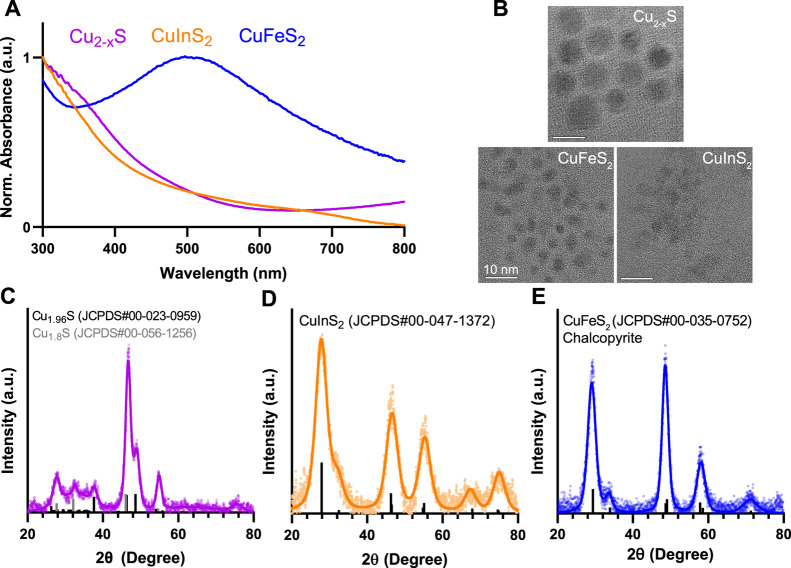 Figure 1
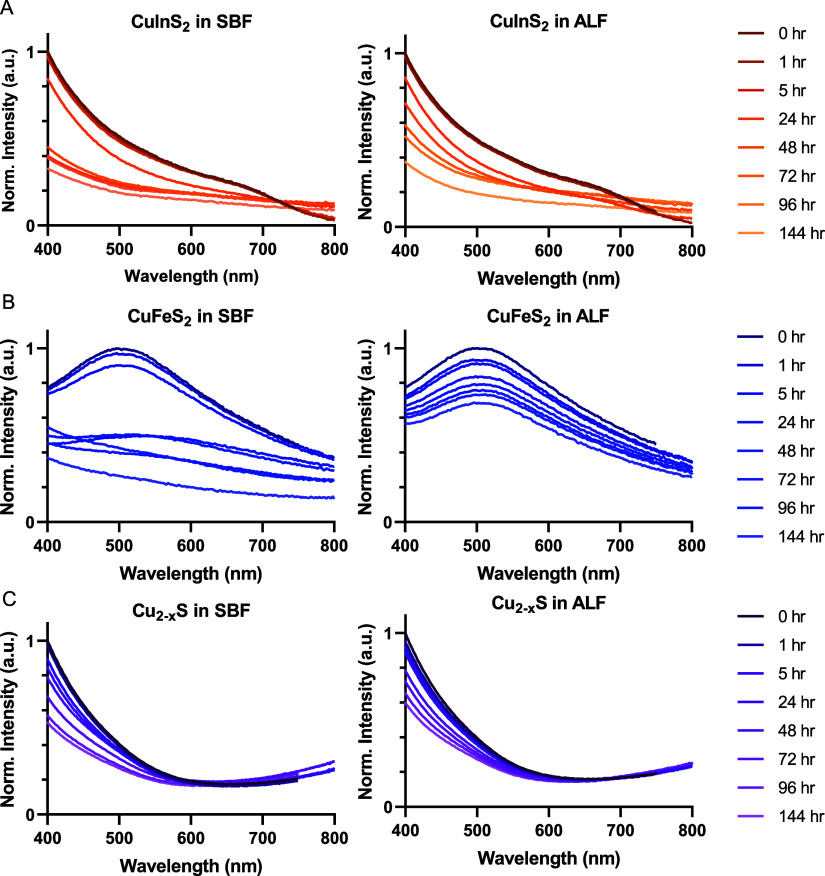 Figure 2
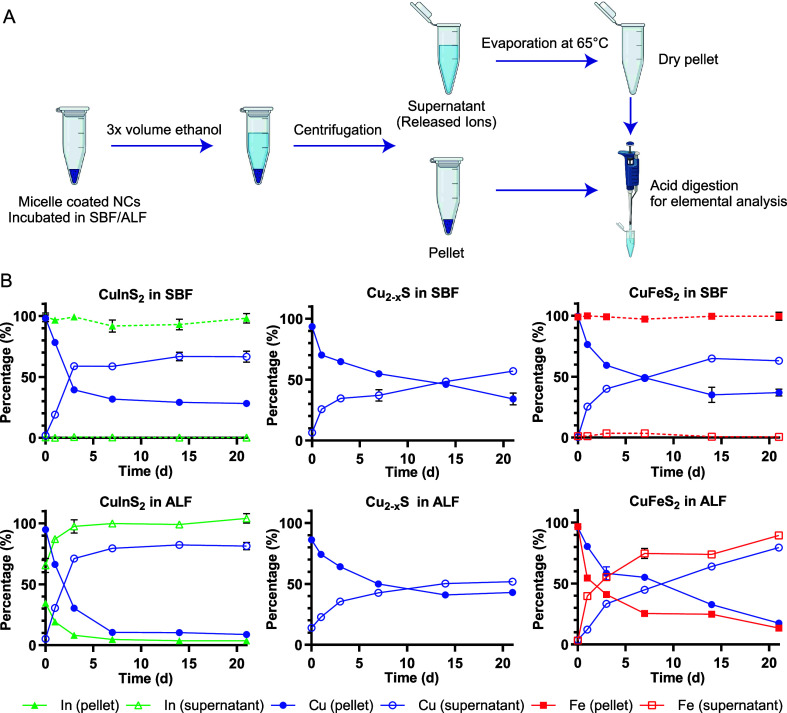 Figure 3
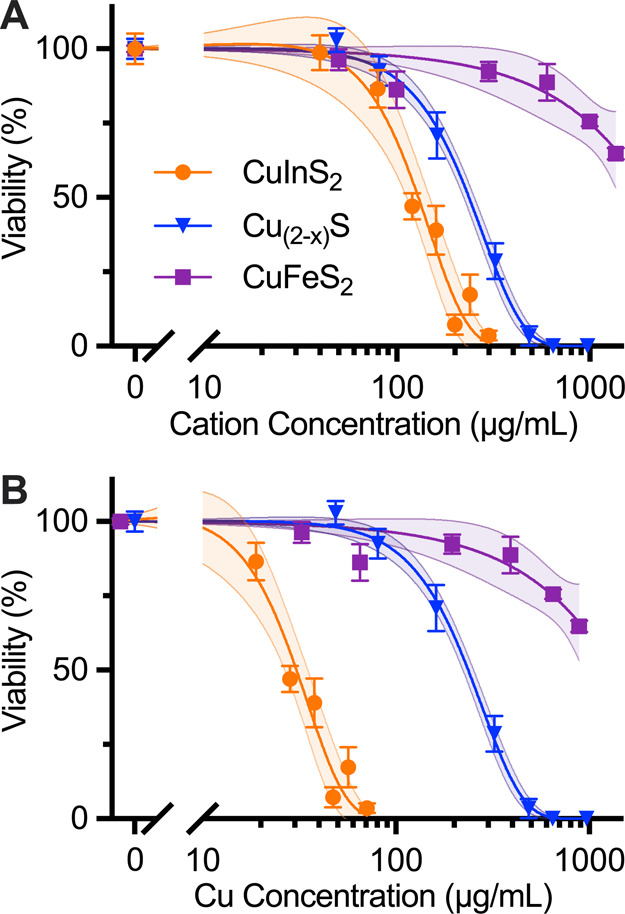 Figure 4
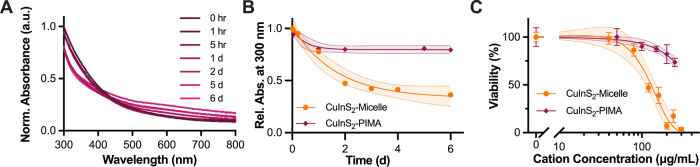 Figure 5
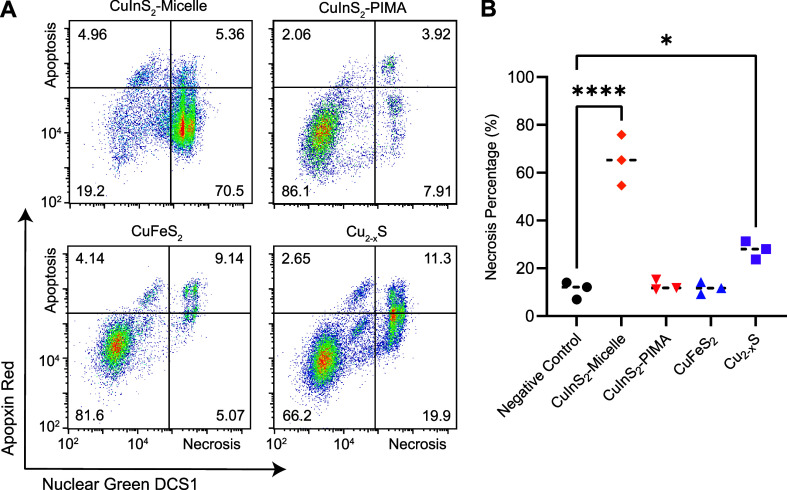 Figure 6
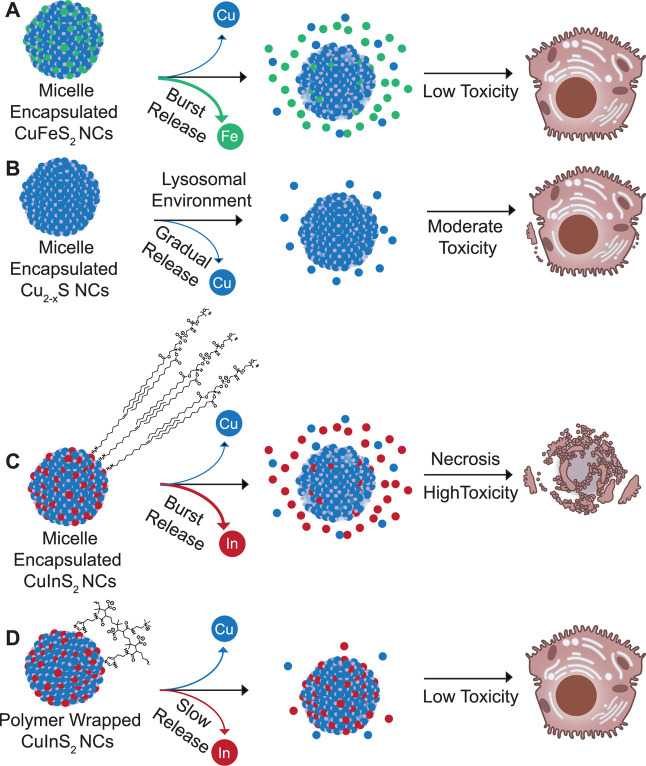 Figure 7
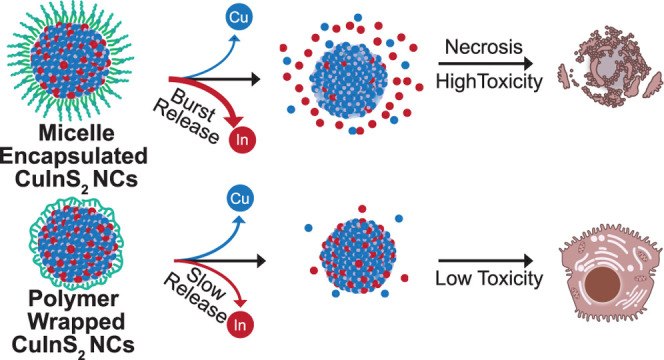 Figure 8
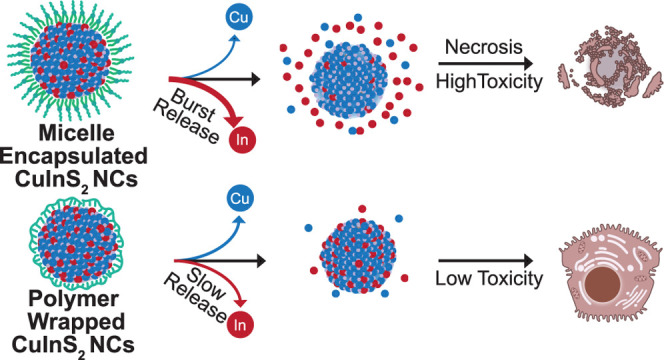 Figure 9
Peer Reviews
No public reviews on file for this paper yet. If you reviewed it on a platform where reviews are public (OpenReview, ICLR, NeurIPS, ICML), you can paste yours below so the community can read it here.
Videos
No videos yet. Explain this paper in a talk, walkthrough, or lecture? Add one.
Taxonomy
TopicsAdvanced Nanomaterials in Catalysis · Selenium in Biological Systems · Pineapple and bromelain studies