Clinical improvement of protein-losing enteropathy after SGLT2 inhibitor therapy in an adult with failing Fontan circulation: a case report
Emanuela C D’Angelo, Veronica Bordonaro, Rosalinda Palmieri, Micol Rebonato, Claudia Montanaro

TL;DR
A patient with a failing Fontan circulation and protein-losing enteropathy showed clinical improvement after treatment with SGLT2 inhibitors.
Contribution
Demonstrates potential therapeutic benefit of SGLT2 inhibitors in managing Fontan failure complicated by protein-losing enteropathy.
Findings
SGLT2 inhibitor therapy led to reduced ascites and stabilized serum protein levels in a patient with failing Fontan circulation.
Magnetic resonance lymphoscintigraphy revealed lymphatic congestion and leakage, supporting the role of lymphatic dysfunction in the patient's condition.
Conventional treatments failed to manage the patient's condition before SGLT2 inhibitor therapy was initiated.
Abstract
Sodium–glucose cotransporter 2 inhibitors (SGLT-2i) have proven benefits in patients with biventricular heart failure; however, their role in patients with univentricular physiology and failing Fontan circulation (FC) remains largely unexplored. A 21-year-old male with failing FC, preserved ejection fraction, and protein-loosing enteropathy (PLE) presented to our Adult Congenital Heart Disease Unit for evaluation. Born with a L-transposition of the great vessels with an interventricular septal defect and antero-superior rudimentary chamber, he underwent a Fontan completion at age 5. Since he was 16 years old, he had multiple admissions for FC failure complicated by PLE and ascites, which did not respond to conventional treatments including diuretics, corticosteroids, albumin, and immunoglobulin infusions. Despite the stenosis of the extracardiac conduit, treated by the placement of a…
Genes, proteins, chemicals, diseases, species, mutations and cell lines named across the full text — each resolved to its canonical identifier and authoritative record.
Click any figure to enlarge with its caption.
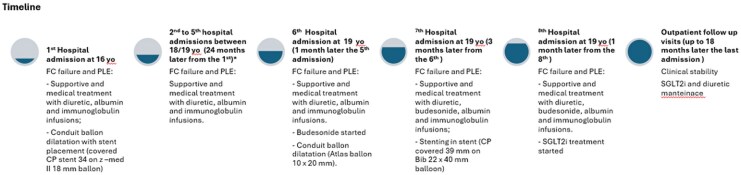 Figure 1
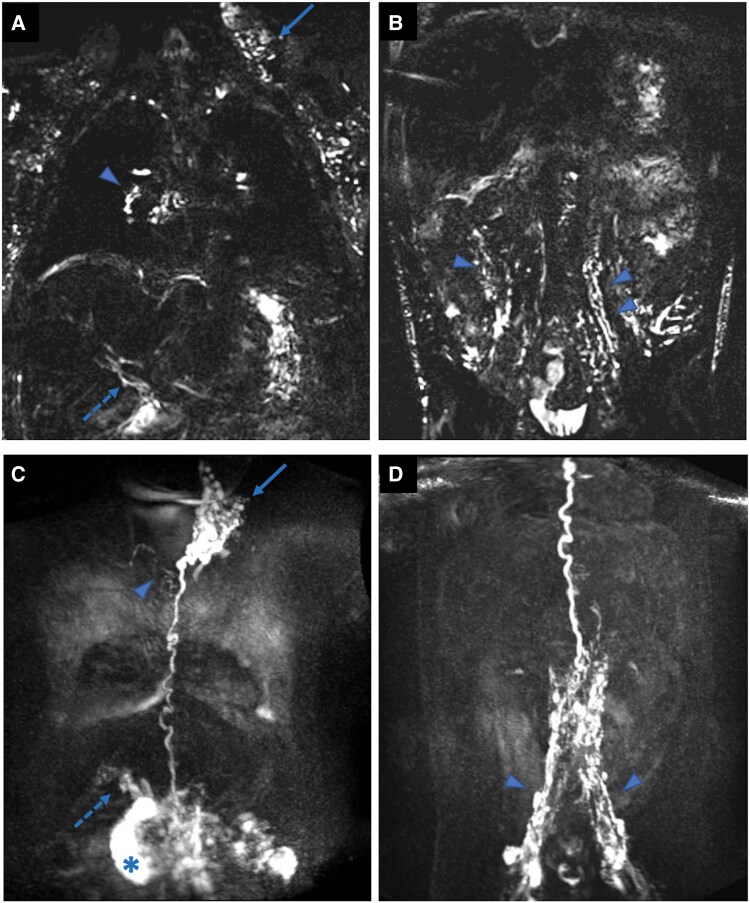 Figure 2
 Figure 3
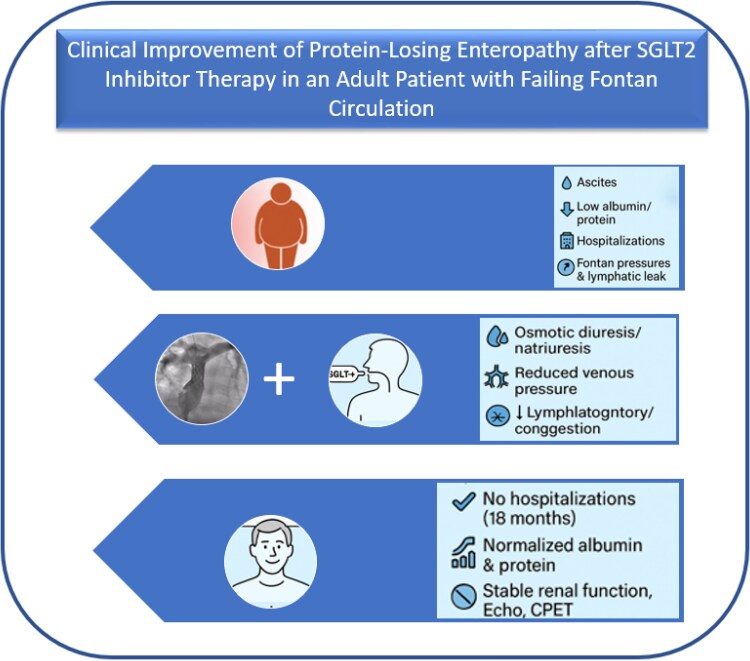 Figure 4
Peer Reviews
No public reviews on file for this paper yet. If you reviewed it on a platform where reviews are public (OpenReview, ICLR, NeurIPS, ICML), you can paste yours below so the community can read it here.
Videos
No videos yet. Explain this paper in a talk, walkthrough, or lecture? Add one.
Taxonomy
TopicsCongenital Heart Disease Studies · Cardiac Arrhythmias and Treatments · Heart Failure Treatment and Management