Neuromuscular Block and Video Laryngoscope to Facilitate Intubation—A Survey of Current Practice in Denmark and Sweden
Åse Lodenius, Louise Holland‐Bill, Emil Ørskov Ipsen, Maria Cronhjort, Arash Afshari, Matias Vested, Andreas Creutzburg, Lars Hyldborg Lundstrøm, Helene Korvenius Nedergaard, Anders Kehlet Nørskov, Mette Schytt Price, Mette Schytt Price, Christian Jessen, Mathias Sinkbæk Thomsen

TL;DR
This study surveyed Danish and Swedish anesthetists about their preferences for using neuromuscular blocking agents and video laryngoscopes during intubation, finding significant differences in practice between the two countries.
Contribution
The study highlights regional variations in the use of neuromuscular blocking agents and video laryngoscopes for intubation, emphasizing the need for updated evidence-based guidelines.
Findings
Swedish anesthetists show a much higher preference for neuromuscular blocking agents compared to Danish anesthetists.
A significant number of Danish anesthetists use high-dose opioids without neuromuscular blocking agents, facilitated by video laryngoscopes.
Video laryngoscopes are more accessible outside operating rooms in Denmark than in Sweden.
Abstract
Neuromuscular blocking agents (NMBA) provide optimal conditions for tracheal intubation. A high dose of opioid can be used as an alternative but may give suboptimal conditions for intubation. The use of a video laryngoscope for intubation might eliminate this potential difference. A survey examining clinical practice regarding tracheal intubation with and without NMBA and use of video laryngoscopes was conducted in Sweden and Denmark. 1771 out of 3181 (56%) of invited anaesthetists responded. Overall, 1365/1771 (77%) preferred using NMBAs for non‐acute tracheal intubation with a considerably higher NMBA preference in Sweden 1011/1073 (94%) than in Denmark 354/700 (51%). A high proportion of Danish anaesthetists 327/700 (47%) compared to 40/1071 (4%) of Swedish anaesthetists reported primarily using opioids without NMBA. Remifentanil was the preferred opioid (1158/1361 (85%)) for…
Genes, proteins, chemicals, diseases, species, mutations and cell lines named across the full text — each resolved to its canonical identifier and authoritative record.
Click any figure to enlarge with its caption.
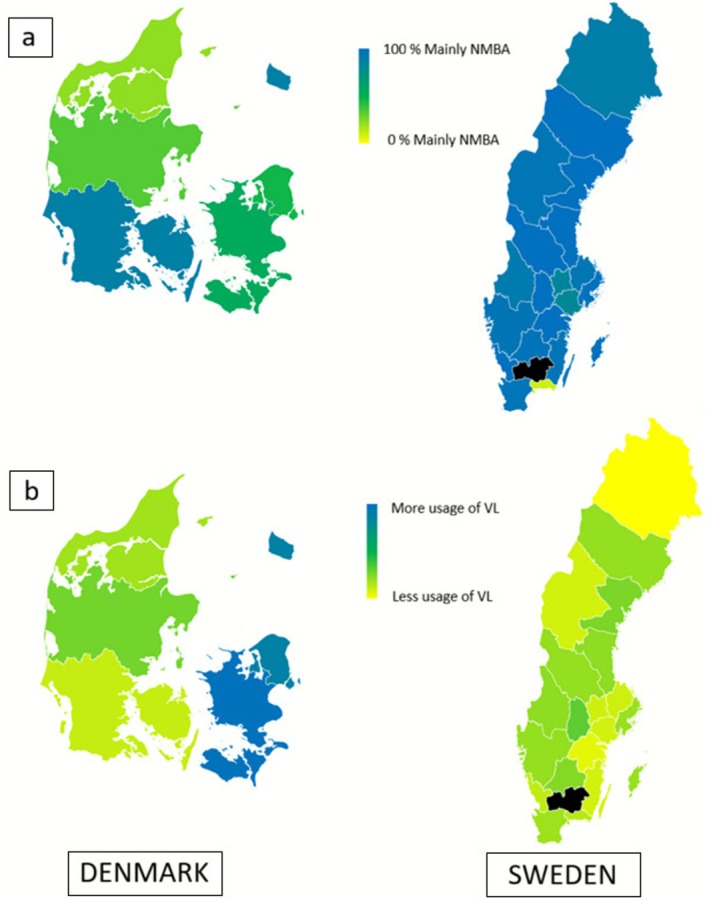 Figure 1
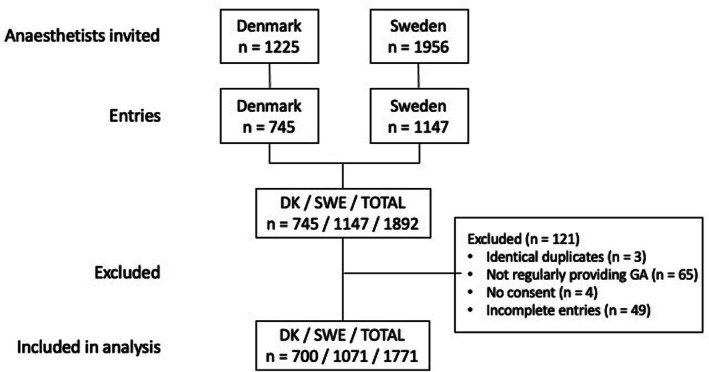 Figure 2
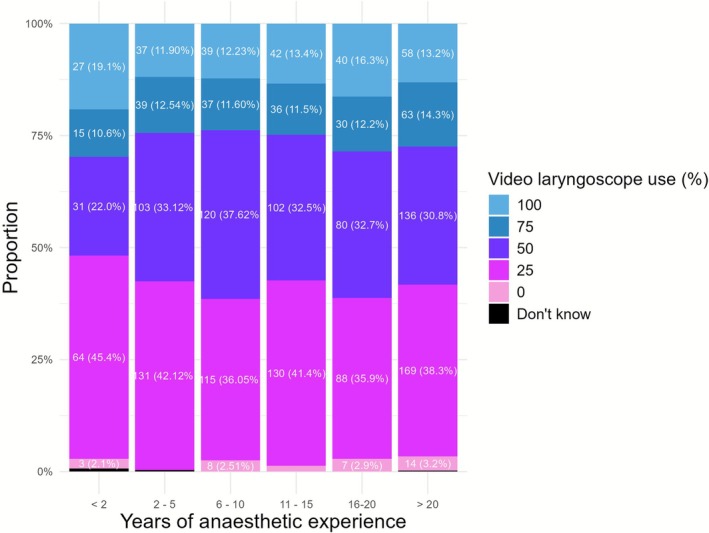 Figure 3
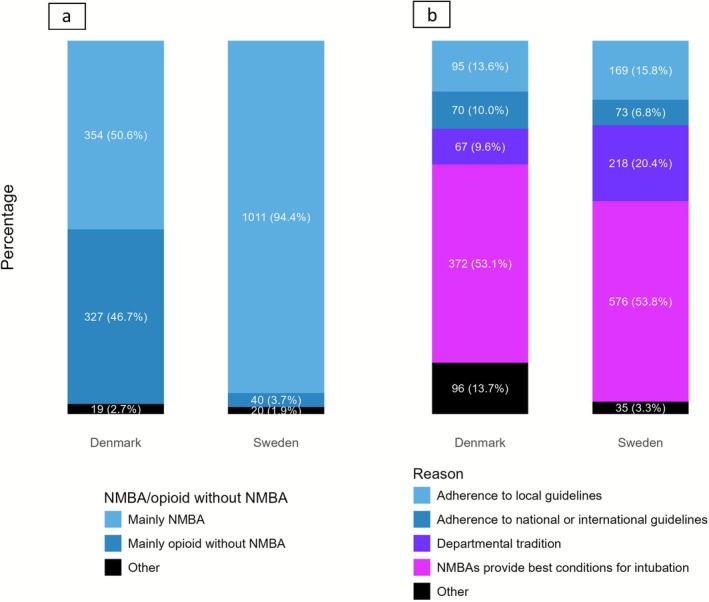 Figure 4
Peer Reviews
No public reviews on file for this paper yet. If you reviewed it on a platform where reviews are public (OpenReview, ICLR, NeurIPS, ICML), you can paste yours below so the community can read it here.
Videos
No videos yet. Explain this paper in a talk, walkthrough, or lecture? Add one.
Taxonomy
TopicsAirway Management and Intubation Techniques · Anesthesia and Sedative Agents · Nausea and vomiting management