Stillbirths by maternal-obstetric characteristics and Robson classification system: a cross-sectional study from eight district hospitals in Bangladesh
Lubna Hossain, Trisha Mallick, Abu Sayeed, Md. Lutful Kader, Md. Akib Al-Zubayer, Farhia Azrin, Hassan Rushekh Mahmood, Muna Shalima Jahan, Farhana Dewan, Md. Mahmudul Hassan Khan Shovon, Nondo Saha, Fariya Rahman, Md Refat Uz Zaman Sajib, Mohammad Delwer Hossain Hawlader

TL;DR
This study examines stillbirth causes in Bangladesh hospitals, finding most deaths occur during labor and highlighting preventable gaps in care.
Contribution
The study applies the Robson classification system to identify high-risk groups and preventable factors for stillbirth in district hospitals in Bangladesh.
Findings
Stillbirth prevalence varied across facilities (0.9–6.6%) with 56.6% occurring intrapartum.
Advanced maternal age, preterm birth, and lack of antenatal care were significantly associated with stillbirth.
Intrapartum stillbirths were most common in specific Robson groups, indicating targeted intervention opportunities.
Abstract
Understanding maternal-obstetric determinants is key to stillbirth prevention. The Robson classification system enables monitoring and identification of high-risk groups. This study examined the prevalence and distribution of antepartum and intrapartum stillbirths by maternal-obstetric characteristics and Robson groups in district hospitals of Bangladesh. We conducted a cross-sectional analysis using prospectively collected data from Phases 4 and 5 (August 2022–June 2023) of a multi-phase implementation research study on the Robson classification system in eight district hospitals. All deliveries at ≥ 28 weeks of gestation were included, classified as live births, antepartum stillbirths (death before onset of labour), and intrapartum stillbirths (death after onset of labour). Descriptive analyses estimated stillbirth prevalence by timing, maternal and obstetric factors, and Robson…
Genes, proteins, chemicals, diseases, species, mutations and cell lines named across the full text — each resolved to its canonical identifier and authoritative record.
Click any figure to enlarge with its caption.
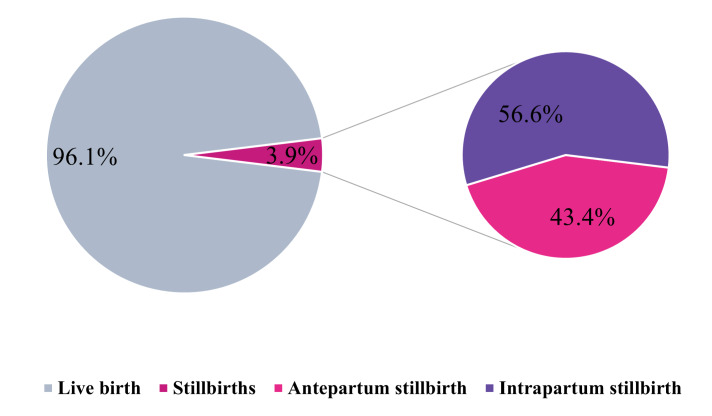 Figure 1
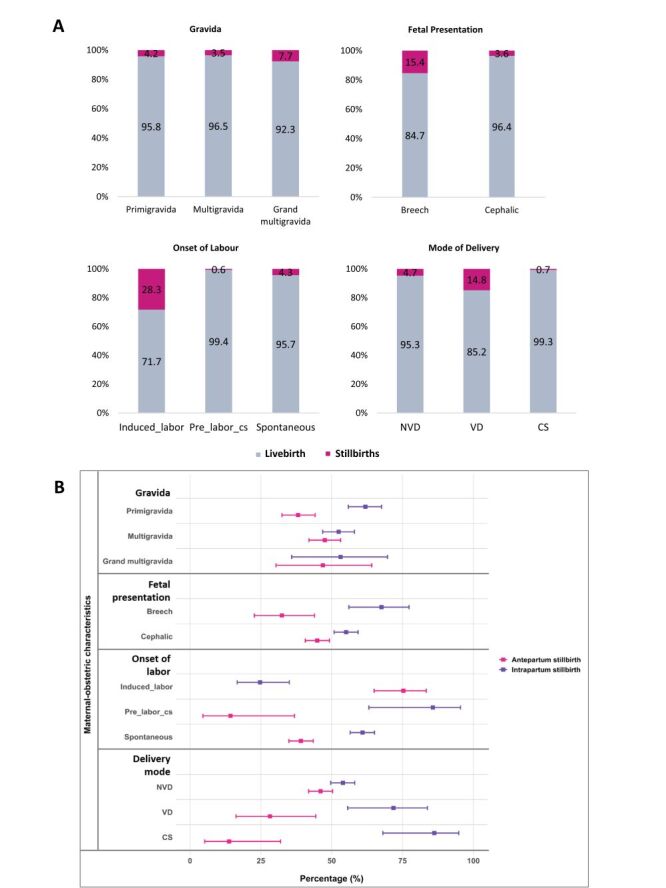 Figure 2
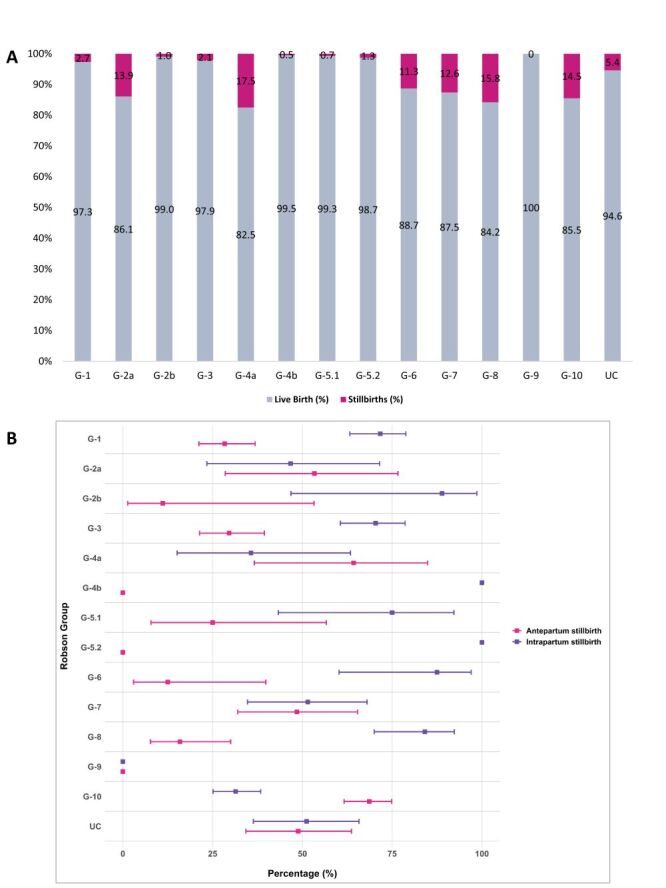 Figure 3
Peer Reviews
No public reviews on file for this paper yet. If you reviewed it on a platform where reviews are public (OpenReview, ICLR, NeurIPS, ICML), you can paste yours below so the community can read it here.
Videos
No videos yet. Explain this paper in a talk, walkthrough, or lecture? Add one.
Taxonomy
TopicsGlobal Maternal and Child Health · Maternal and Perinatal Health Interventions · Maternal and fetal healthcare