Determining the Impact of a Physiotherapist-Led Primary Care Model for Low Back Pain: Protocol and Analysis Plan for a Cluster Randomized Controlled Trial and Embedded Process Evaluation
Jordan Miller, Catherine Donnelly, Chad McClintock, Kevin Varette, Yeimi Camargo, Jacquelyn Marsh, Monica Taljaard, Mir Sanim Al Mamun, Geneviève Bacchus, David Barber, Lynn Cooper, Simon French, Jonathan Hill, Michael Green, Joy MacDermid, Kathleen Norman, Julie Richardson

TL;DR
This study tests if a physiotherapist-led primary care model for low back pain improves patient outcomes and reduces costs compared to traditional physician-led care.
Contribution
The study introduces a novel primary care model led by physiotherapists for low back pain, with a comprehensive evaluation of effectiveness and system impact.
Findings
A cluster randomized trial will compare physiotherapist-led care to physician-led care for low back pain.
The study will assess disability, pain, quality of life, and cost-effectiveness over one year.
A process evaluation will explore implementation and contextual factors influencing the model.
Abstract
Low back pain (LBP) is a common and disabling condition that is costly for health systems and society. Interprofessional primary care models may improve care quality and reduce this burden. This protocol and analysis plan communicates the methods for a cluster randomized trial with the following objectives: (1) evaluate the effectiveness of a physiotherapist-led (PT-led) primary care model for LBP at improving disability (primary outcome), pain intensity, quality of life, global rating of change, patient satisfaction, and adverse events compared with usual physician-led primary care; and (2) determine the impact of the PT-led primary care model for LBP on the health care system and society (health care access, health care use, missed work, cost-effectiveness). Both objectives are evaluated over a 1-year period. A multimethod process evaluation is embedded to assess model…
Genes, proteins, chemicals, diseases, species, mutations and cell lines named across the full text — each resolved to its canonical identifier and authoritative record.
Click any figure to enlarge with its caption.
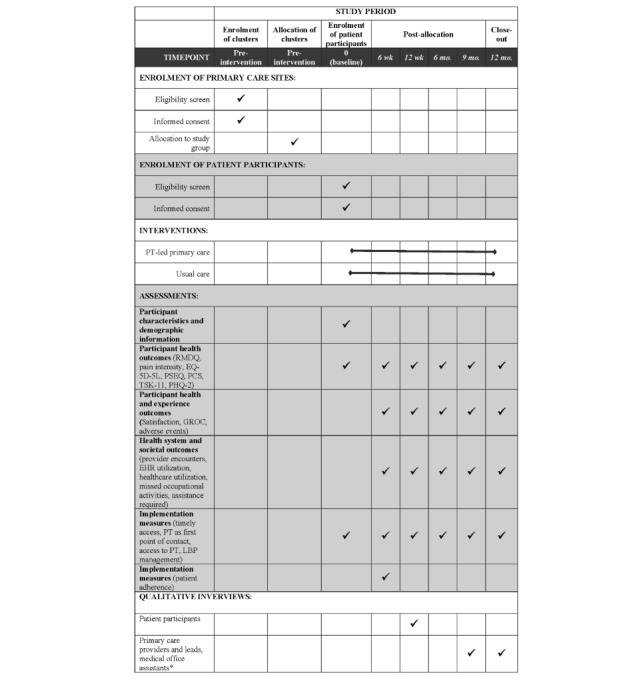 Figure 1
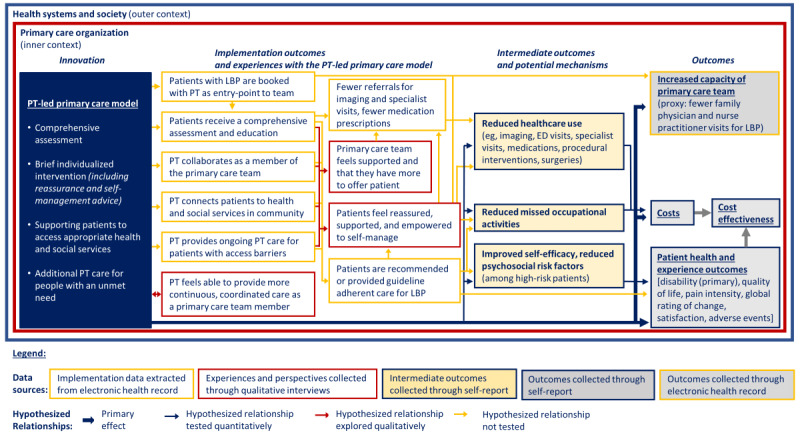 Figure 2
Peer Reviews
No public reviews on file for this paper yet. If you reviewed it on a platform where reviews are public (OpenReview, ICLR, NeurIPS, ICML), you can paste yours below so the community can read it here.
Videos
No videos yet. Explain this paper in a talk, walkthrough, or lecture? Add one.
Taxonomy
TopicsMusculoskeletal pain and rehabilitation · Occupational Health and Performance · Health Policy Implementation Science