Impact of GPT-4–Generated Discharge Letters on Patients’ Medical Comprehension: Prospective Crossover Study
Friederike Holderried, Alessandra Sonanini, Christian Stegemann–Philipps, Anne Herrmann–Werner, Philipp Spitzer, Martina Guthoff, Nils Heyne, Konstantin Sering, Martin Holderried, Felix Eisinger

TL;DR
GPT-4 generated discharge letters improved patients' understanding of medical information compared to standard letters, especially for medication and organization details.
Contribution
This study provides empirical evidence that AI-generated patient-centered discharge letters enhance medical comprehension and reduce cognitive load.
Findings
GPT-4 letters improved comprehension of safety-relevant information compared to standard discharge letters.
The greatest improvements were observed in medication and organizational content fields.
Higher-order understanding, such as risk prevention, was less effectively supported by AI-generated letters.
Abstract
Patients often struggle to understand standard hospital discharge letters, increasing the risk of medication errors and misunderstandings. According to cognitive load theory (CLT), complex, information-dense texts can overload working memory and impair comprehension. Artificial intelligence tools that generate patient-centered versions could help reduce extraneous cognitive load and bridge this gap. However, evidence for their effectiveness remains limited. This study aimed to evaluate whether GPT-4 (OpenAI)–generated patient-centered letters improve standardized patients’ retention and understanding of safety-relevant medical information compared with standard hospital discharge letters, and to explore potential effects on cognitive load as described by CLT. In this prospective, randomized, crossover study, 48 trained standardized patients received a conventional discharge letter for…
Genes, proteins, chemicals, diseases, species, mutations and cell lines named across the full text — each resolved to its canonical identifier and authoritative record.
Click any figure to enlarge with its caption.
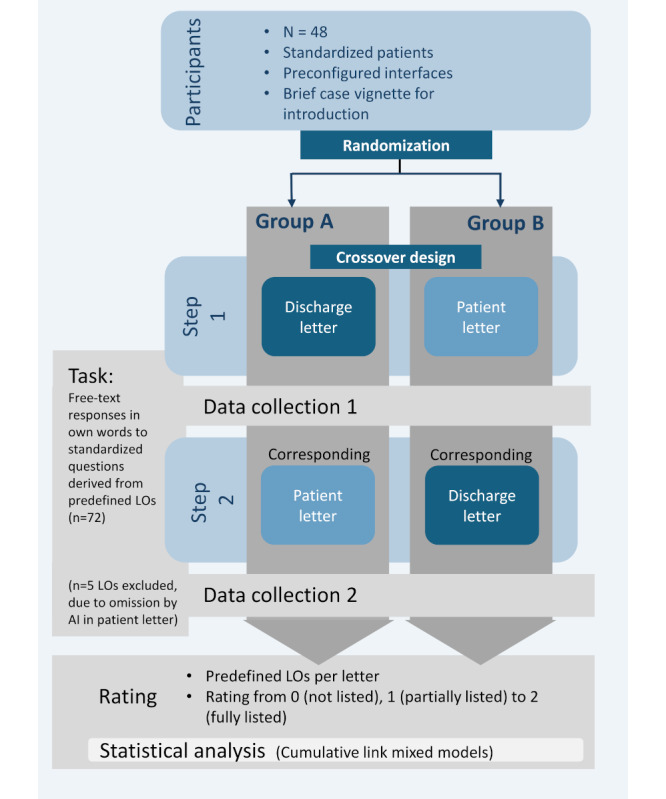 Figure 1
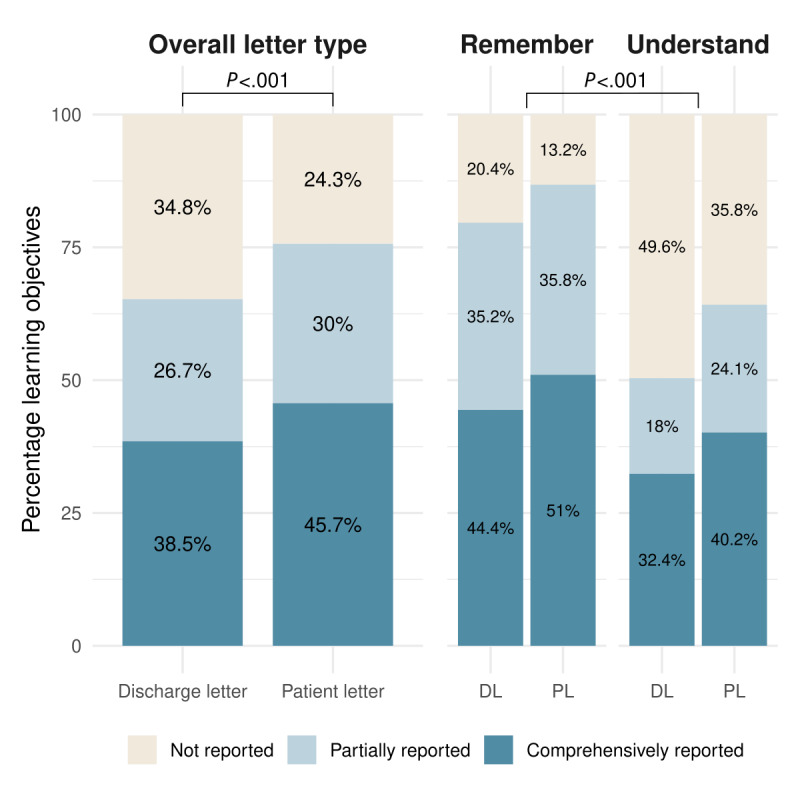 Figure 2
 Figure 3
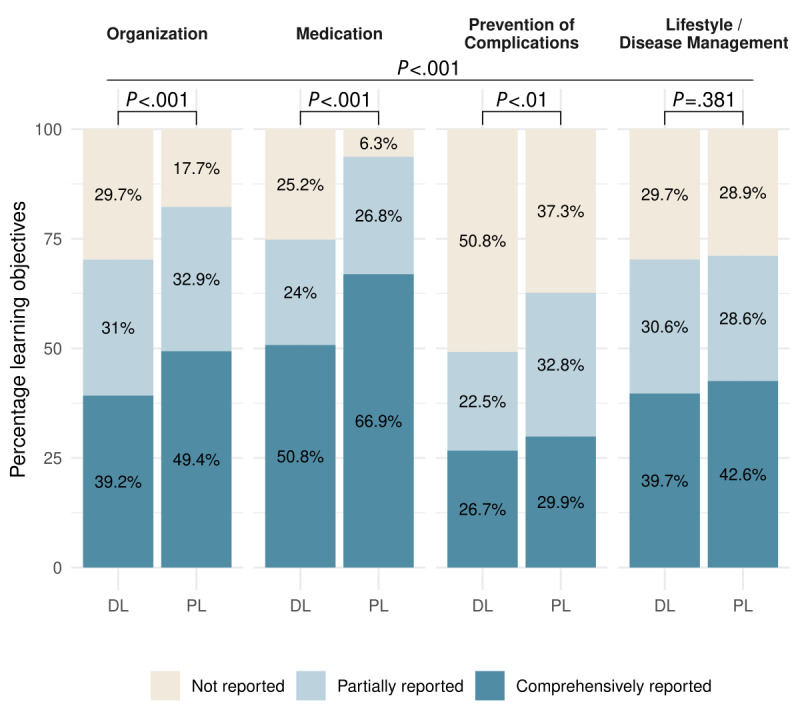 Figure 4
Peer Reviews
No public reviews on file for this paper yet. If you reviewed it on a platform where reviews are public (OpenReview, ICLR, NeurIPS, ICML), you can paste yours below so the community can read it here.
Videos
No videos yet. Explain this paper in a talk, walkthrough, or lecture? Add one.
Taxonomy
TopicsArtificial Intelligence in Healthcare and Education · Patient-Provider Communication in Healthcare · Clinical Reasoning and Diagnostic Skills