Epigenetic regulation of PANoptosis: DNA methylation, histone modifications and non-coding RNAs
Yogendra Singh, Muhammad Afzal, M. Arockia Babu, Surya Nath Pandey, Arcot Rekha, Gaurav Gupta, Imran Kazmi, Sami I. Alzarea, Omar Awad Alsaidan, Waleed Hassan Almalki, Salem Salman Almujri

TL;DR
This paper explores how epigenetic mechanisms like DNA methylation, histone modifications, and non-coding RNAs regulate PANoptosis, a form of programmed cell death important for cancer therapy.
Contribution
The paper introduces a novel framework showing how epigenetic factors collectively control PANoptotic pathways and proposes strategies to enhance cancer treatment.
Findings
DNA methylation suppresses PANoptotic pathways like RIPK3, GSDME, and CASP8, but hypomethylation can restore sensitivity.
BRD4/p300-mediated histone acetylation promotes ZBP1 and NLRP3 transcription while inhibiting inflammasome formation.
ncRNAs like miR-223-3p and lncRNA NEAT1 regulate NLRP3, RIPK3, and GSDMD expression, influencing PANoptosis.
Abstract
PANoptosome (Programmed Necrosis-Apoptosis Optosome) multiprotein complexes mediate the convergence of apoptosis, pyroptosis, and necroptosis. The ability of cells to undergo programmed inflammatory cell death is regulated by the epigenetic control of PANoptotic sensors, adaptors, and effectors, and has pivotal implications for their use in cancer therapies. DNA methylation suppresses the main PANoptotic pathways, such as RIPK3 (Receptor-Interacting Serine/Threonine-Protein Kinase 3), GSDME (Gasdermin E), and CASP8 (Caspase-8) that promote chemoresistance; hypomethylating DNA silencers resume PANoptotic sensitivity. BRD4 (Bromodomain-Containing Protein 4)/p300 (E1A-Associated Protein p300 - Histone Acetyltransferase) -mediated histone acetylation in enhancers (H3K27ac) stimulates ZBP1 (Z-DNA Binding Protein 1), NLRP3 (NOD-Like Receptor Family Pyrin Domain Containing 3), and caspase-8…
Genes, proteins, chemicals, diseases, species, mutations and cell lines named across the full text — each resolved to its canonical identifier and authoritative record.
Click any figure to enlarge with its caption.
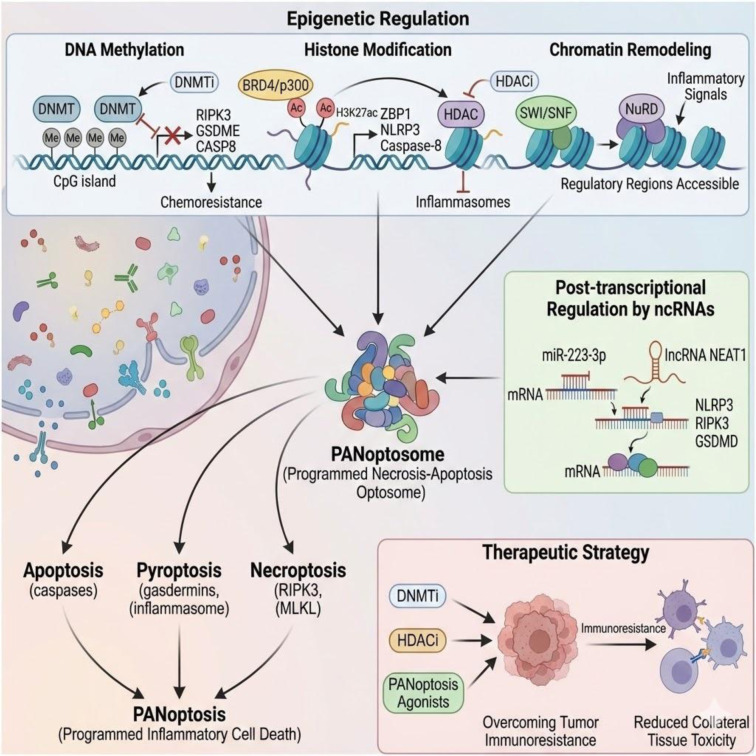 Figure 1
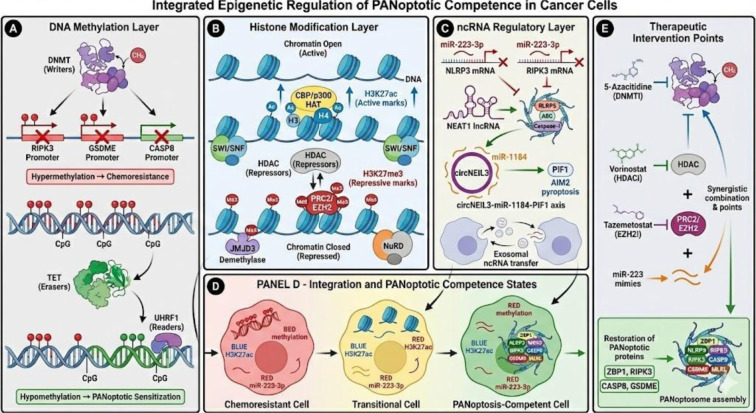 Figure 2
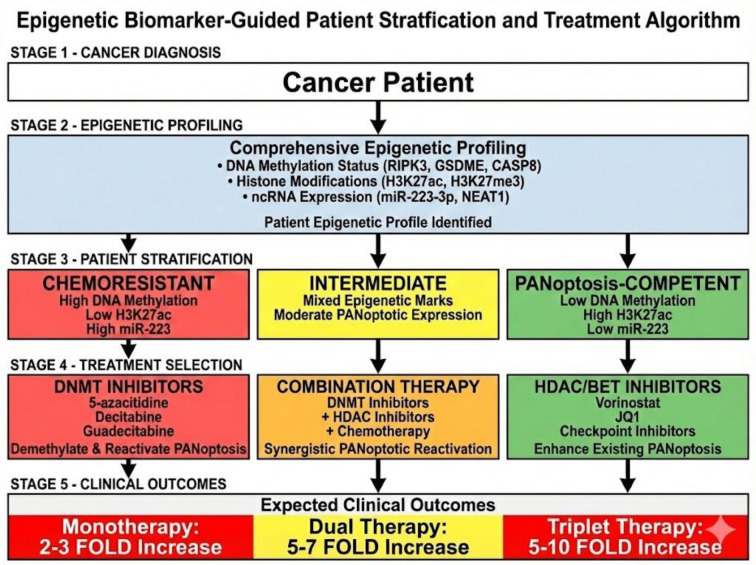 Figure 3
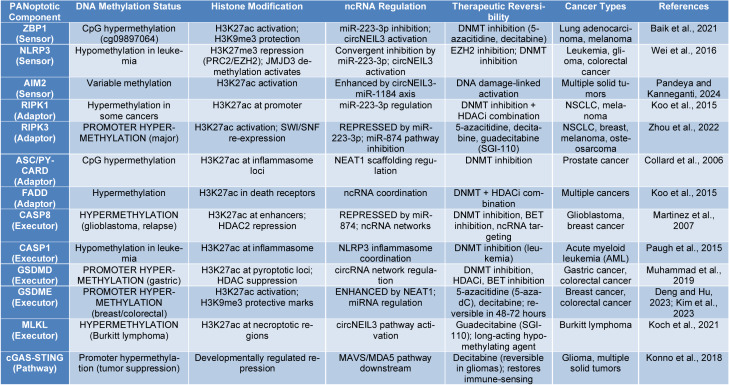 Figure 4
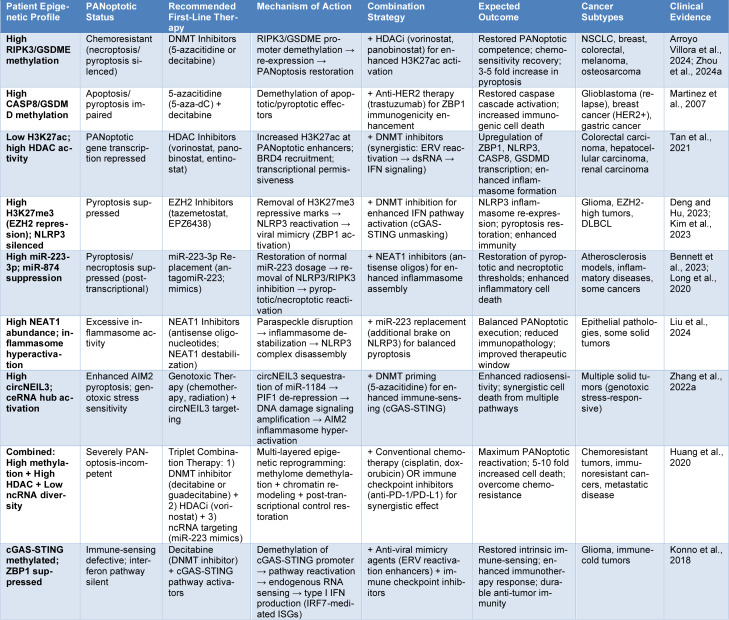 Figure 5
Peer Reviews
No public reviews on file for this paper yet. If you reviewed it on a platform where reviews are public (OpenReview, ICLR, NeurIPS, ICML), you can paste yours below so the community can read it here.
Videos
No videos yet. Explain this paper in a talk, walkthrough, or lecture? Add one.
Taxonomy
TopicsInflammasome and immune disorders · Immune Response and Inflammation · Cell death mechanisms and regulation