Eugenol: A promising therapeutic terpenoid against ischemia-reperfusion injury
Puneet Kaur Randhawa, Deepti Gupta, Mohd Hanifa, Bivek Bajgai, Sorabh Sehajpal, Sarbeshwar Jaggi, Anjana Bali

TL;DR
Eugenol, a natural compound, shows promise in reducing tissue damage caused by restoring blood flow after ischemic events.
Contribution
This review highlights eugenol's novel mechanisms in mitigating ischemia-reperfusion injury through multiple signaling pathways.
Findings
Eugenol protects multiple organs from ischemia-reperfusion injury via antioxidant and anti-inflammatory effects.
It modulates key pathways like AMPK-mTOR-P70S6K, PI3K/Akt, and Nrf2 to reduce oxidative damage.
Eugenol influences gene expression and histone acetylation, indicating broad therapeutic potential.
Abstract
Ischemic disorders are one of the prime causes of mortality and disability among various individuals across the globe. Although drug treatment/percutaneous coronary interventions may recanalize the obstructed blood vessels, yet reperfusion therapy may aggravate tissue damage and result in ischemia-reperfusion injury. Eugenol, a phenolic monoterpenoid (4-allyl-2-methoxyphenol), has been used extensively in various preclinical studies as an antioxidant compound that ameliorates ischemia-reperfusion injury in several organs, including the heart, brain, kidney, and intestine. This protective effect of eugenol is attributed to its ability to influence various several key signaling pathways. These include the AMPK-mTOR-P70S6K (AMP-activated protein kinase-mammalian target of rapamycin-p70 ribosomal S6 kinase) pathway, AMPK/GSK3β (Glycogen synthase kinase-3 beta) axis, PI3K/Akt…
Genes, proteins, chemicals, diseases, species, mutations and cell lines named across the full text — each resolved to its canonical identifier and authoritative record.
Click any figure to enlarge with its caption.
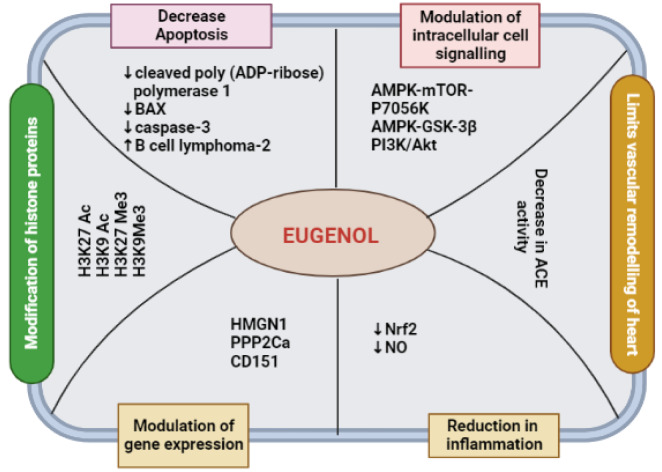 Figure 1
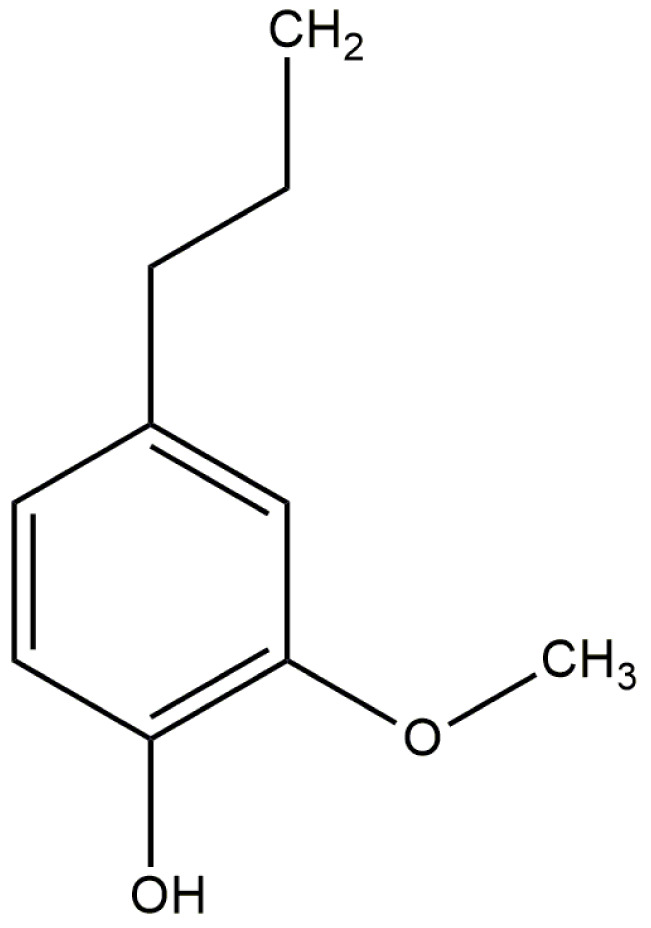 Figure 2
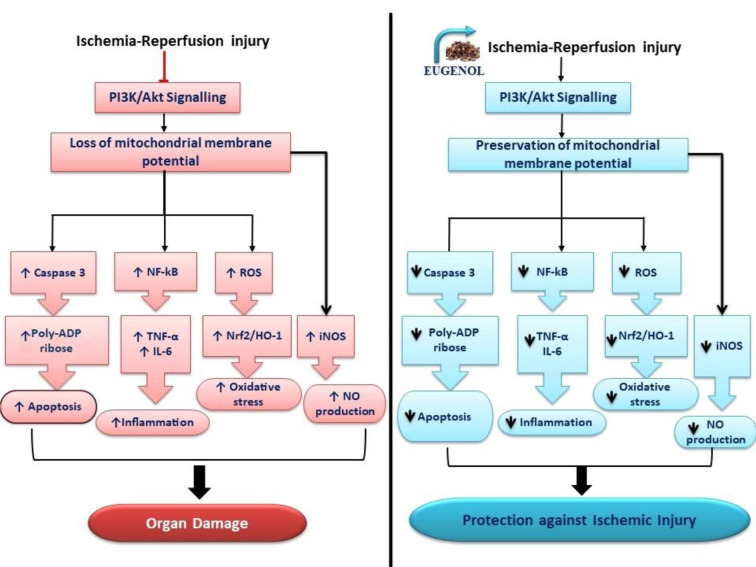 Figure 3
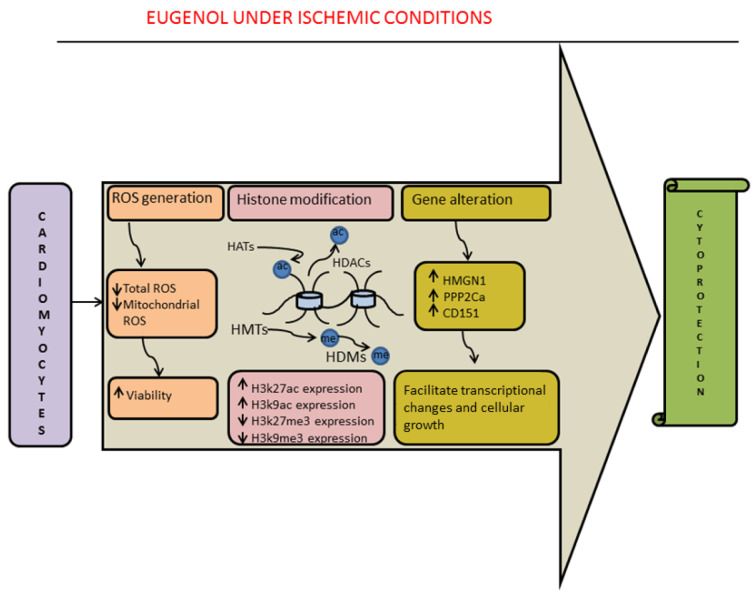 Figure 4
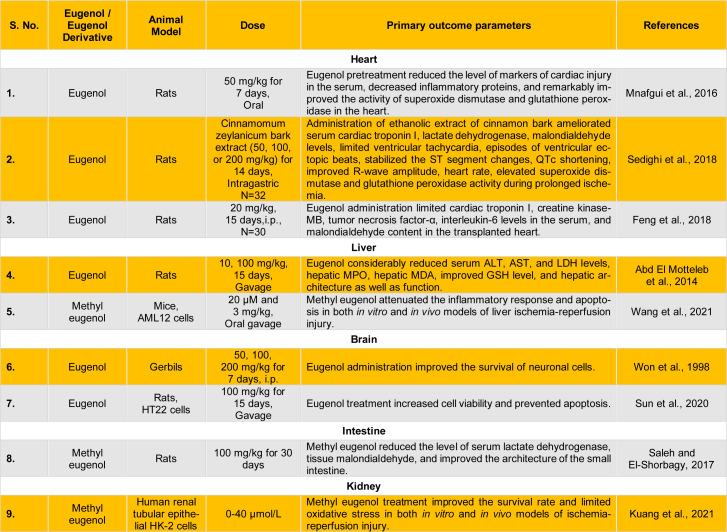 Figure 5
Peer Reviews
No public reviews on file for this paper yet. If you reviewed it on a platform where reviews are public (OpenReview, ICLR, NeurIPS, ICML), you can paste yours below so the community can read it here.
Videos
No videos yet. Explain this paper in a talk, walkthrough, or lecture? Add one.
Taxonomy
TopicsCardiac Ischemia and Reperfusion · Biological and pharmacological studies of plants · Genomics, phytochemicals, and oxidative stress