NeuroMorphFusion: A Neuro-Inspired Hybrid Learning Framework for Interpretable Deep Lesion Detection in IoT-Enabled Healthcare Systems
Roseline Oluwaseun Ogundokun, Rotimi-Williams Bello, Pius Adewale Owolawi, Etienne A. van Wyk, Chunling Tu

TL;DR
NeuroMorphFusion is a new framework for detecting lesions in medical imaging that combines brain-inspired learning with efficient computation for use in healthcare IoT systems.
Contribution
The novel framework integrates spiking neural networks, morphological attention, and genetic algorithm optimization for interpretable and efficient lesion detection.
Findings
NeuroMorphFusion achieves 98.18% classification accuracy on the IQ-OTHNCCD lung cancer CT dataset.
The framework outperforms VGG16, SqueezeNet, MobileNetV3, and ResNet18 in transparency and efficiency.
Optimization converges within eight minutes on a Jetson Nano, balancing accuracy, latency, and explainability.
Abstract
Integrating deep learning within the Internet of Medical Things (IoMT) has revolutionized automated lesion detection in medical imaging. Yet, maintaining high diagnostic accuracy, interpretability and computational efficiency on resource-limited edge devices remains challenging. To address these gaps, we propose NeuroMorphFusion, a neuro-inspired hybrid framework that combines biologically plausible learning with mathematical modelling for interpretable and efficient lesion detection. NeuroMorphFusion integrates a lightweight ResNet18 backbone, a Spiking Neural Network (SNN) component to capture temporal dynamics, and a morphological attention mechanism that emphasizes structure-relevant regions in CT scans. The architecture employs a semi-supervised reinforcement learning strategy, where pseudo-label accuracy and the overlap between Grad-CAM visualizations and expert annotations…
Genes, proteins, chemicals, diseases, species, mutations and cell lines named across the full text — each resolved to its canonical identifier and authoritative record.
Click any figure to enlarge with its caption.
 Figure 1
 Figure 2
 Figure 3
 Figure 4
 Figure 5
 Figure 6
 Figure 7
 Figure 8
 Figure 9
 Figure 10
 Figure 11
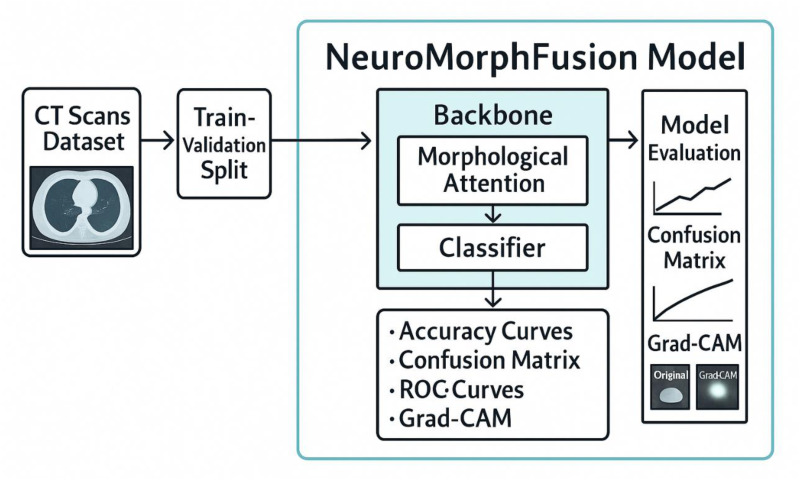 Figure 1
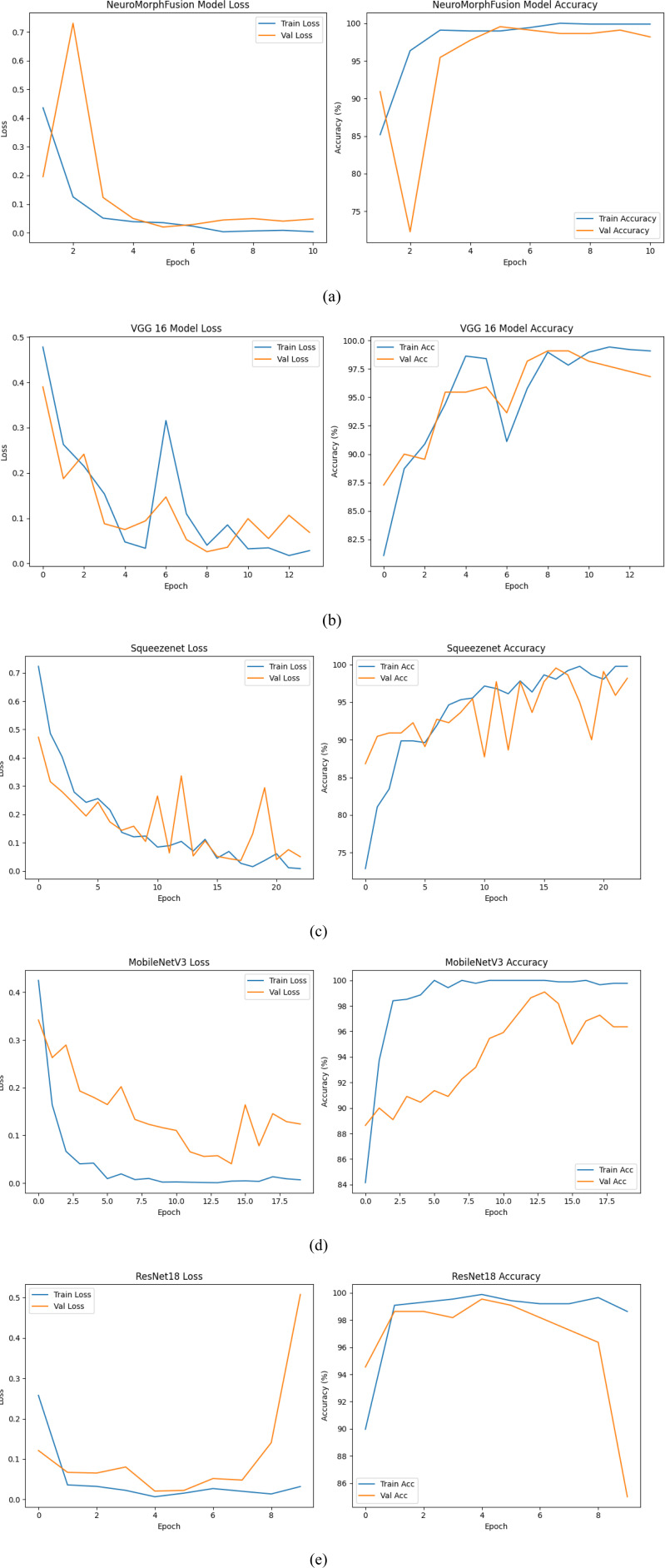 Figure 2
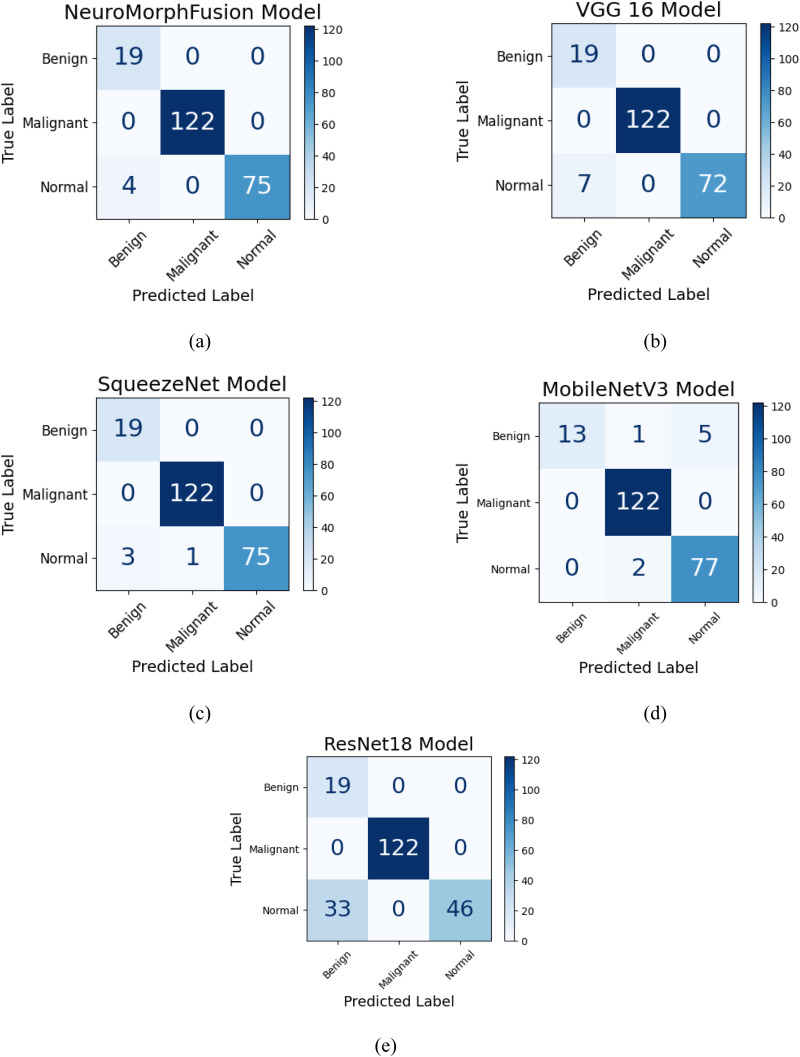 Figure 3
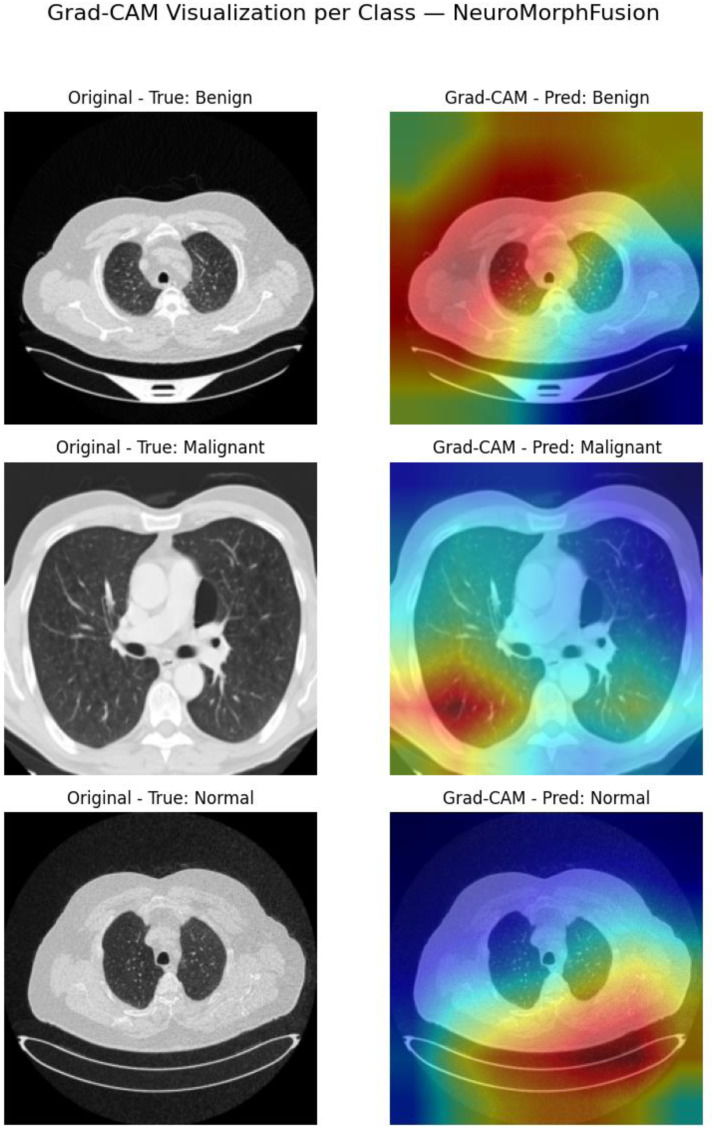 Figure 4
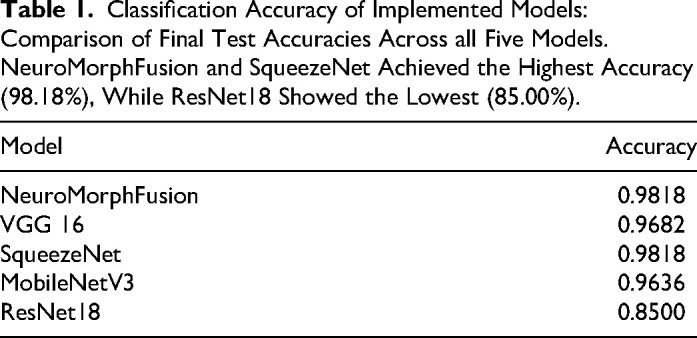 Figure 16
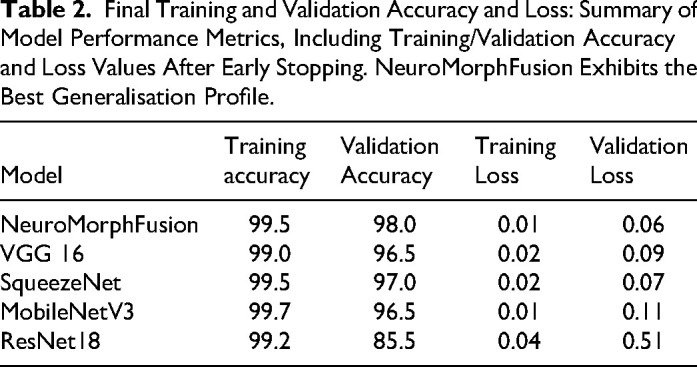 Figure 17
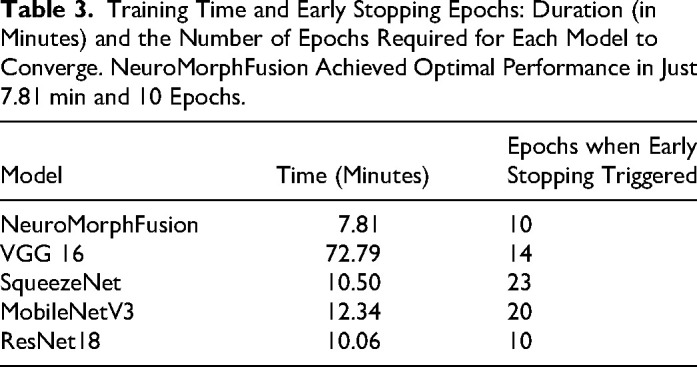 Figure 18
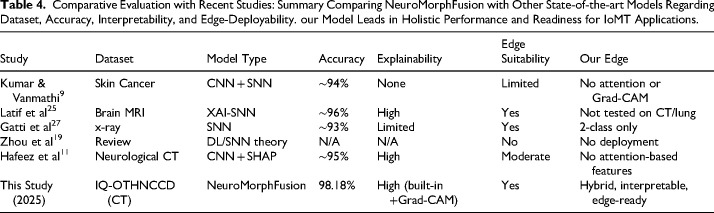 Figure 19
Peer Reviews
No public reviews on file for this paper yet. If you reviewed it on a platform where reviews are public (OpenReview, ICLR, NeurIPS, ICML), you can paste yours below so the community can read it here.
Videos
No videos yet. Explain this paper in a talk, walkthrough, or lecture? Add one.
Taxonomy
TopicsExplainable Artificial Intelligence (XAI) · COVID-19 diagnosis using AI · Advanced Neural Network Applications