High-temperature probe of electron compressibility via asymmetric Coulomb drag
Yingjia Liu, Kaining Yang, Hanwen Wang, Qin Zhang, Hongpeng Liu, Kenji Watanabe, Takashi Taniguchi, Wencai Ren, Zheng Vitto Han, Siwen Zhao

TL;DR
Researchers used Coulomb drag in a layered system to study graphene's electronic compressibility at high temperatures, revealing quantum effects missed by traditional methods.
Contribution
Asymmetric Coulomb drag is introduced as a novel method to probe electronic compressibility in 2D systems at high temperatures.
Findings
Coulomb drag reveals graphene's compressibility oscillations at high temperatures where standard transport is insensitive.
MoS2 acts as a transducer for graphene's Landau-level physics in magnetic fields.
Quantum oscillations in compressibility are detected via drag even when graphene's transport shows no features.
Abstract
Lateral charge transport of a two-dimensional (2D) electronic system can be much influenced by feeding a current into another closely spaced 2D conductor, known as the Coulomb drag phenomenon – a powerful probe of electron-electron interactions and collective excitations. Here, we show that Coulomb drag in a deliberately asymmetric van der Waals bilayer can serve as a layer-selective probe of electronic compressibility that remains invisible to standard transport. We devise a MoS2/graphene double layer with large disparity in effective mass and Fermi temperature between them, separated by a ~ 3 nm hexagonal boron nitride spacer, and operate in the degenerate Fermi liquid regime. The MoS2 drag channel exhibits constant electronic compressibility and acts as a sensitive transducer of graphene’s Landau-level physics at finite magnetic fields. At elevated temperatures and moderate magnetic…
Genes, proteins, chemicals, diseases, species, mutations and cell lines named across the full text — each resolved to its canonical identifier and authoritative record.
Click any figure to enlarge with its caption.
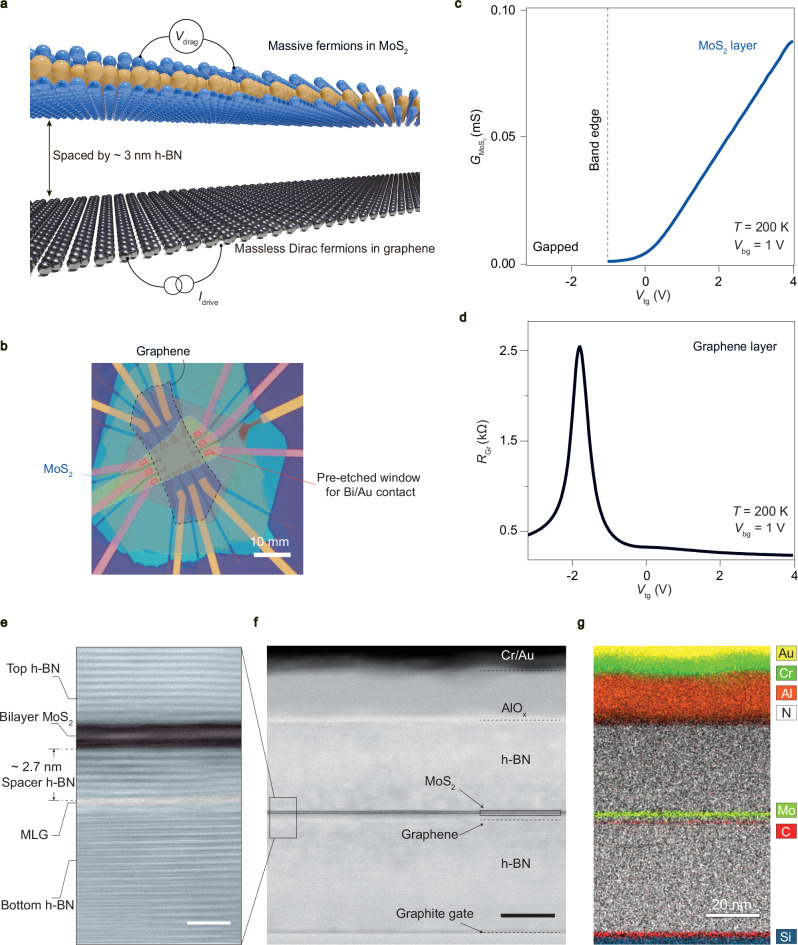 Figure 1
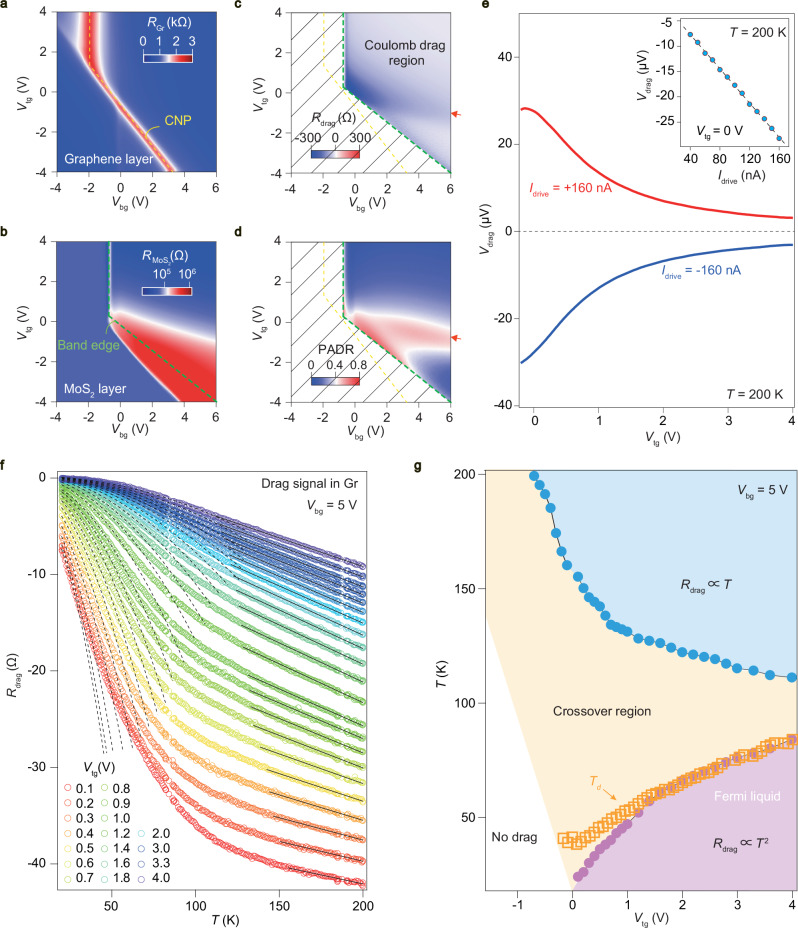 Figure 2
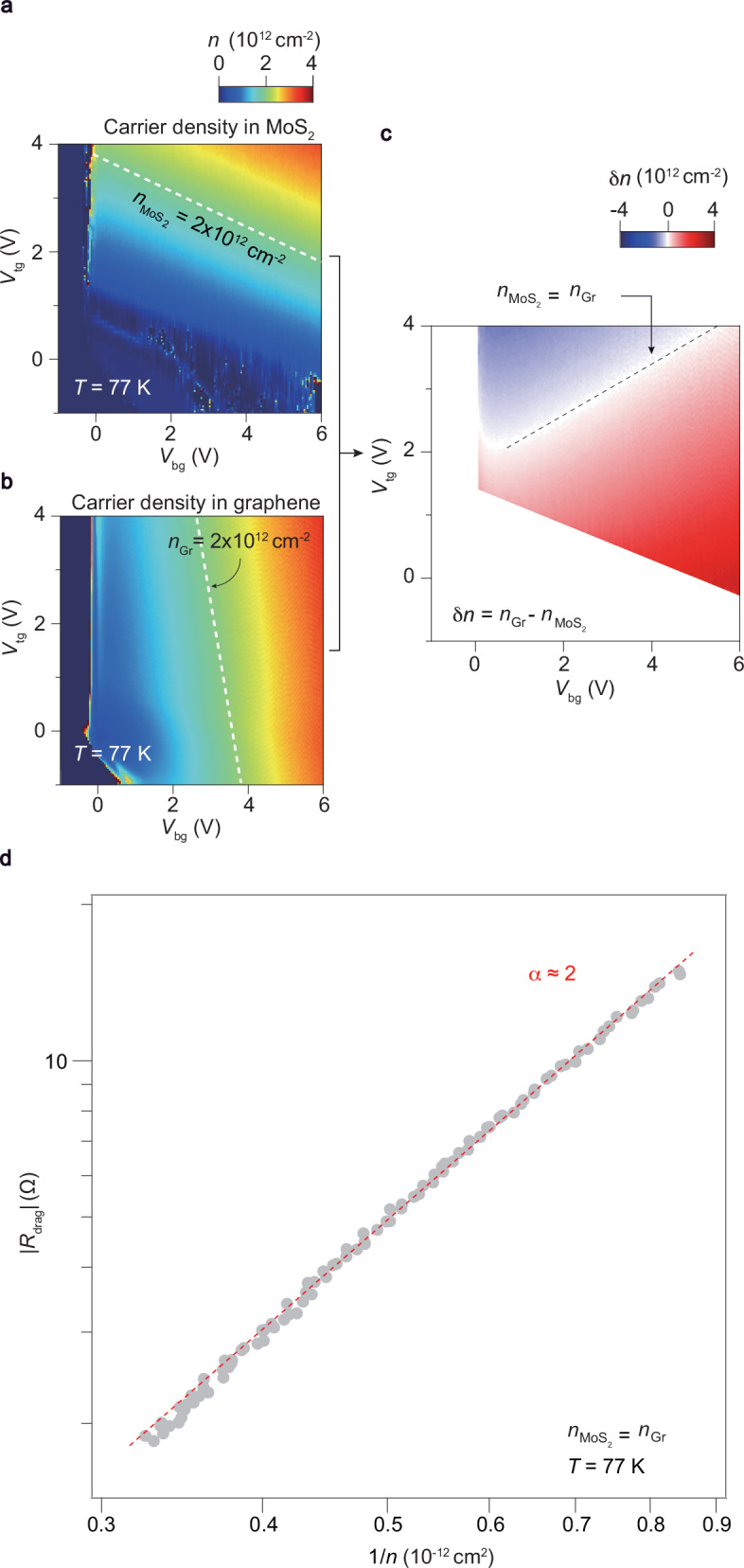 Figure 3
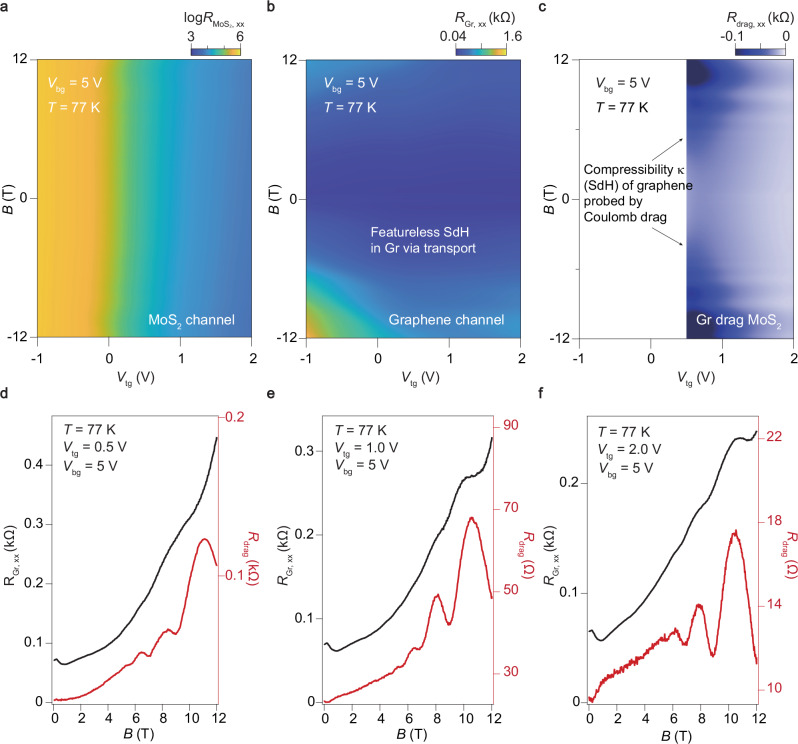 Figure 4
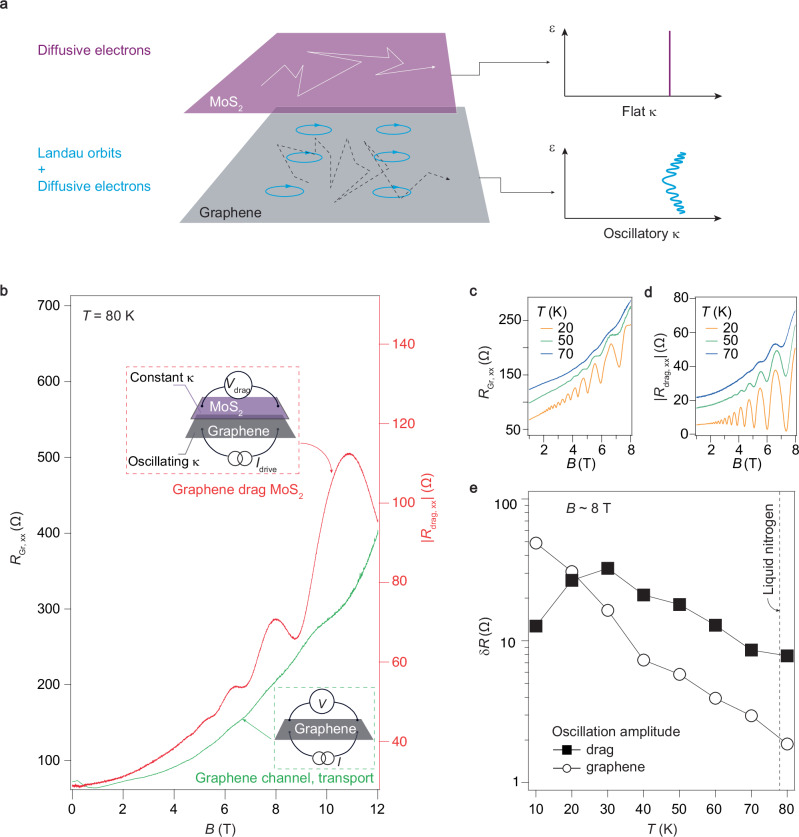 Figure 5
Peer Reviews
No public reviews on file for this paper yet. If you reviewed it on a platform where reviews are public (OpenReview, ICLR, NeurIPS, ICML), you can paste yours below so the community can read it here.
Videos
No videos yet. Explain this paper in a talk, walkthrough, or lecture? Add one.
Taxonomy
TopicsGraphene research and applications · 2D Materials and Applications · Thermal properties of materials