Utilizing the predictable binding kinetics of DNA-PAINT to denoise super-resolution images
George Sirinakis, Edward S. Allgeyer, Jennifer H. Richens, Jeanne Lefévère-Laoide, Ewa K. Paluch, Daniel St Johnston

TL;DR
This paper introduces a statistical method to reduce noise in DNA-PAINT super-resolution images by removing non-specific binding signals, improving image quality and measurement accuracy.
Contribution
A novel statistical test is introduced to distinguish and remove non-specific binding events in DNA-PAINT imaging.
Findings
The method removes over 90% of non-specific signals in DNA-PAINT super-resolved images.
Denoising enhances the accuracy of spatial relationship and protein quantification measurements.
The technique was validated using Drosophila melanogaster egg chambers.
Abstract
DNA-Point Accumulation for Imaging in Nanoscale Topography (DNA-PAINT) is a versatile super-resolution technique that relies on the predictable binding kinetics between fluorescent imager strands and docking strands attached to target proteins. This makes DNA-PAINT particularly suitable for multiplexing and quantitative applications, but its performance is often limited by spurious signals from non-specific binding of imager strands. Here we describe a method to remove these non-specific binding events using a statistical test to distinguish between DNA-specific and non-specific interactions. To demonstrate the method, we imaged mosaic epithelial tissues in Drosophila melanogaster egg chambers and showed that >90% of non-specific and otherwise indistinguishable signal in the super-resolved images can be removed. This denoising improves the quality of DNA-PAINT super-resolved images and…
Genes, proteins, chemicals, diseases, species, mutations and cell lines named across the full text — each resolved to its canonical identifier and authoritative record.
Click any figure to enlarge with its caption.
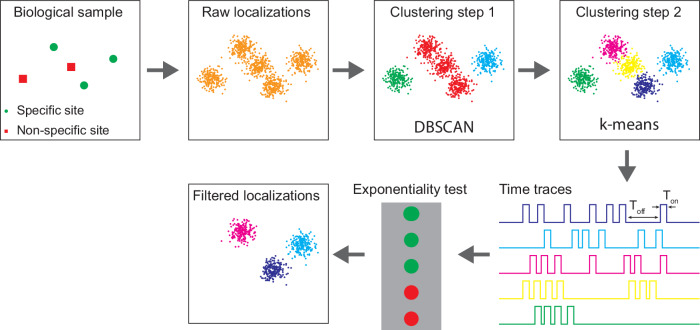 Figure 1
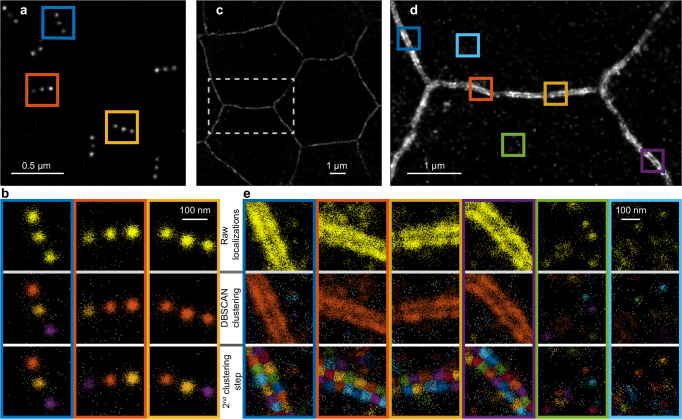 Figure 2
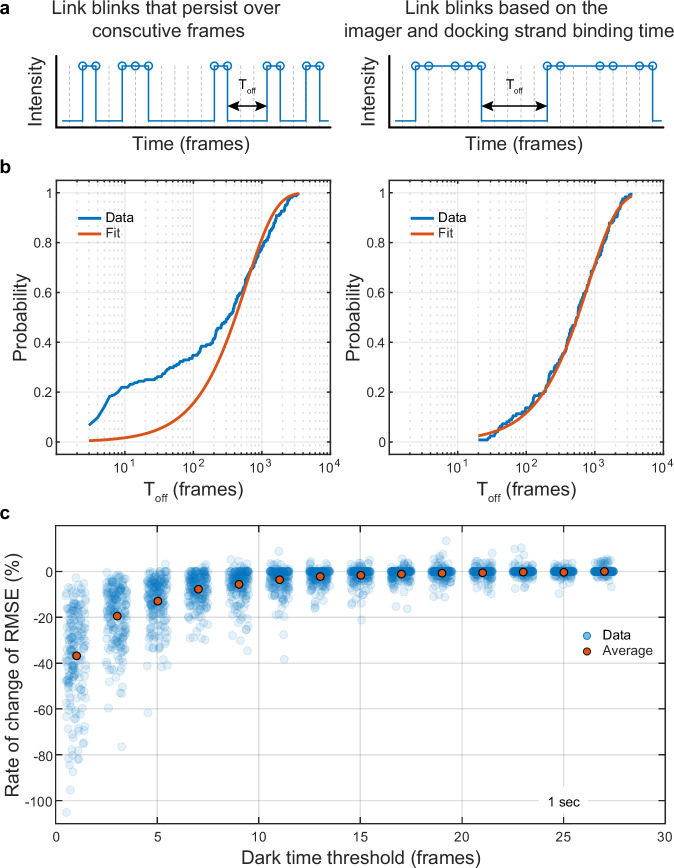 Figure 3
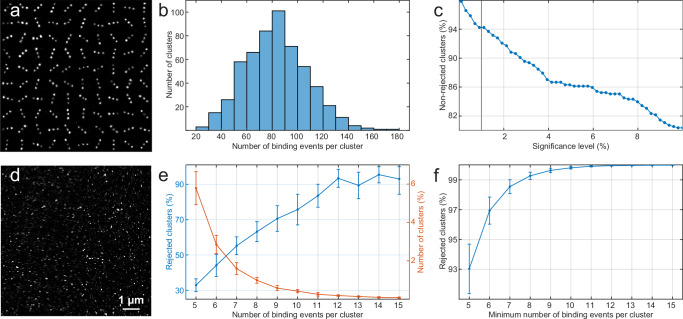 Figure 4
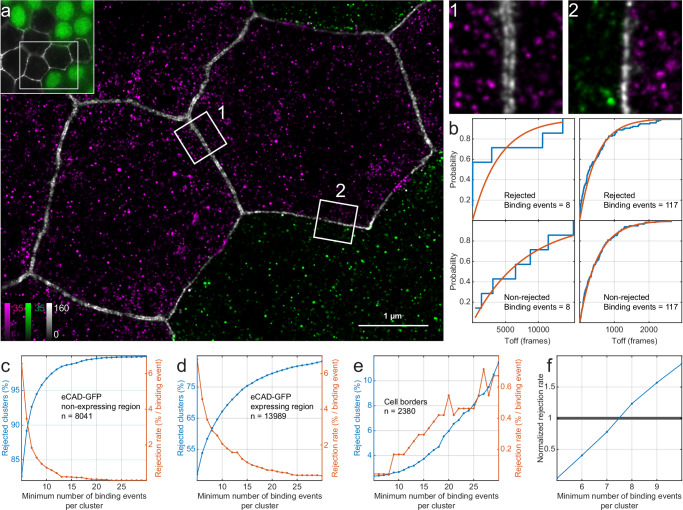 Figure 5
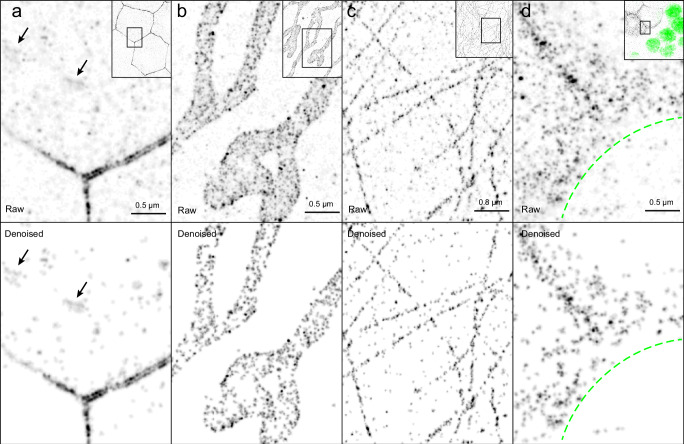 Figure 6
Peer Reviews
No public reviews on file for this paper yet. If you reviewed it on a platform where reviews are public (OpenReview, ICLR, NeurIPS, ICML), you can paste yours below so the community can read it here.
Videos
No videos yet. Explain this paper in a talk, walkthrough, or lecture? Add one.
Taxonomy
TopicsAdvanced Fluorescence Microscopy Techniques · Digital Holography and Microscopy · Advanced X-ray Imaging Techniques