Comparison of primary analysis strategies of randomized controlled trials with multiple endpoints with application to kidney transplantation
Felix Herkner, Martin Posch, Gregor Bond, Franz König

TL;DR
The paper compares different statistical methods for analyzing clinical trials with multiple endpoints, showing that some methods are more powerful but may be harder to interpret.
Contribution
The study evaluates three primary analysis strategies for RCTs with multiple endpoints, highlighting their trade-offs in power and interpretability.
Findings
Global testing strategies like composite endpoints and generalized pairwise comparisons showed higher power than multiple testing with correction.
Global methods can produce significant results even with heterogeneous treatment effects across endpoints.
The study emphasizes the need for careful interpretation and component-wise assessment when using global procedures.
Abstract
Relying on a single primary endpoint in randomized controlled trials (RCTs) is often infeasible, for example due to rare or heterogeneous events. Regulatory guidance therefore allows multiple endpoints, but different analytical strategies address different scientific questions and null hypotheses, even when applied to the same set of variables. We explored three approaches to consider multiple endpoints in the primary analysis of RCTs, as stated in the FDA and EMA guidelines on multiplicity: (i) a composite endpoint (CE), (ii) multiple testing and multiplicity correction (MTMC), and (iii) a hierarchical non-parametric procedure, called generalized pairwise comparisons (GPC). Using clinical trial simulations, we compared these strategies’ power in two-arm RCTs perform when testing strategy-specific hypotheses across a range of scenarios reflecting endpoint prioritization, correlation…
Genes, proteins, chemicals, diseases, species, mutations and cell lines named across the full text — each resolved to its canonical identifier and authoritative record.
Click any figure to enlarge with its caption.
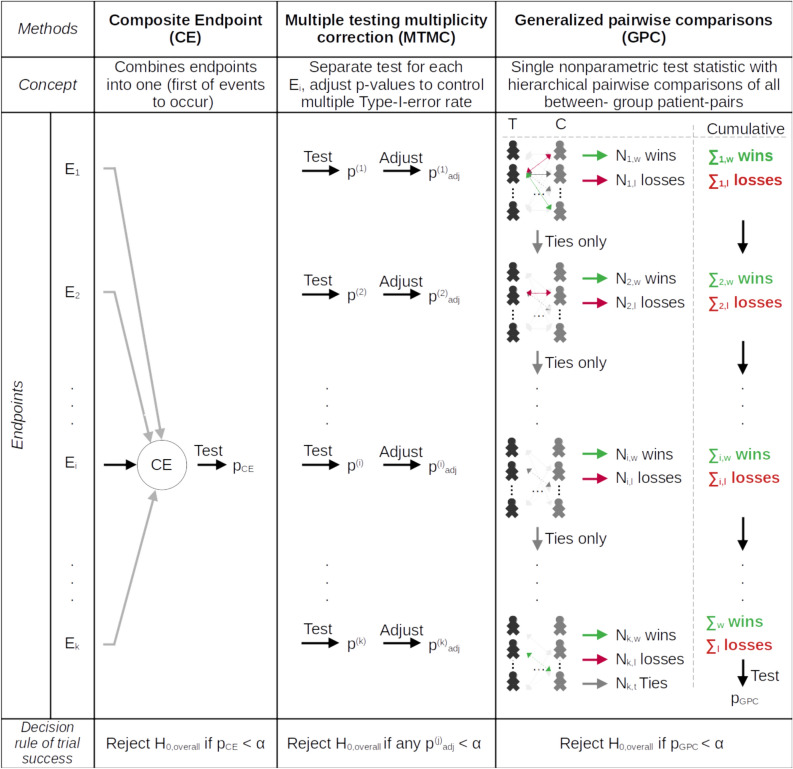 Figure 1
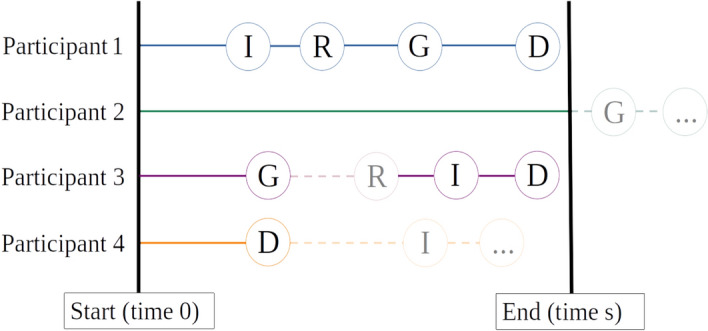 Figure 2
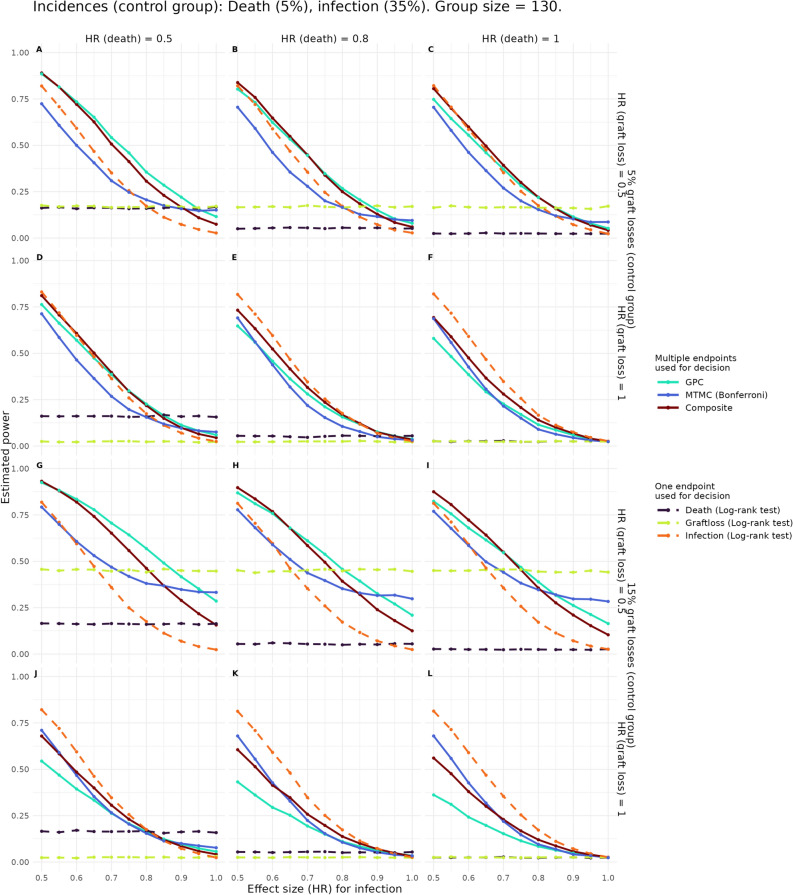 Figure 3
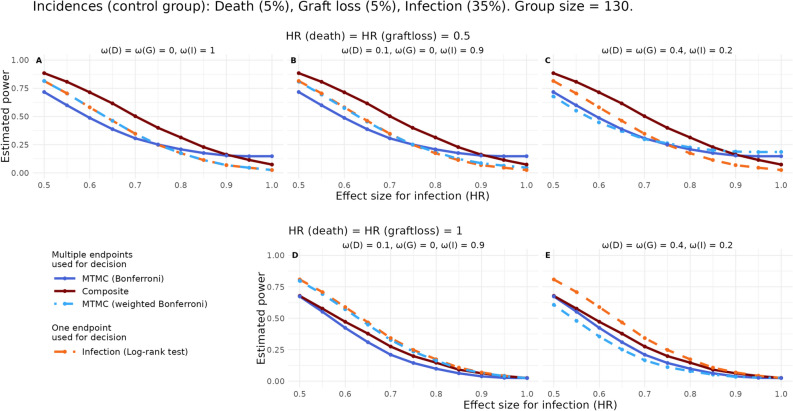 Figure 4
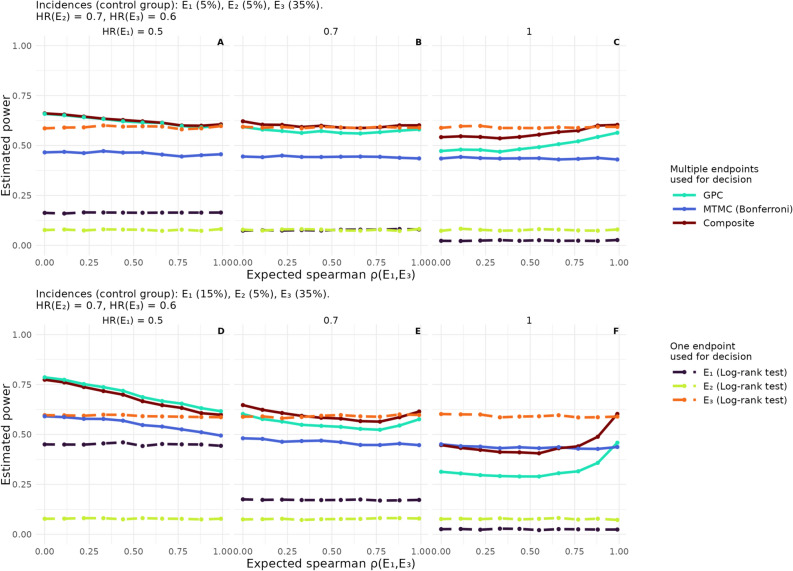 Figure 5
Peer Reviews
No public reviews on file for this paper yet. If you reviewed it on a platform where reviews are public (OpenReview, ICLR, NeurIPS, ICML), you can paste yours below so the community can read it here.
Videos
No videos yet. Explain this paper in a talk, walkthrough, or lecture? Add one.
Taxonomy
TopicsStatistical Methods in Clinical Trials · Advanced Causal Inference Techniques · Statistical Methods and Bayesian Inference