Setting digital psychiatry in motion: towards dynamic digital markers for digital phenotyping
Axel Constant, C. Emre Koksal, Lena Palaniyappan

TL;DR
The paper introduces a dynamic approach to digital phenotyping that captures how mental health patterns change over time, offering a better understanding of psychopathology.
Contribution
The novel contribution is the proposal of dynamic digital markers that model time-varying aspects of mental disorders.
Findings
Traditional entropy-based measures fail to capture temporal dependencies in digital phenotyping.
Dynamic digital markers better reflect the evolving nature of mental disorder processes.
The dynamic approach improves the representation of variability in regulatory mechanisms of psychopathology.
Abstract
Digital phenotyping uses data from smartphones and wearables to extract behavioural and biosocial markers of psychopathology in situ. Traditional entropy-based measures capture static system properties that neglect temporal dependencies critical to psychiatric phenomena. We propose a “dynamic” approach to the modelling of digital data capturing the time-varying aspects of processes of mental disorders. We defend that the resulting dynamic digital markers better capture variability in regulatory mechanisms of psychopathology. Digital phenotyping uses information from smartphones and wearable devices to track patterns in behavior and physiology related to mental health. Most current methods summarize this data in ways that miss how experiences change over time. We propose a new, dynamic approach that focuses on how patterns evolve moment by moment. By capturing these changes, our method…
Genes, proteins, chemicals, diseases, species, mutations and cell lines named across the full text — each resolved to its canonical identifier and authoritative record.
Click any figure to enlarge with its caption.
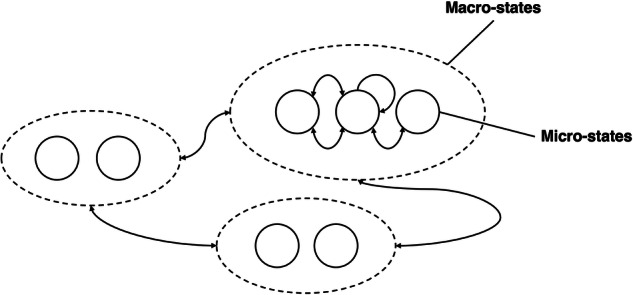 Figure 1
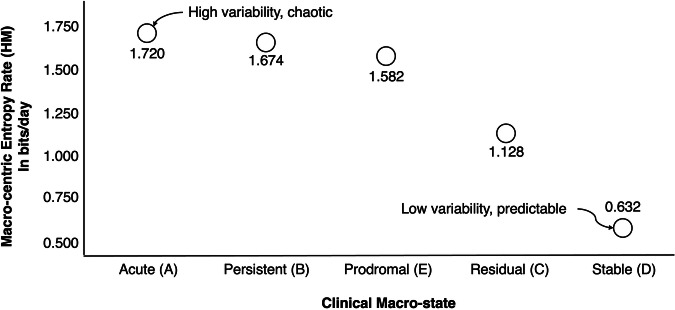 Figure 2
Peer Reviews
No public reviews on file for this paper yet. If you reviewed it on a platform where reviews are public (OpenReview, ICLR, NeurIPS, ICML), you can paste yours below so the community can read it here.
Videos
No videos yet. Explain this paper in a talk, walkthrough, or lecture? Add one.
Taxonomy
TopicsDigital Mental Health Interventions · Mental Health Research Topics · Emotion and Mood Recognition