A cellular basis for the hourglass pattern in vertebrate embryogenesis
Amor Damatac, Kristian K. Ullrich, Alexander Klimovich, Markéta Kaucká

TL;DR
This paper explores whether the hourglass pattern in vertebrate embryogenesis is rooted in the behavior of individual cells, not just overall embryo development.
Contribution
It proposes that the hourglass pattern arises from universal constraints on cell states during mid-embryogenesis.
Findings
Mid-embryonic conservation is linked to converging cell states across species.
Ancient gene programs constrain these cell states, supporting a cellular basis for the hourglass pattern.
Abstract
Vertebrate embryogenesis follows a conserved trajectory, exhibiting divergence in early and late stages and conservation during mid-embryogenesis across species. This pattern, known as the developmental hourglass, was first described at the morphological level and later supported by molecular studies, establishing it as a hallmark of vertebrate development. The “waist” of the hourglass, representing the period most resilient to evolutionary change, coincides with the emergence of the body plan, when embryos across species appear most alike. Yet development is not simply an organism-level process; it arises from the coordinated behaviors of individual cell lineages that collectively generate form and function. If the hourglass reflects a fundamental principle of vertebrate development, might it also be rooted in the dynamics of cells themselves? In this Perspective, we revisit the…
Genes, proteins, chemicals, diseases, species, mutations and cell lines named across the full text — each resolved to its canonical identifier and authoritative record.
Click any figure to enlarge with its caption.
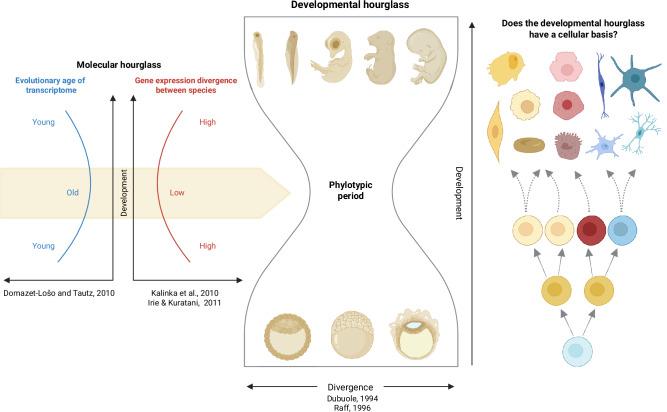 Figure 1
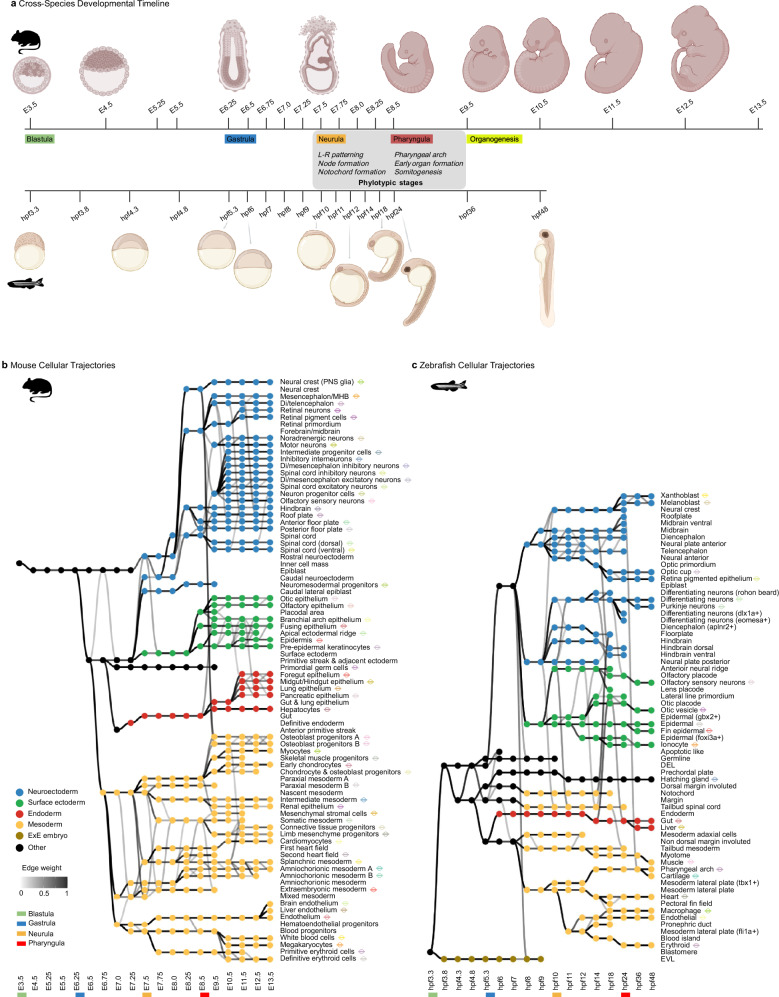 Figure 2
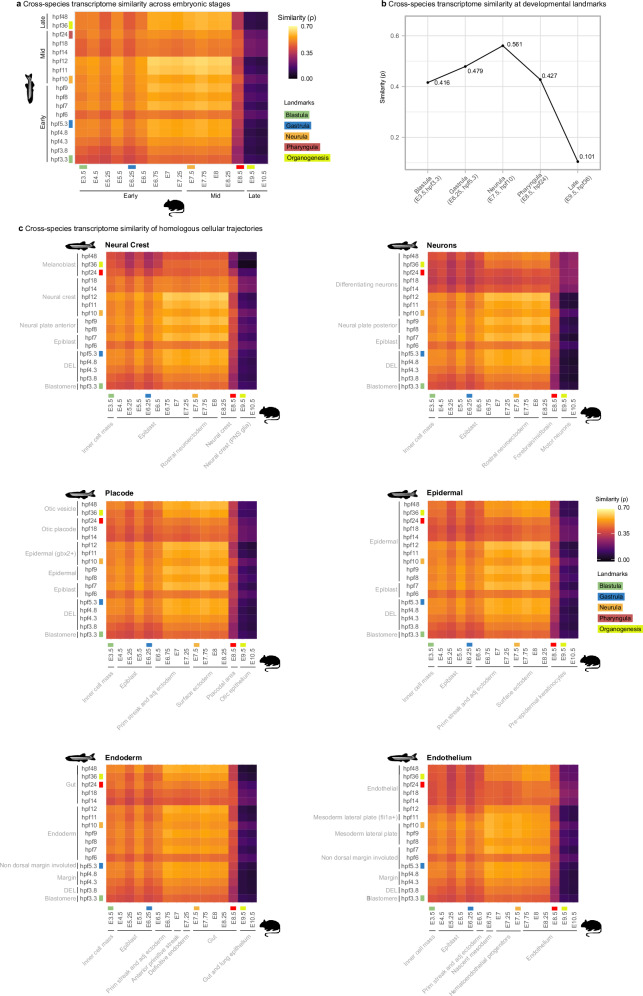 Figure 3
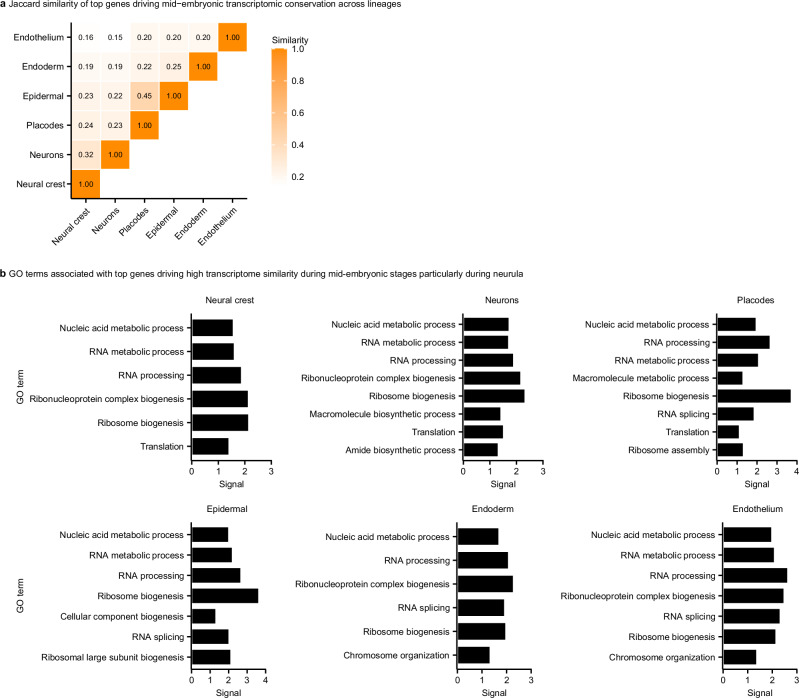 Figure 4
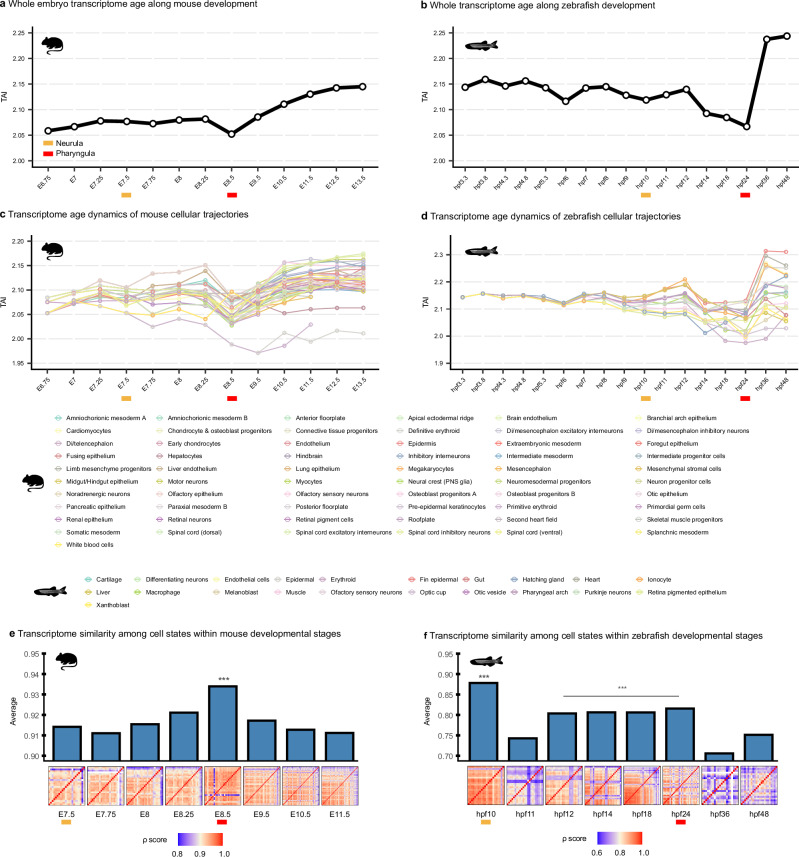 Figure 5
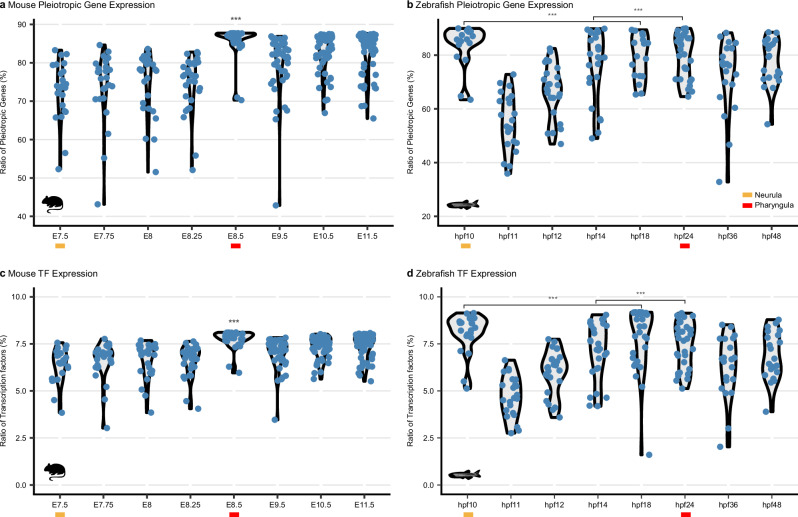 Figure 6
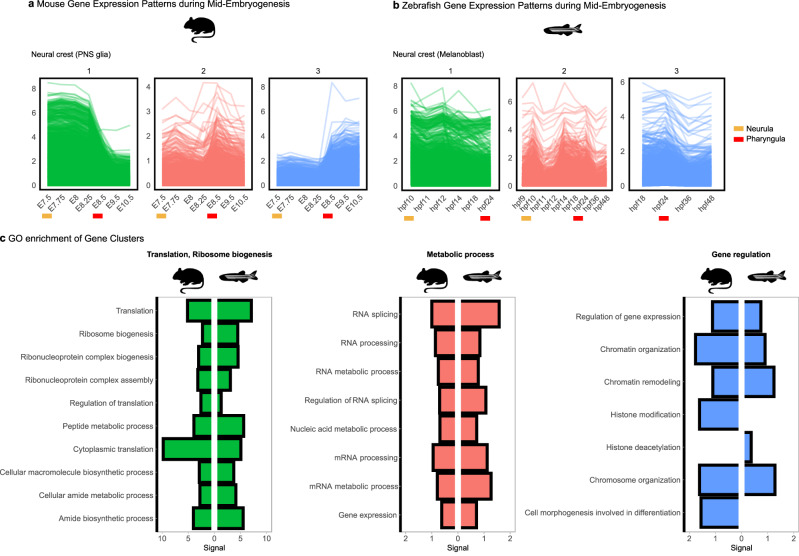 Figure 7
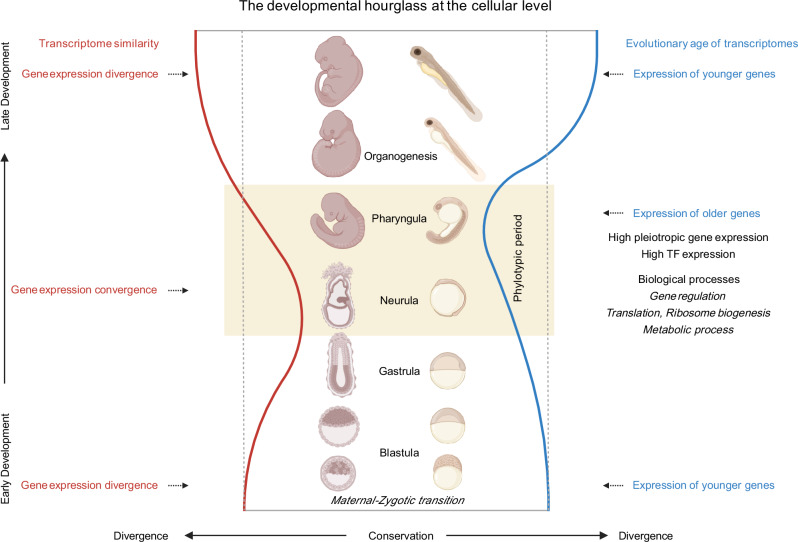 Figure 8
Peer Reviews
No public reviews on file for this paper yet. If you reviewed it on a platform where reviews are public (OpenReview, ICLR, NeurIPS, ICML), you can paste yours below so the community can read it here.
Videos
No videos yet. Explain this paper in a talk, walkthrough, or lecture? Add one.
Taxonomy
TopicsDevelopmental Biology and Gene Regulation · Planarian Biology and Electrostimulation · Pluripotent Stem Cells Research