Quantitative fat-fraction analysis of the rotator cuff muscles on clinical sagittal and coronal T1-weighted MRI using deep learning algorithms
Hanspeter Hess, Alexandra Oswald, Keivan Daneshvar, Nicolas Gerber, Michael Schär, Matthias A. Zumstein, Kate Gerber

TL;DR
This paper introduces a deep learning method to accurately measure fat infiltration in rotator cuff muscles using standard MRI scans, improving surgical outcome predictions.
Contribution
A novel deep learning algorithm enables accurate, voxel-wise fat fraction quantification from clinical T1-weighted MRIs.
Findings
The algorithm achieved significantly higher accuracy than binary fat classification methods (p < 0.001).
Average fat fraction calculation errors ranged from − 0.5 ± 2.2% to 2.3 ± 3.9% compared to Dixon MRI measures.
The method allows for comprehensive muscle fat distribution analysis to improve prognosis and treatment planning.
Abstract
Increased fatty infiltration of the rotator cuff muscles is a primary prognostic factor for poor surgical outcomes of rotator cuff repair surgery. Preoperative fat assessment currently relies on the qualitative Goutallier classification using magnetic resonance imaging (MRI). This method suffers from high observer variability and only assesses a single slice. The aim of this study was to use deep learning to predict quantitative, voxel-wise fat fraction (FF) from standard T1-weighted MRIs. A deep learning-based algorithm was developed for automatic FF prediction using a voxel-wise, five-class system. The network was trained on 75 patients using paired T1-weighted and 2-point Dixon MRI, with rotator cuff muscles segmented in coronal and sagittal planes. It was validated on 24 patients. The proposed algorithm was significantly more accurate than a binary fat classification approach (p <…
Genes, proteins, chemicals, diseases, species, mutations and cell lines named across the full text — each resolved to its canonical identifier and authoritative record.
Click any figure to enlarge with its caption.
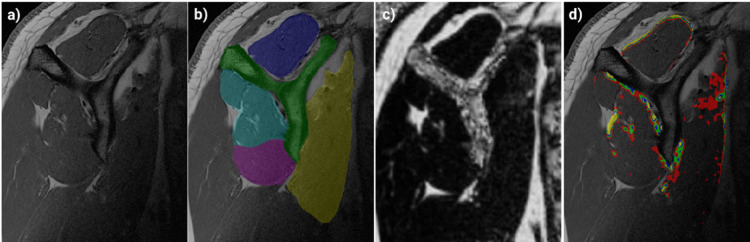 Figure 1
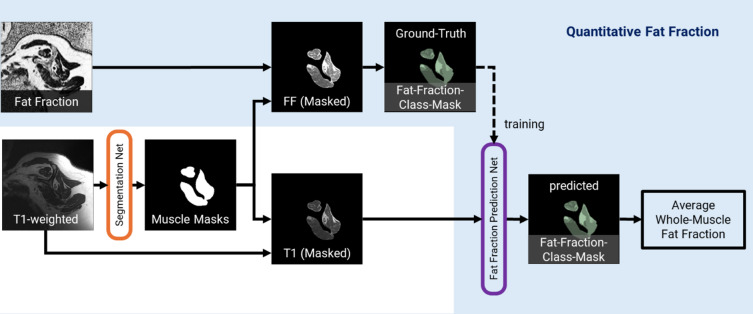 Figure 2
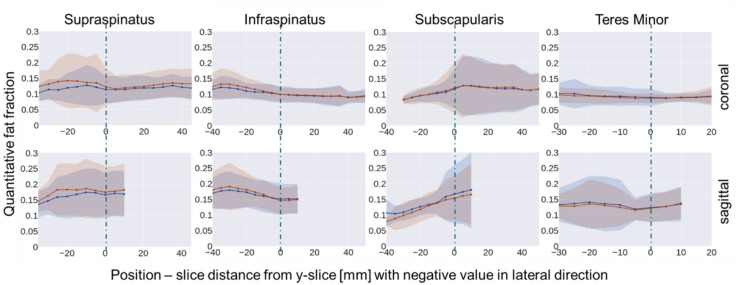 Figure 3
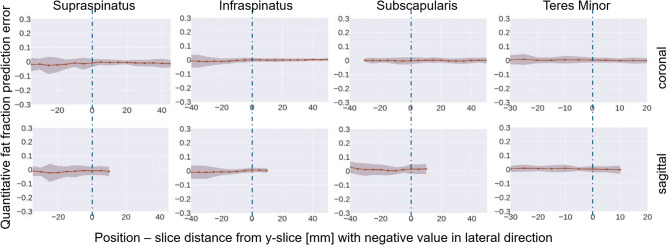 Figure 4
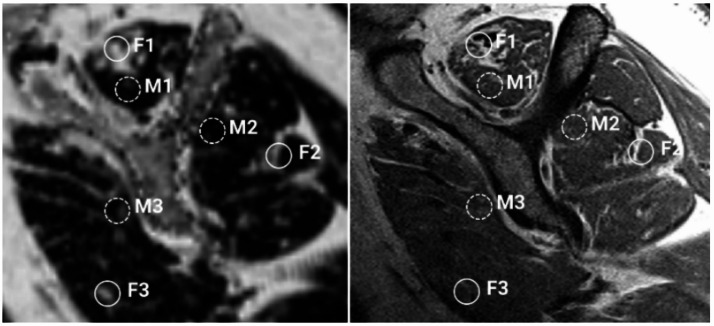 Figure 5
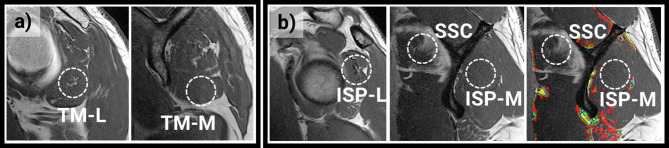 Figure 6
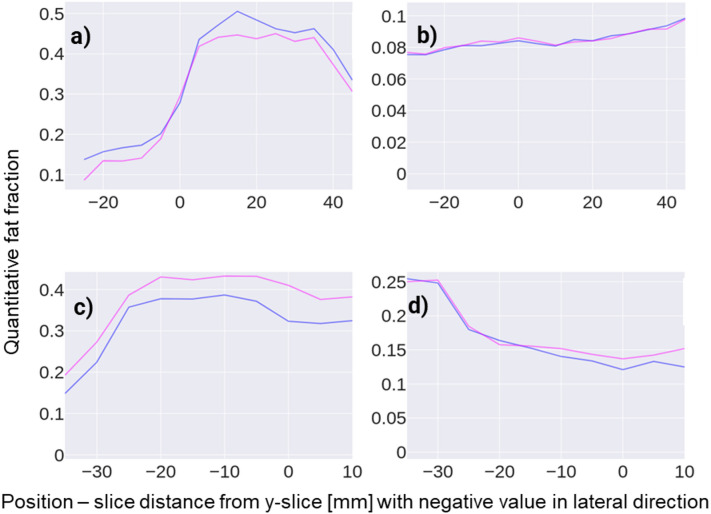 Figure 7
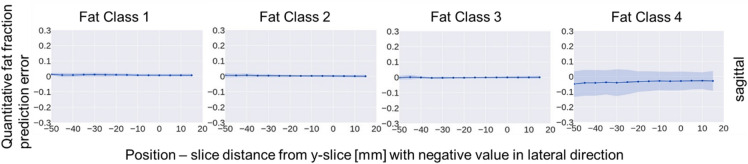 Figure 8
Peer Reviews
No public reviews on file for this paper yet. If you reviewed it on a platform where reviews are public (OpenReview, ICLR, NeurIPS, ICML), you can paste yours below so the community can read it here.
Videos
No videos yet. Explain this paper in a talk, walkthrough, or lecture? Add one.
Taxonomy
TopicsShoulder Injury and Treatment · Hip disorders and treatments · Total Knee Arthroplasty Outcomes