Development of orthographic, phonological and semantic parafoveal processing in Chinese reading
Min Liu, Sainan Li, Zhu Meng, Yongsheng Wang, Chuanli Zang, Guoli Yan, Simon P Liversedge

TL;DR
This study explores how children's ability to process upcoming words in Chinese reading improves with age, focusing on orthographic, phonological, and semantic aspects.
Contribution
The study is the first to compare the development of orthographic, phonological, and semantic parafoveal processing in Chinese reading across different age groups.
Findings
Orthographic parafoveal processing is effective in all age groups studied.
Phonological and semantic parafoveal processing develops later, starting in third or fourth grade.
Orthographic processing likely precedes phonological and semantic processing during reading development.
Abstract
Parafoveal pre-processing of upcoming words is a key aspect of fluent reading. A comparative analysis of how children’s orthographic, phonological and semantic parafoveal processing changes with age has not been investigated to date. In the present study, three eye movement experiments used the boundary paradigm to characterize the nature of change in orthographic, phonological and semantic parafoveal processing across children in Grades 2 to 5 (n = 366, Tianjin Primary School) and adults (n = 90, Tianjin Normal University) during natural Chinese reading. In each experiment we manipulated preview type (identical, related or unrelated preview). The results showed that effective orthographic parafoveal processing occurred in all our participant groups; however, effective phonological and semantic parafoveal processing was somewhat delayed, occurring in the third or fourth grade through to…
Genes, proteins, chemicals, diseases, species, mutations and cell lines named across the full text — each resolved to its canonical identifier and authoritative record.
Click any figure to enlarge with its caption.
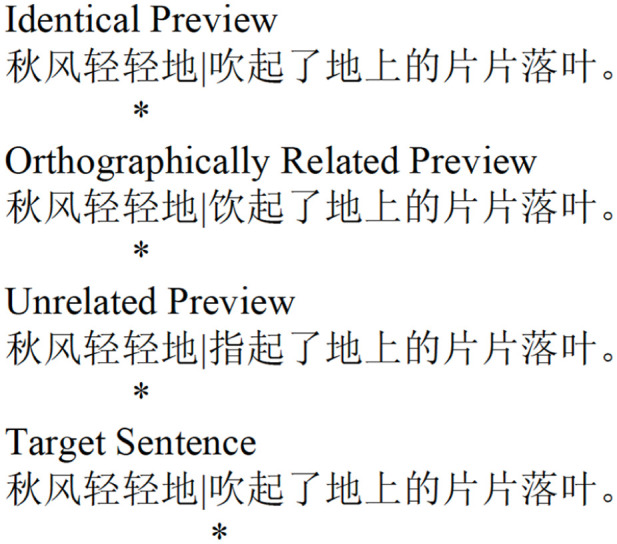 Figure 1
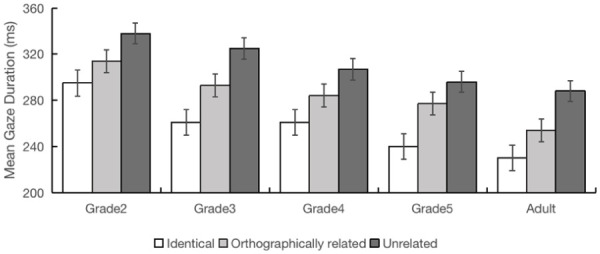 Figure 2
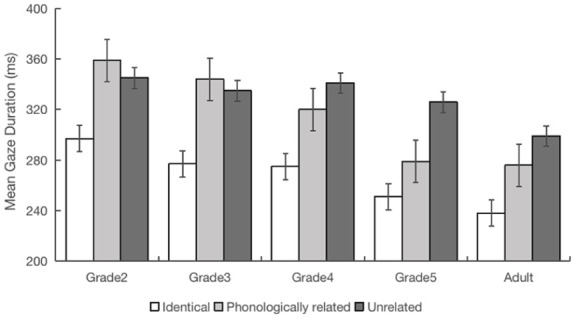 Figure 3
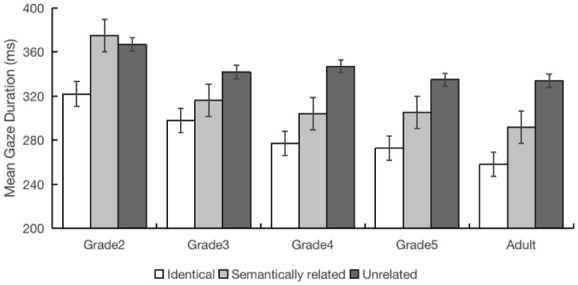 Figure 4
 Figure 5
 Figure 6
 Figure 7
 Figure 8
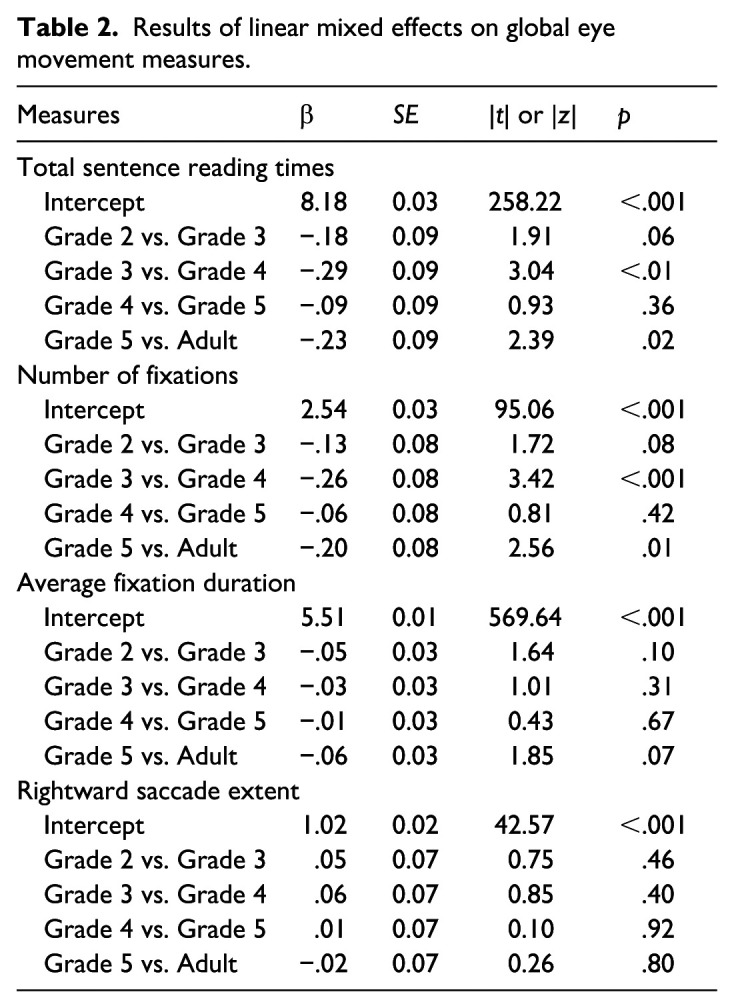 Figure 9
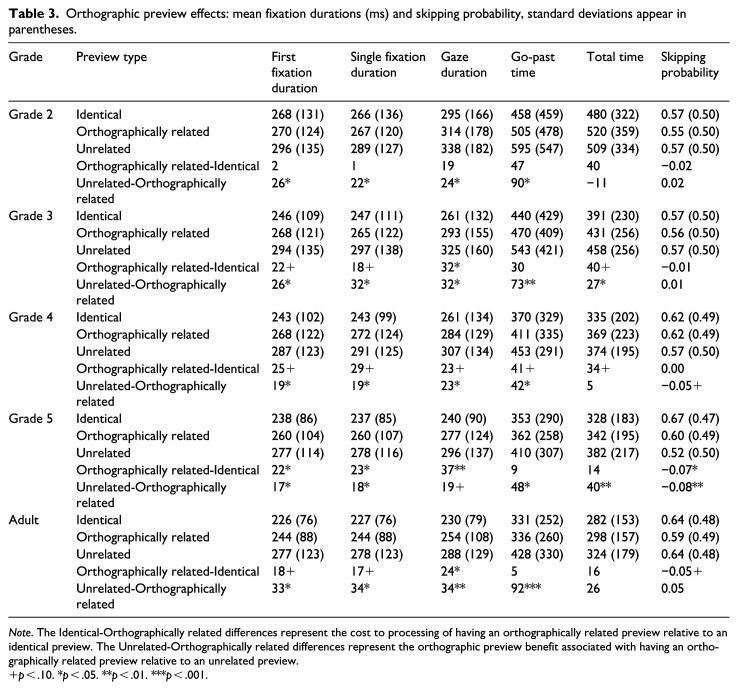 Figure 10
 Figure 11
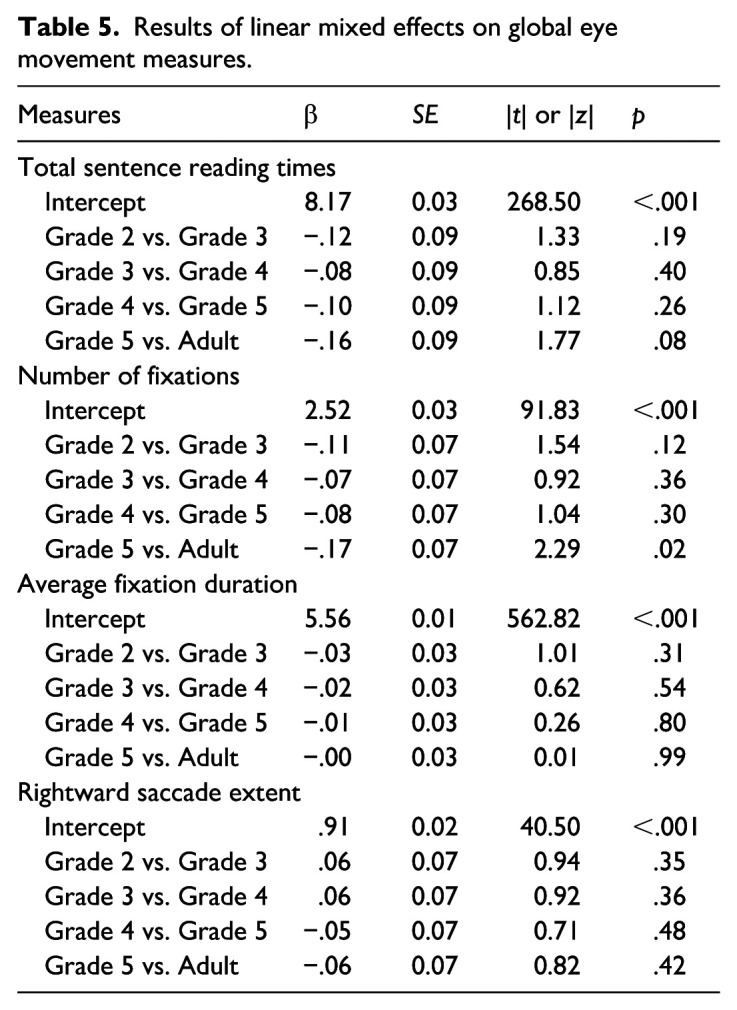 Figure 12
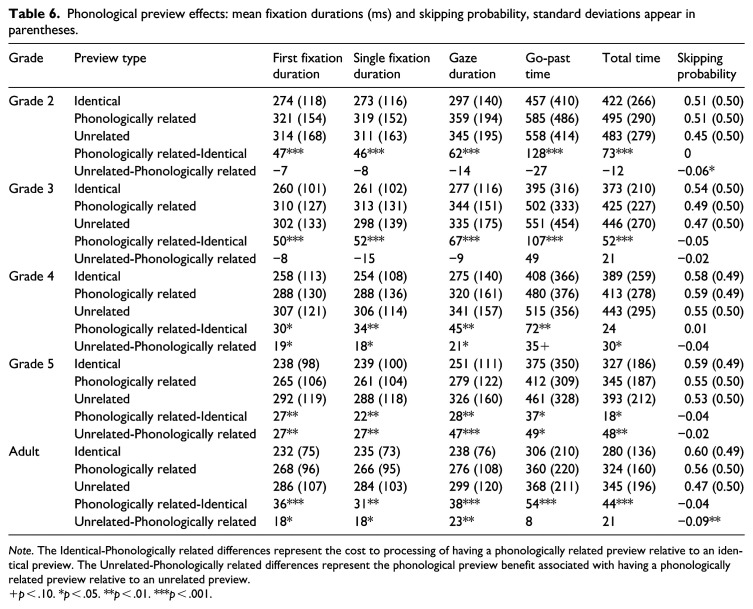 Figure 13
 Figure 14
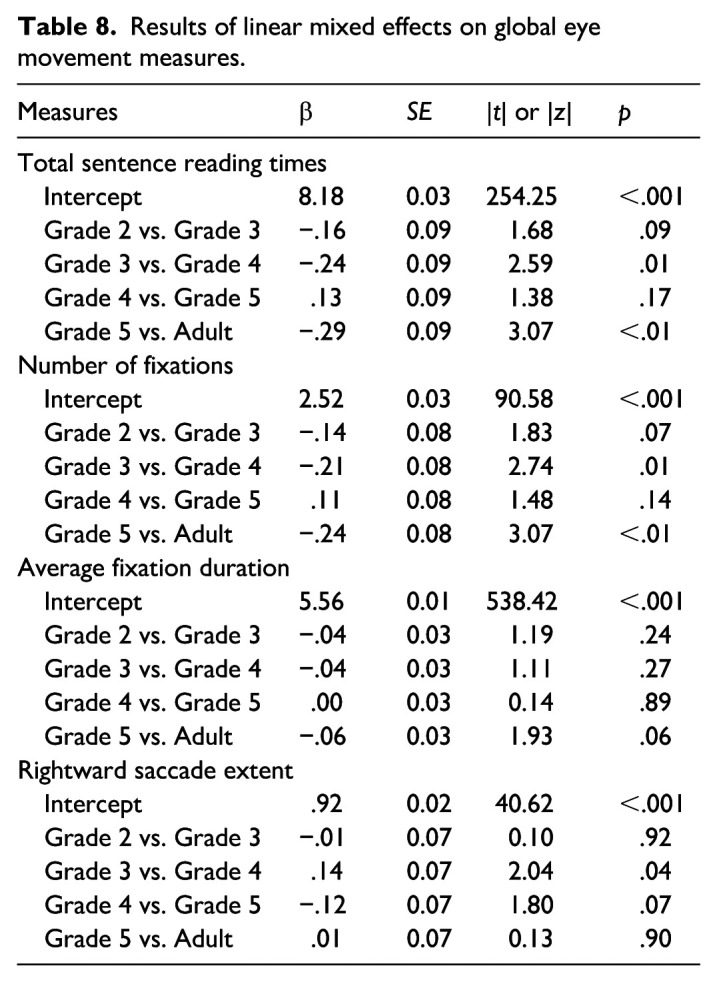 Figure 15
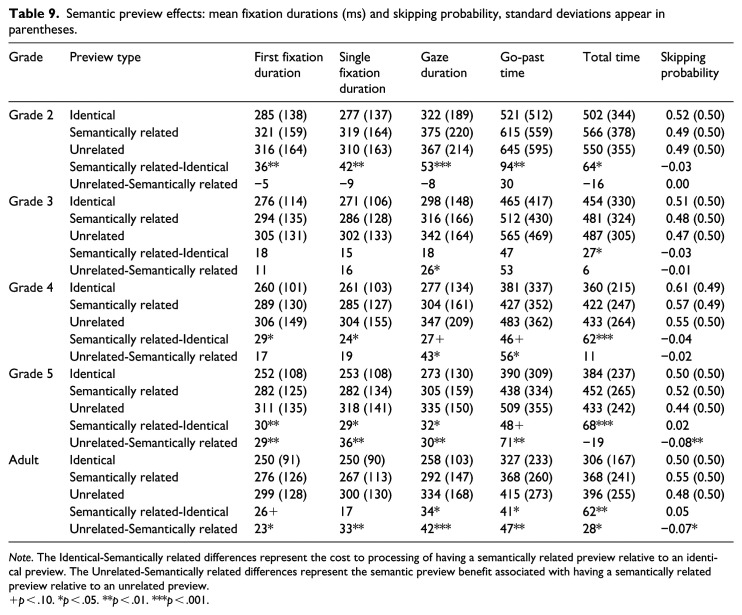 Figure 16
Peer Reviews
No public reviews on file for this paper yet. If you reviewed it on a platform where reviews are public (OpenReview, ICLR, NeurIPS, ICML), you can paste yours below so the community can read it here.
Videos
No videos yet. Explain this paper in a talk, walkthrough, or lecture? Add one.
Taxonomy
TopicsReading and Literacy Development