A large tyrannosaurid from the Late Cretaceous (Campanian) of North America
Nicholas R. Longrich, Sebastian Dalman, Spencer G. Lucas, Anthony R. Fiorillo

TL;DR
A large tyrannosaurid tibia found in New Mexico suggests a massive predator lived in southern Laramidia 74 million years ago, possibly a new or early giant tyrannosaur.
Contribution
The discovery of a large tibia provides new insights into the evolution and geographic distribution of giant tyrannosaurids in Late Cretaceous North America.
Findings
The tibia is 84% the length of the largest Tyrannosaurus, suggesting a mass approaching 5 tonnes.
The tibia's features are most consistent with referral to Tyrannosaurini, a group including Tyrannosaurus.
The find highlights the endemicity of Laramidian dinosaurs, with giant tyrannosaurins in the south and smaller relatives in the north.
Abstract
The Tyrannosauridae emerged as the dominant large predators in Laurasia during the Late Cretaceous. Their evolution in North America culminated with the replacement of Albertosaurinae, Daspletosaurinae, and Teratophonei, with masses of 2-3 tonnes, by the giant Tyrannosaurus in the late Maastrichtian, with a mass approaching or exceeding 10 tonnes. The origin of Tyrannosaurus remains enigmatic, but fossils suggest an origin in the Campanian—Maastrichtian of southern Laramidia. Here we describe an unusually large and robust tyrannosaurid tibia from the late Campanian aged Hunter Wash Member of the Kirtland Formation, New Mexico, ~ 74 Ma. The tibia measures 960 mm in length and 128 mm in diameter, ~84% and 78% the dimensions of the largest known Tyrannosaurus, suggesting a mass approaching 5 tonnes, larger than any contemporary tyrannosaur. The Hunter Wash tyrannosaur could potentially…
Genes, proteins, chemicals, diseases, species, mutations and cell lines named across the full text — each resolved to its canonical identifier and authoritative record.
Click any figure to enlarge with its caption.
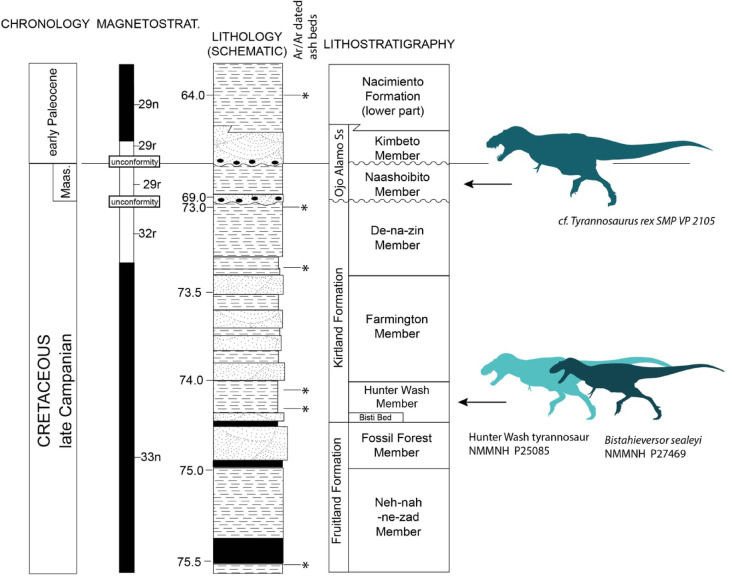 Figure 1
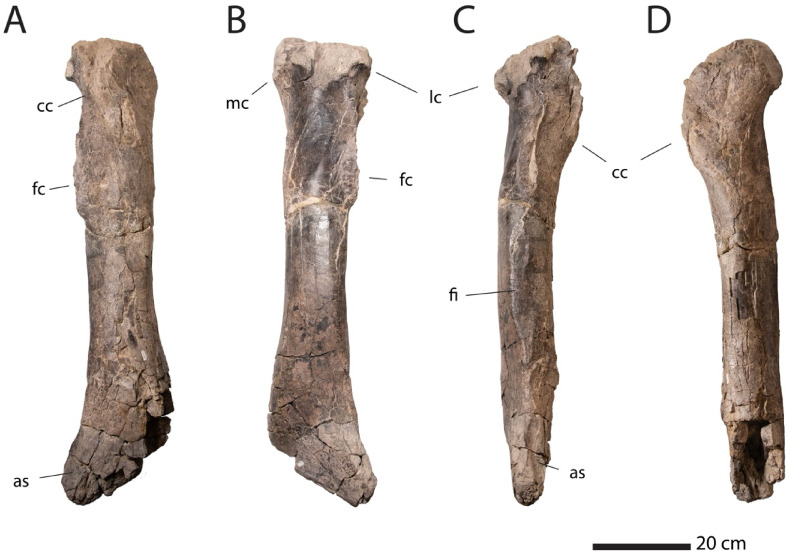 Figure 2
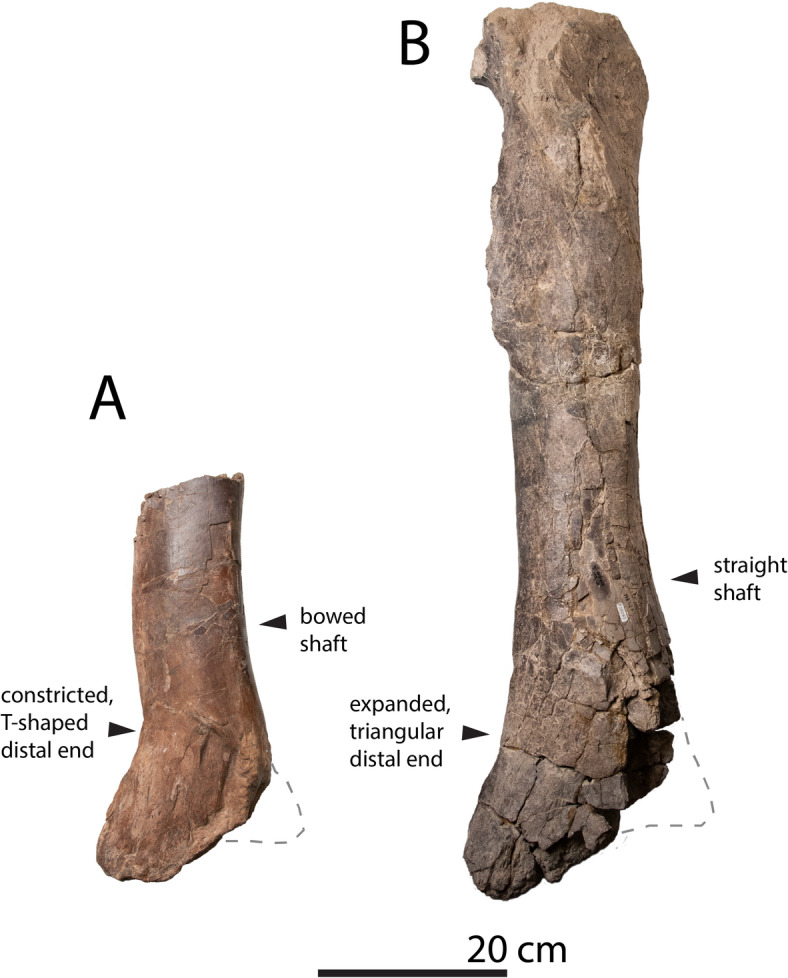 Figure 3
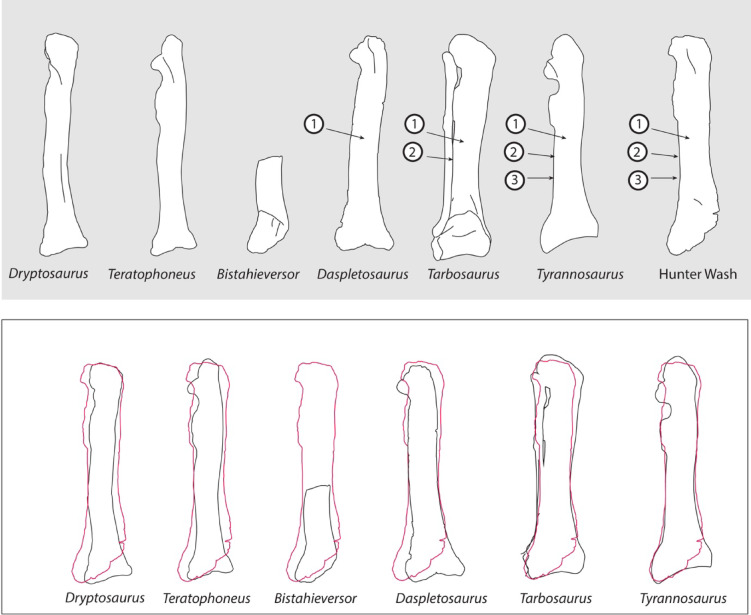 Figure 4
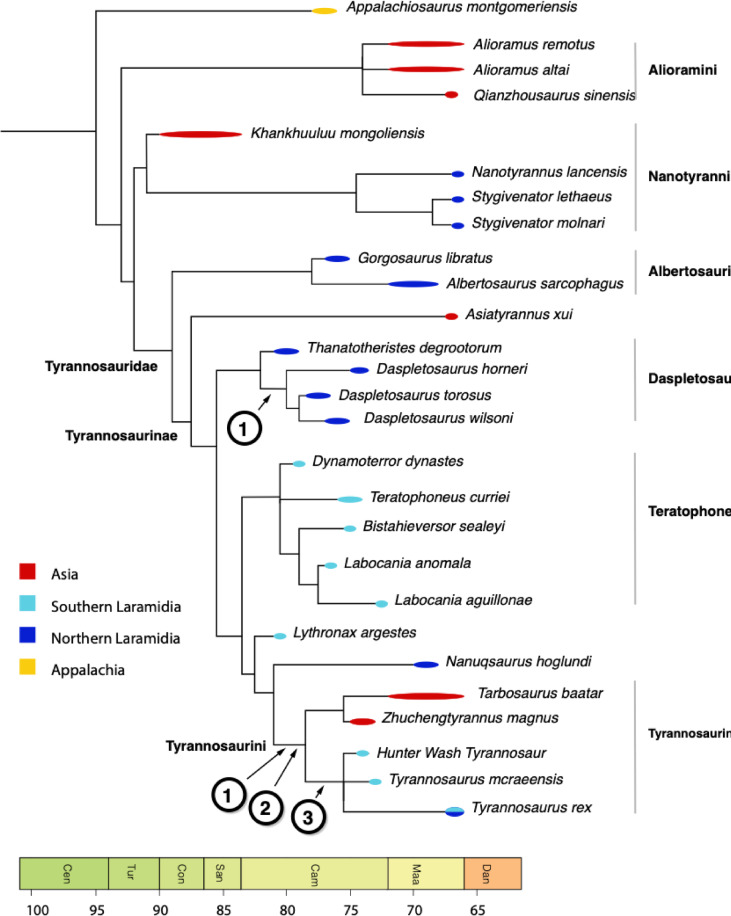 Figure 5
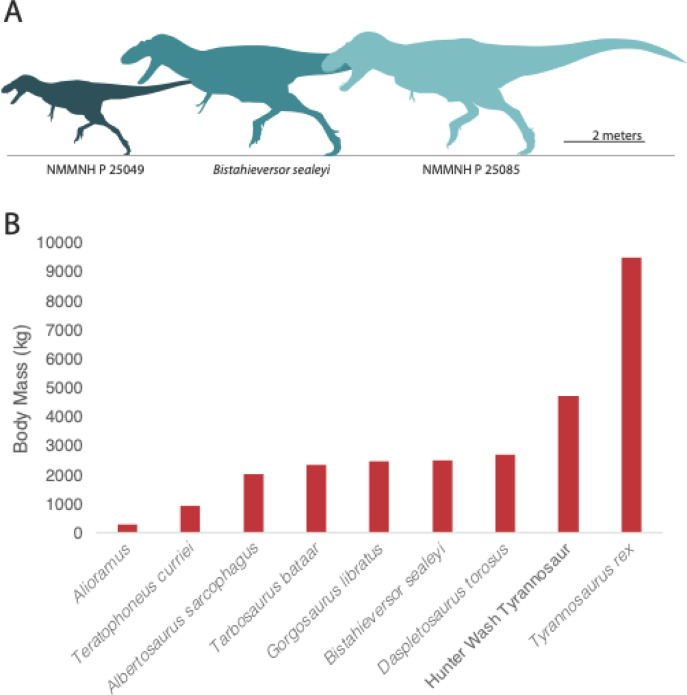 Figure 6
Peer Reviews
No public reviews on file for this paper yet. If you reviewed it on a platform where reviews are public (OpenReview, ICLR, NeurIPS, ICML), you can paste yours below so the community can read it here.
Videos
No videos yet. Explain this paper in a talk, walkthrough, or lecture? Add one.
Taxonomy
TopicsPaleontology and Evolutionary Biology · Paleontology and Stratigraphy of Fossils · Evolution and Paleontology Studies