Proteome-wide Mendelian randomization and colocalization analyses identify potential biomarkers for schizophrenia
Jingyu Lin, Haiming Huang, Lin Chen, Yanyan Wei, Tianmei Si, Yunai Su, Yajuan Niu, Jingxu Chen

TL;DR
This study identifies seven plasma proteins with potential causal roles in schizophrenia, offering new biomarker candidates for further research and treatment development.
Contribution
The study provides novel evidence of causal relationships between specific plasma proteins and schizophrenia through proteome-wide Mendelian randomization and colocalization analyses.
Findings
Seven plasma proteins (ADAM22, LIMA1, CTSS, FOXO3, IRF3, KLC1, and MMP16) were significantly associated with schizophrenia risk.
FOXO3, IRF3, and LIMA1 showed strong colocalization evidence for shared causal variants with schizophrenia.
CTSS, FOXO3, IRF3, and MMP16 interact with known antipsychotic drug targets.
Abstract
We performed proteome-wide Mendelian randomization (MR) and colocalization analyses to explore the causal relationships between proteins and schizophrenia (SCZ). In the primary analysis, genetic instruments of 4,907 plasma protein from 35,559 Icelanders served as the exposure, summary statistics for SCZ (35,476 cases, 46,839 controls) Working Group of the Psychiatric Genomics Consortium (PGC) served as the outcome. The initial findings underwent sensitivity analyses and were externally validated using cis-pQTLs from the Fenland study (4,979 proteins, 10,708 participants) and UK Biobank Pharma Proteomics Project (UKB-PPP, 2923 proteins, 33,043 participants), and brain cis-eQTLs from Genotype-Tissue Expression (GTEx). Bayesian colocalization assessed shared causal variants. Protein-protein interactions with antipsychotic drug targets were explored. In the primary analysis, genetically…
Genes, proteins, chemicals, diseases, species, mutations and cell lines named across the full text — each resolved to its canonical identifier and authoritative record.
Click any figure to enlarge with its caption.
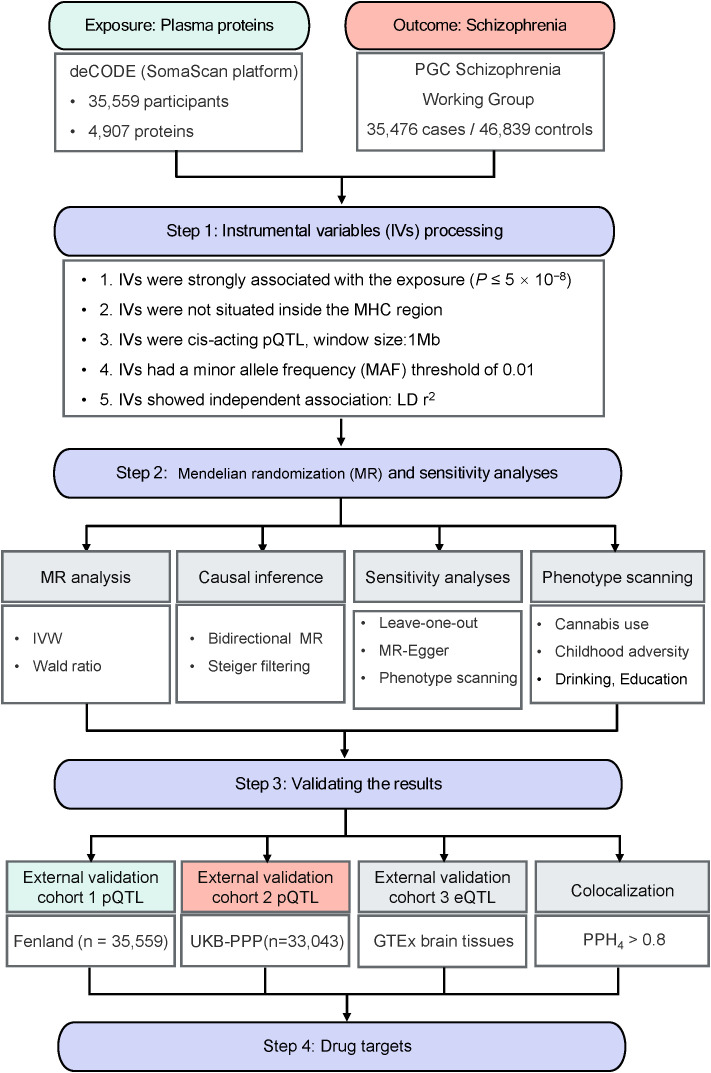 Figure 1
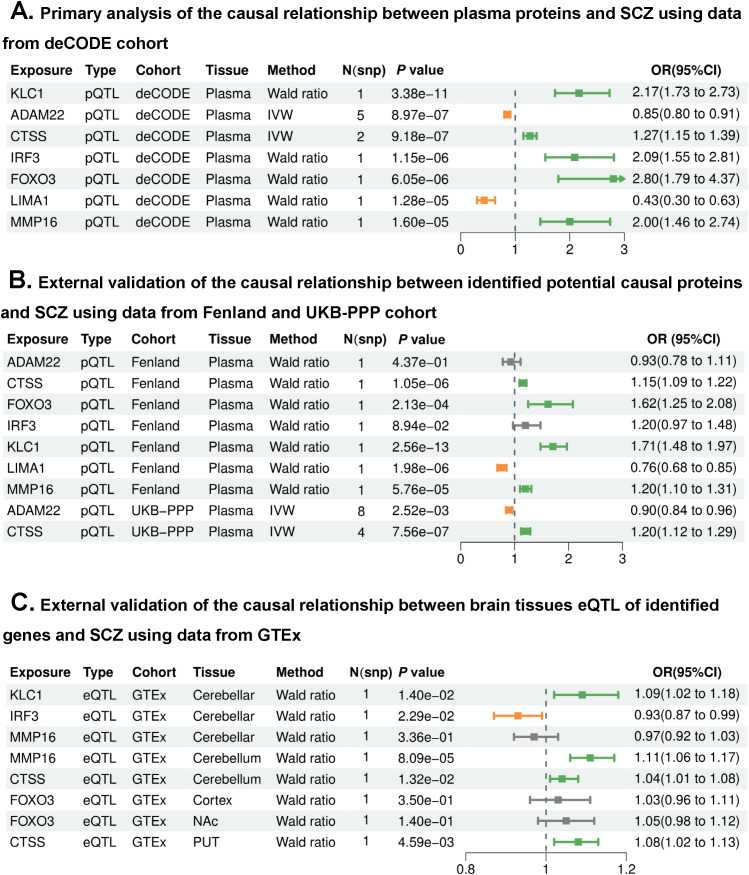 Figure 2
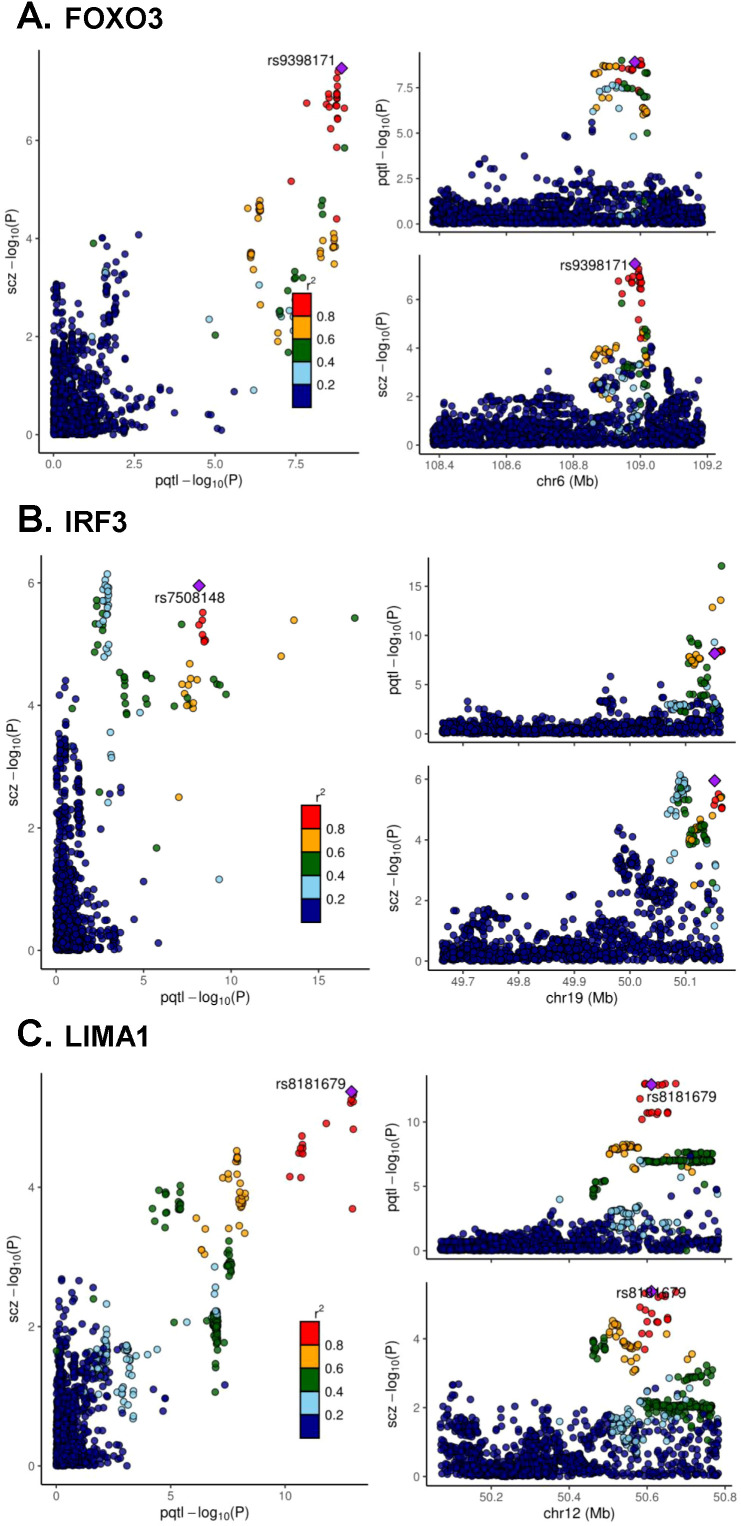 Figure 3
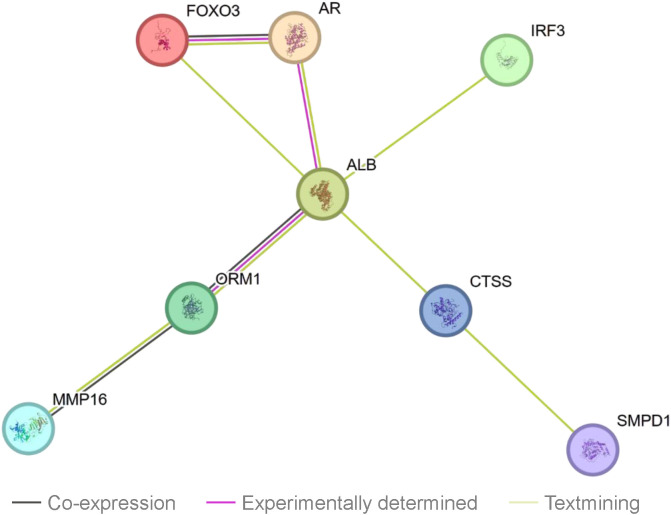 Figure 4
Peer Reviews
No public reviews on file for this paper yet. If you reviewed it on a platform where reviews are public (OpenReview, ICLR, NeurIPS, ICML), you can paste yours below so the community can read it here.
Videos
No videos yet. Explain this paper in a talk, walkthrough, or lecture? Add one.
Taxonomy
TopicsGenetic Associations and Epidemiology · Schizophrenia research and treatment · Tryptophan and brain disorders