Investigating the psychedelic hypothesis of kykeon, the sacred elixir of the Eleusinian Mysteries
Romanos K. Antonopoulos, Evangelos Dadiotis, Kostas Ioannidis, Antigoni Cheilari, Vangelis Mitsis, Ana M. Garcia-Campaña, Laura Gámiz-Gracia, Maykel Hernández-Mesa, Alfonso Narváez, Mark A. Hoffman, Carl A. P. Ruck, Zacharoula Gonou-Zagou, Nektarios Aligiannis, Prokopios Magiatis

TL;DR
This study explores whether ergot fungus was used to create a psychedelic drink in ancient Eleusinian rituals.
Contribution
The study demonstrates a plausible ancient method to convert toxic ergot compounds into psychoactive substances.
Findings
Ergopeptides were converted into lysergic acid amide derivatives using lye, as shown by NMR and HRMS.
The process yielded 0.54 mg LSA and 0.48 mg iso-LSA per gram of ergot after 120 minutes.
This supports the hypothesis that kykeon contained psychoactive compounds from ergot.
Abstract
This study revisits the hypothesis that Claviceps purpurea (Fr.) Tul., a fungus infecting cereals and producing ergot alkaloids (EAs), was the psychedelic agent in kykeon, the sacred elixir of the Eleusinian Mysteries. Although archaeological evidence supports this link, experimental data confirming the transformation of toxic ergopeptides into psychoactive lysergic acid amide derivatives in putative ancient preparations remain limited. The potential hydrolysis products of ergot were investigated using a technique that could have been readily applied by the priestesses of Eleusis, notably reacting in lye. Pulverized sclerotia were refluxed in solutions of lye and in distilled water. Samples obtained after liquid-liquid extractions were analyzed with 1H-NMR and UHPLC/Q-TOF-HRMS. The 1H NMR spectra demonstrated conversion of toxic ergopeptides, present in control samples but absent at all…
Genes, proteins, chemicals, diseases, species, mutations and cell lines named across the full text — each resolved to its canonical identifier and authoritative record.
Click any figure to enlarge with its caption.
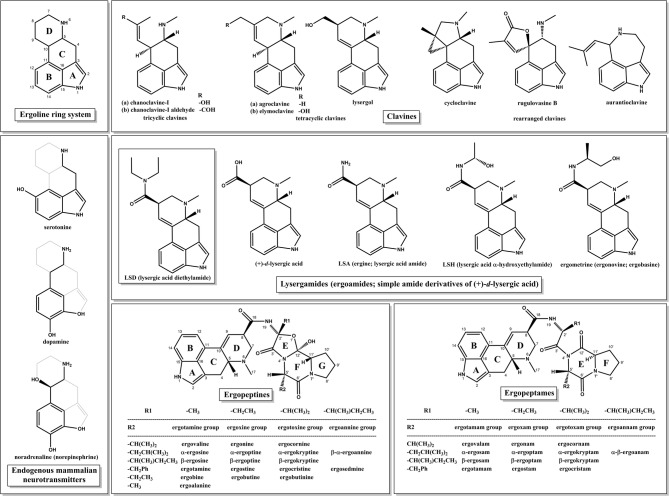 Figure 1
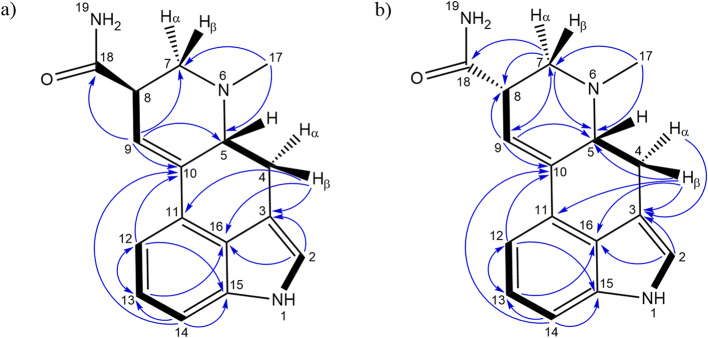 Figure 2
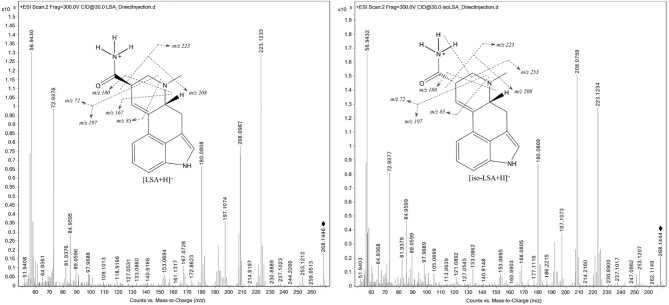 Figure 3
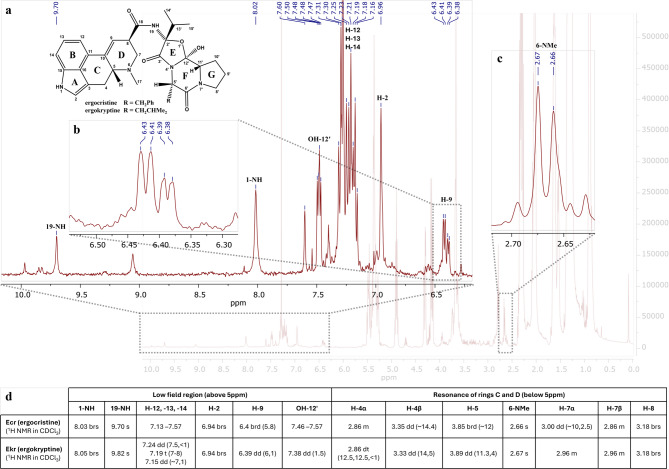 Figure 4
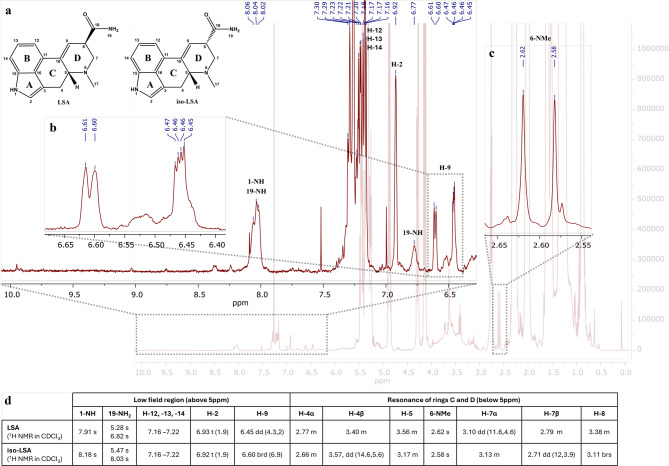 Figure 5
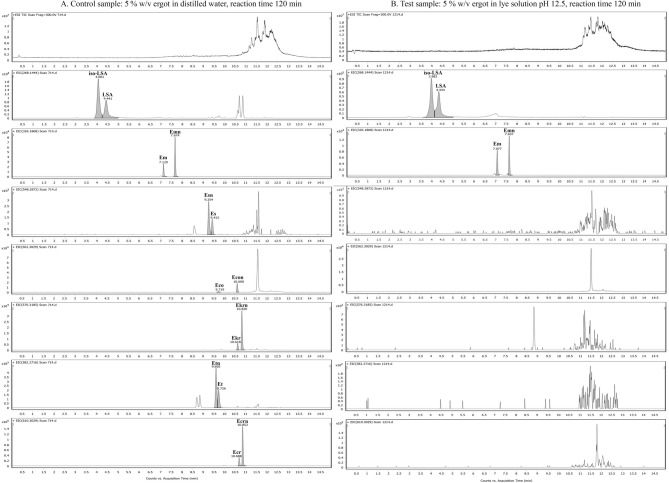 Figure 6
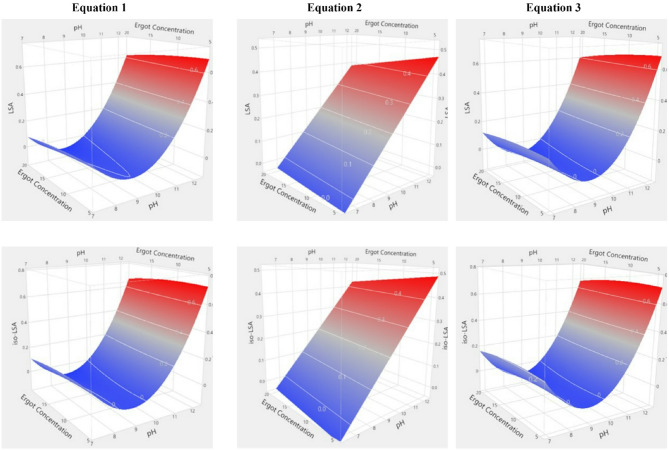 Figure 7
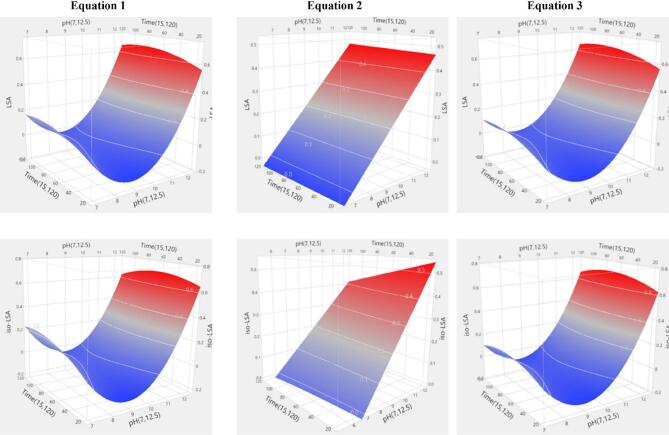 Figure 8
Peer Reviews
No public reviews on file for this paper yet. If you reviewed it on a platform where reviews are public (OpenReview, ICLR, NeurIPS, ICML), you can paste yours below so the community can read it here.
Videos
No videos yet. Explain this paper in a talk, walkthrough, or lecture? Add one.
Taxonomy
TopicsPlant and fungal interactions · Fungal Biology and Applications · Chemical synthesis and alkaloids