Antibody-enabled structural biology and AI-driven antibody design
Khuram U. Ashraf, Satchal K. Erramilli

TL;DR
Antibodies and AI are transforming structural biology by enabling better study of membrane proteins and accelerating drug discovery.
Contribution
This paper reviews the combined impact of antibody engineering and AI on structural biology and therapeutic development.
Findings
Antibodies stabilize membrane proteins for structural studies.
AI enhances modeling and design of antibody-antigen interactions.
These approaches enable visualization of previously inaccessible complexes.
Abstract
Membrane proteins govern essential cellular processes, including ion transport, signal transduction, and molecular recognition, and collectively represent more than half of all current therapeutic targets. Yet their structural characterization remains challenging due to intrinsic instability, amphipathic surfaces, and conformational heterogeneity. Over the past decade, antibody-based approaches, spanning full-length immunoglobulins, antigen-binding fragments (Fabs), nanobodies, and engineered scaffolds such as designed ankyrin repeat proteins (DARPins), have transformed structural biology by stabilizing dynamic states, augmenting molecular weight for cryo-electron microscopy (cryo-EM), and enabling visualization of previously inaccessible complexes. In parallel, advances in artificial intelligence and machine learning have begun to enhance predictive modeling, accelerate structure…
Click any figure to enlarge with its caption.
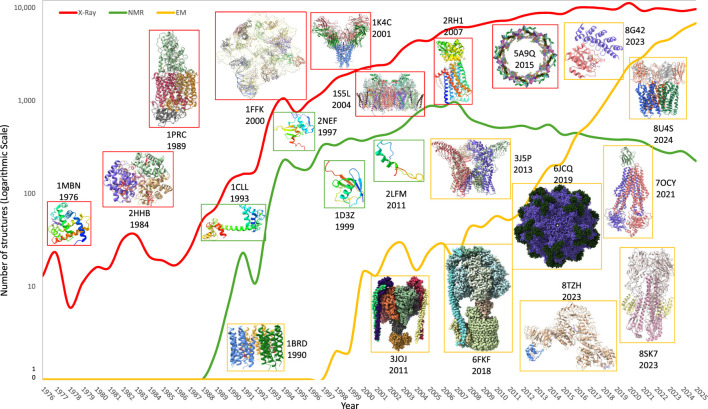 Figure 1
Peer Reviews
No public reviews on file for this paper yet. If you reviewed it on a platform where reviews are public (OpenReview, ICLR, NeurIPS, ICML), you can paste yours below so the community can read it here.
Videos
No videos yet. Explain this paper in a talk, walkthrough, or lecture? Add one.
Taxonomy
TopicsMonoclonal and Polyclonal Antibodies Research · vaccines and immunoinformatics approaches · Biochemical and Structural Characterization