Evaluation of genetic variation in tumor suppressor miRNA encoding and their target genes in breast cancer; focus on miRNA interaction and expression analysis
Yogita Chhichholiya, Sandeep Singh, Rajesh Vashistha, Manjit Kaur Rana, Anjana Munshi

TL;DR
This study explores how genetic variations in tumor suppressor miRNAs and their target genes, specifically KRAS, affect breast cancer risk and survival outcomes.
Contribution
The study identifies specific KRAS 3′UTR variants that disrupt miRNA binding and links miRNA expression levels to better survival in breast cancer patients.
Findings
Variants rs712 and rs9266 in KRAS 3′UTR disrupt miRNA binding and increase KRAS expression.
Higher hsa-let-7c and hsa-miR-181c expression correlates with better survival in breast cancer patients.
KRAS is identified as a potential predictive biomarker for chemotherapy response.
Abstract
Genetic variations in tumor suppressor miRNAs and the 3′UTR of their target genes influence tumor biology and breast cancer (BC) risk. This study investigated genetic variations in tumor suppressor miRNAs (hsa-let-7c, hsa-miR-34a, hsa-miR-145a) and their target genes (KRAS, IGFBP6, IGF1R), and their functional significance in BC patients. The miRNA encoding regions and 3′UTRs of the selected target genes were sequenced in 208 BC patients. Functional analyses were performed using luciferase assay, RT-PCR, IHC, and Western blotting. RNAfold, TNM plot, Kaplan-Meier Plotter, and ROC Plotter were used for structural predictions, survival, and therapy response analysis. Two variants, rs712 and rs9266, were found in the 3′UTR of KRAS. Luciferase assay confirmed that rs9266 disrupts the binding of hsa-let-7c and hsa-miR-181c, leading to increased KRAS expression. KRAS expression was highest…
Genes, proteins, chemicals, diseases, species, mutations and cell lines named across the full text — each resolved to its canonical identifier and authoritative record.
Click any figure to enlarge with its caption.
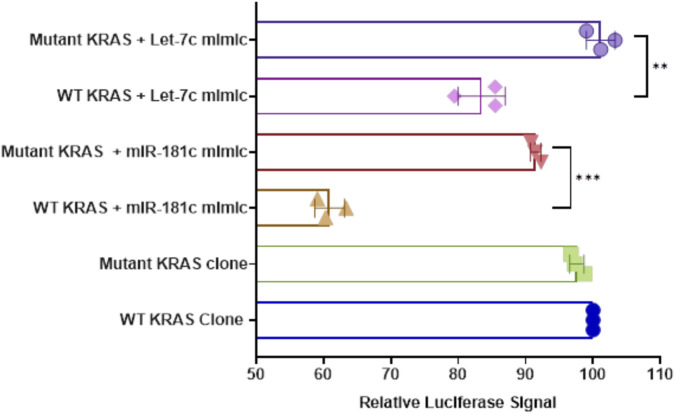 Figure 1
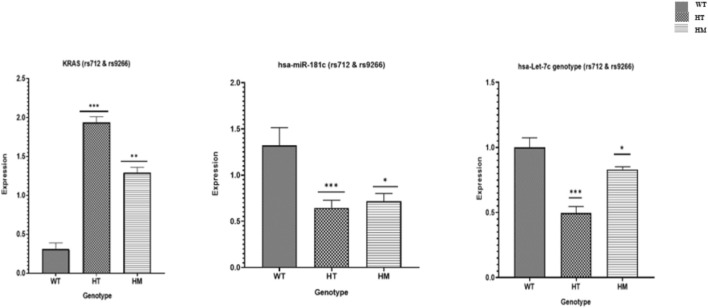 Figure 2
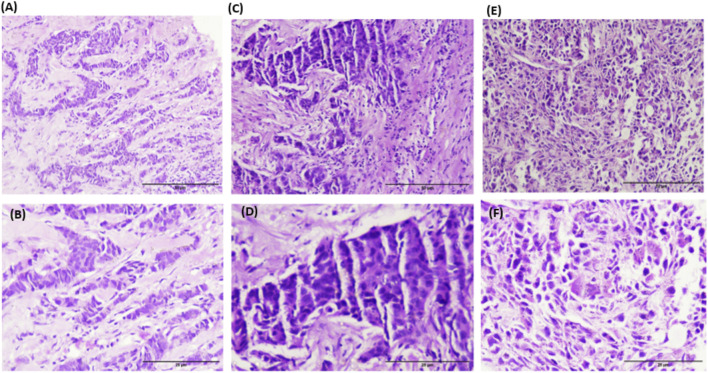 Figure 3
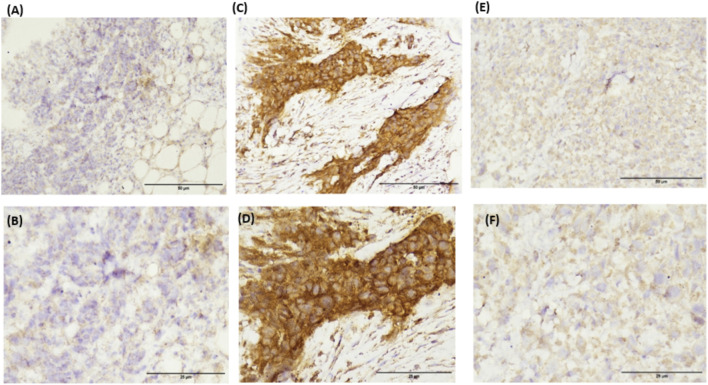 Figure 4
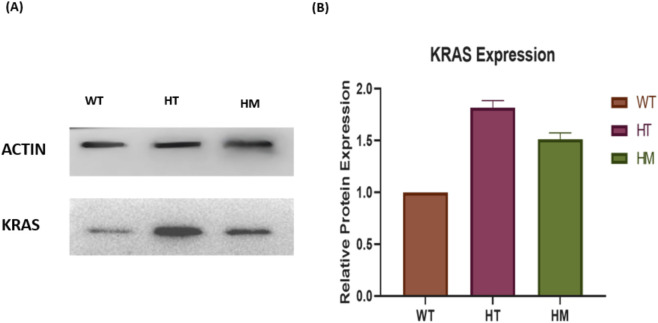 Figure 5
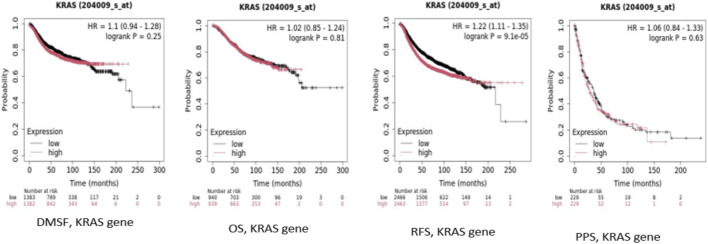 Figure 6
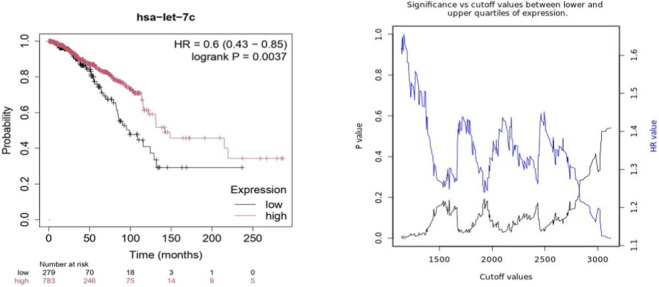 Figure 7
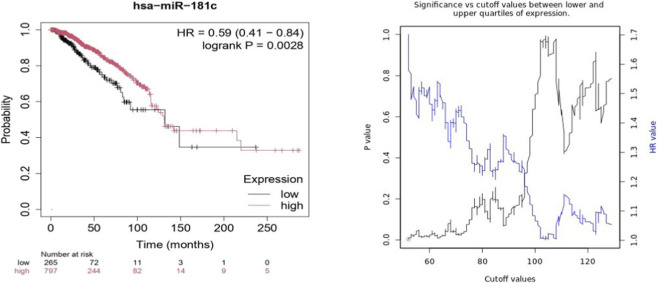 Figure 8
Peer Reviews
No public reviews on file for this paper yet. If you reviewed it on a platform where reviews are public (OpenReview, ICLR, NeurIPS, ICML), you can paste yours below so the community can read it here.
Videos
No videos yet. Explain this paper in a talk, walkthrough, or lecture? Add one.
Taxonomy
TopicsMicroRNA in disease regulation · Cancer-related Molecular Pathways · Genomics and Chromatin Dynamics