Comparative genomic and ecological insights into Salmonella enterica serovar Kumasi ST2302 from the first Asian clinical isolate
Shijie Peng, Yan Chen, Taigui Chen, Jun Wang, Peijun Lv, Yanan Wang, Xuebin Xu, Yibin Zhou, Yue Liu

TL;DR
This paper reports the first Asian case of a rare Salmonella strain, S. Kumasi, isolated from a child with mild diarrhea, highlighting its plant-associated origin and limited human transmission.
Contribution
The study provides the first genomic and clinical characterization of S. Kumasi ST2302 in Asia, revealing its plant-adapted lineage and limited pathogenic potential.
Findings
The S. Kumasi isolate from China is the first clinical case in Asia and is sequence type ST2302.
The genome lacks mobile genetic elements and acquired resistance genes, showing a plant-adapted lineage.
The isolate's atypical toxin architecture and limited clinical expansion suggest sporadic spillover from plant sources.
Abstract
Salmonella enterica subspecies enterica serovar Kumasi (S. Kumasi) is an exceptionally rare non-typhoidal Salmonella (NTS) serovar that has been historically linked to plant- or environment-associated sources and only sporadically isolated from humans. Its genomic characteristics, ecological niche, and pathogenic potential remain poorly defined. The clinical isolate (XXB410) underwent antimicrobial susceptibility testing and whole-genome sequencing. Comparative phylogenomic, resistome, virulence, and pan-genome analyses were performed against all 20 publicly available S. Kumasi genomes. We report the first human infection due to S. Kumasi in Asia, isolated from a 4-year-old child in China presenting with self-limiting diarrhea. XXB410 was identified as sequence type ST2302 and clustered within a lineage dominated by plant/botanical and non-human sources. The genome was plasmid-free…
Genes, proteins, chemicals, diseases, species, mutations and cell lines named across the full text — each resolved to its canonical identifier and authoritative record.
Click any figure to enlarge with its caption.
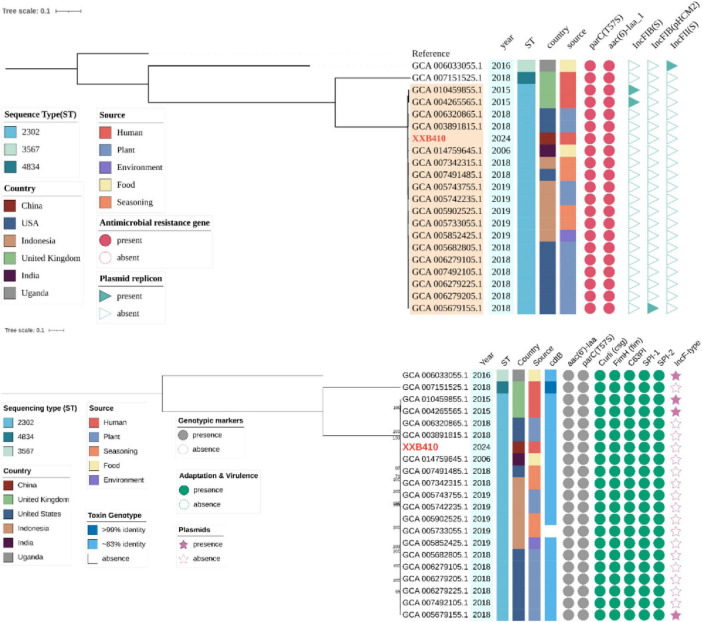 Figure 1
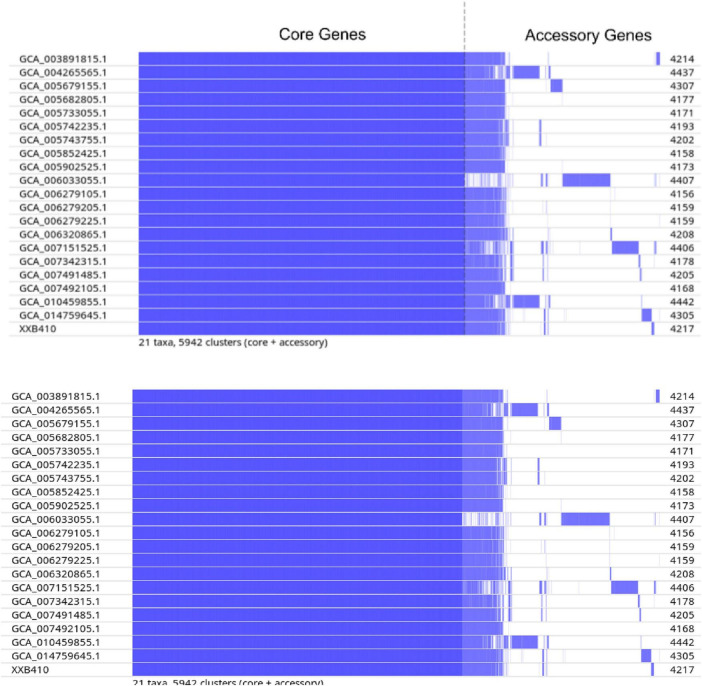 Figure 2
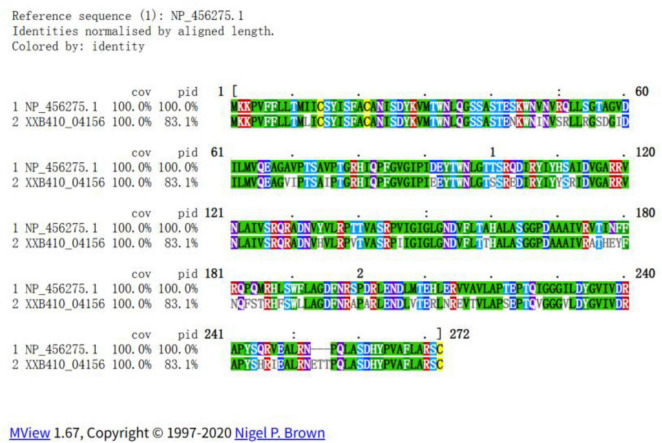 Figure 3
Peer Reviews
No public reviews on file for this paper yet. If you reviewed it on a platform where reviews are public (OpenReview, ICLR, NeurIPS, ICML), you can paste yours below so the community can read it here.
Videos
No videos yet. Explain this paper in a talk, walkthrough, or lecture? Add one.
Taxonomy
TopicsSalmonella and Campylobacter epidemiology · Cancer Research and Treatments · Escherichia coli research studies