Toward automated neonatal EEG analysis: multi-center validation of a reliable deep learning pipeline
Tim Hermans, Anneleen Dereymaeker, Katrien Lemmens, Katrien Jansen, Fatima Usman, Shellie Robinson, Gunnar Naulaers, Maarten De Vos, Caroline Hartley

TL;DR
This paper introduces NeoNaid, an automated tool for analyzing neonatal EEGs, validated across two hospitals to ensure reliability and accuracy in estimating brain age and sleep stages.
Contribution
The novel contribution is a deep learning pipeline with integrated quality control that reliably estimates functional brain age and sleep stages in neonatal EEGs across different clinical settings.
Findings
NeoNaid achieved median absolute FBA errors of 0.50 weeks in the internal dataset and 0.55 weeks in the external dataset.
Sleep staging accuracy had Cohen’s Kappa values of 0.89 and 0.87 for quiet sleep detection in internal and external datasets, respectively.
Quality control routines reduced extreme errors and improved reliability across both datasets.
Abstract
To evaluate the reliability and generalization of NeoNaid, a fully automated software tool for neonatal EEG analysis, based on functional brain age (FBA) estimation and sleep staging. NeoNaid combines a multi-task deep learning model with proposed quality control routines detecting artifacts, out-of-distribution inputs, and uncertain predictions. Based on a raw EEG input, it outputs one global FBA estimate and a continuous 2-state hypnogram. We validated performance on two independent hospital settings: an internal dataset (33 EEGs, 17 infants, median 900 min/recording) and an external dataset (38 EEGs, 24 infants, median 124 min/recording). Quality control rejected a comparable number of segments in the internal and external datasets, reducing extreme errors in FBA estimation, and modestly improving sleep staging accuracy. Across the internal and external data, NeoNaid achieved…
Genes, proteins, chemicals, diseases, species, mutations and cell lines named across the full text — each resolved to its canonical identifier and authoritative record.
Click any figure to enlarge with its caption.
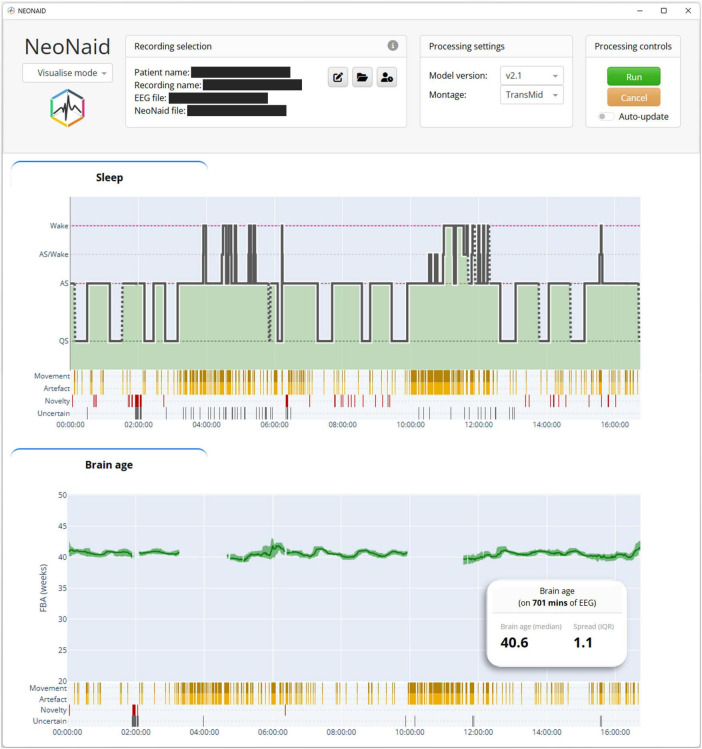 Figure 1
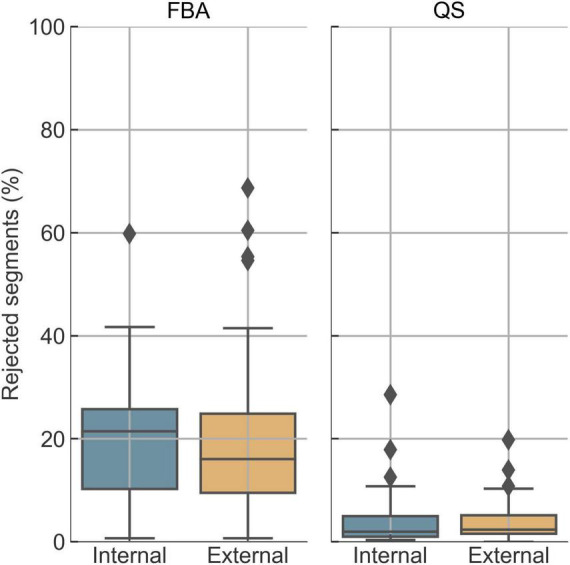 Figure 2
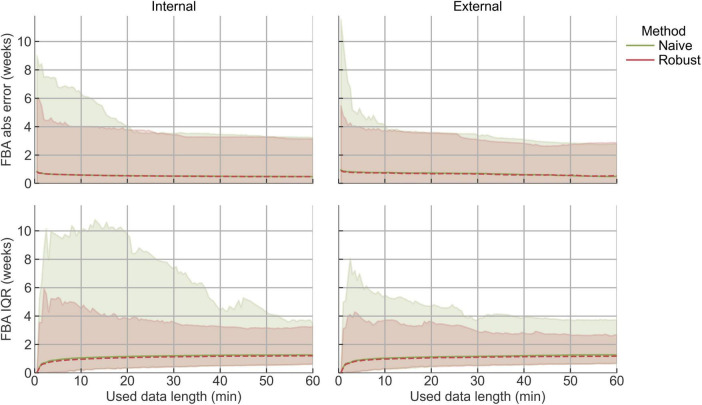 Figure 3
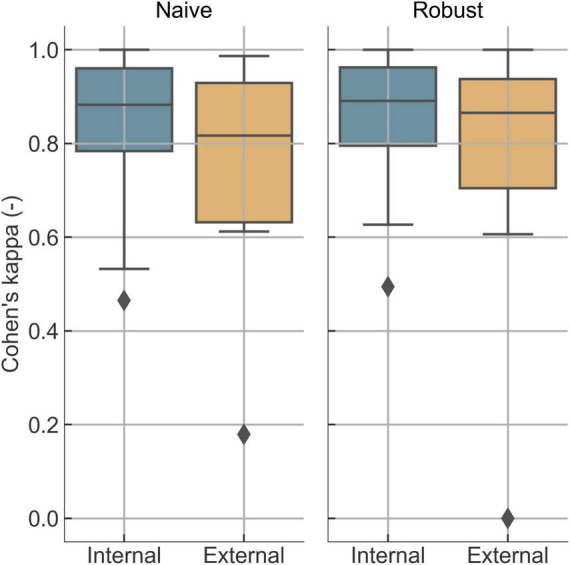 Figure 4
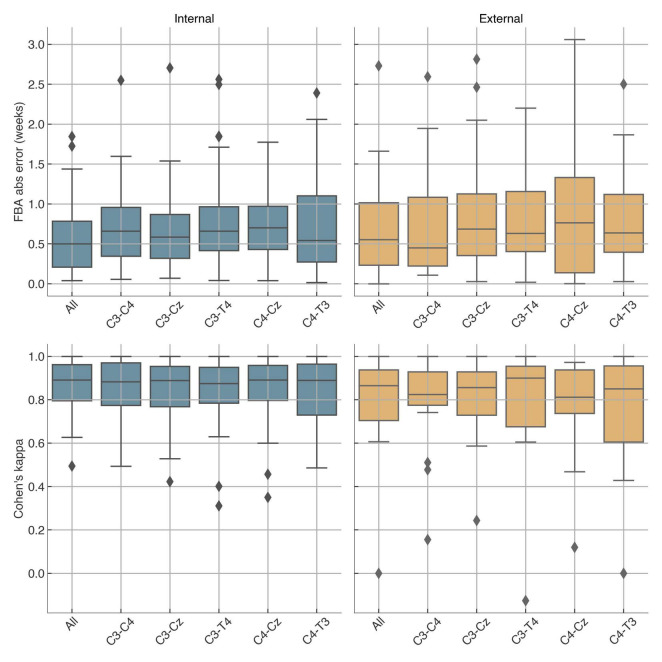 Figure 5
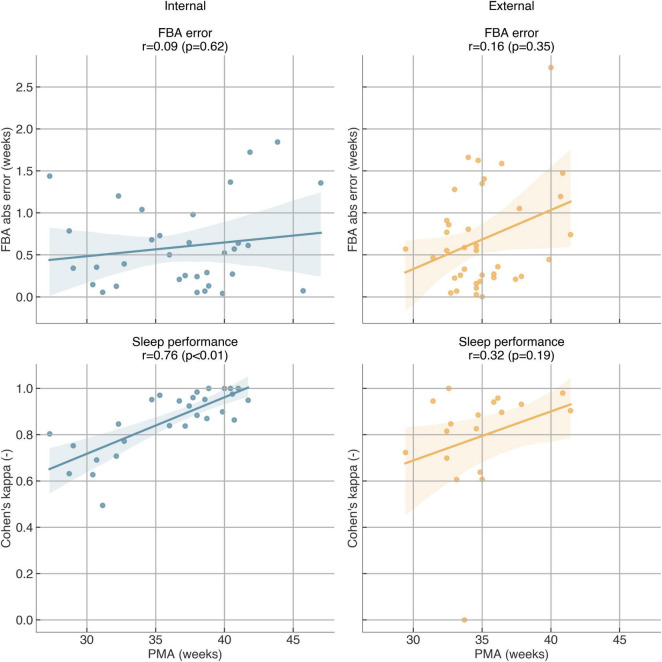 Figure 6
Peer Reviews
No public reviews on file for this paper yet. If you reviewed it on a platform where reviews are public (OpenReview, ICLR, NeurIPS, ICML), you can paste yours below so the community can read it here.
Videos
No videos yet. Explain this paper in a talk, walkthrough, or lecture? Add one.
Taxonomy
TopicsEEG and Brain-Computer Interfaces · Neonatal and fetal brain pathology · Non-Invasive Vital Sign Monitoring