Classification of Lupinus seeds into sweet and bitter categories using VIS–NIR spectroscopy and machine learning
Josefa Díaz-Álvarez, Francisco A. Galea-Gragera, Francisco Chávez de la O, Pedro A. Salguero-López, Fernando Llera Cid

TL;DR
Researchers used light and machine learning to non-destructively classify sweet and bitter Lupinus seeds.
Contribution
A non-destructive method using VIS-NIR spectroscopy and machine learning for classifying Lupinus seeds is proposed.
Findings
SVC and LGR achieved high classification accuracy (92-93%) using VIS-NIR data.
Hybrid spectral transformations improved discrimination between sweet and bitter seeds.
Resampling methods helped reduce overfitting due to class imbalance.
Abstract
The Lupinus germplasm includes sweet and bitter materials distinguished by compounds responsible for bitterness. Conventional identification is often destructive. This study assesses a non-destructive approach based on visible–near infrared (VIS-NIR) spectroscopy and machine learning to classify whole seeds from seven Lupinus species into sweet or bitter classes. Five machine-learning algorithms were evaluated on two datasets (reflectance and absorbance) acquired with VIS-NIR spectroscopy. Analyses were conducted on raw spectra and on spectra transformed using four spectral-transformation techniques. Because classes were imbalanced, five resampling methods were compared to improve classification performance. Performance was assessed using F1-score and ROC-AUC. On reflectance, LGR and SVC reached 92.5 and 92.0%; on absorbance, SVC and RF achieved 93.2 and 92.5%. Hybrid transformations…
Genes, proteins, chemicals, diseases, species, mutations and cell lines named across the full text — each resolved to its canonical identifier and authoritative record.
Click any figure to enlarge with its caption.
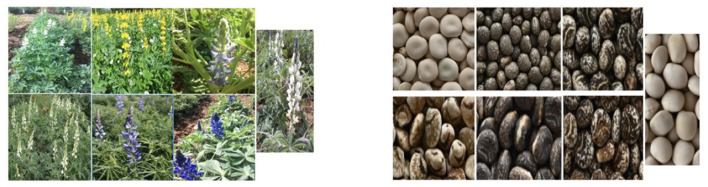 Figure 1
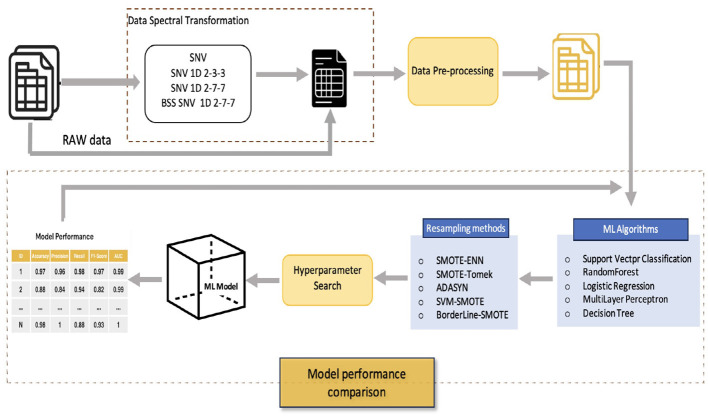 Figure 2
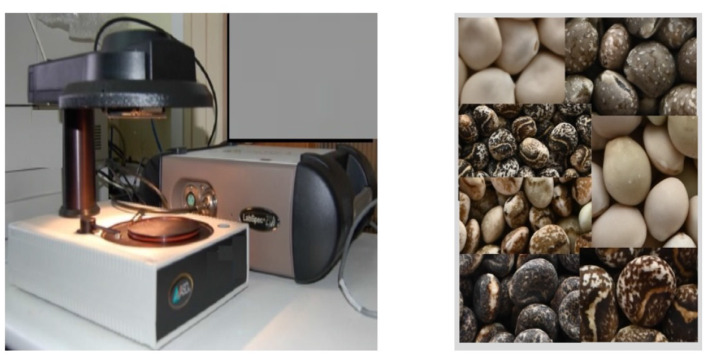 Figure 3
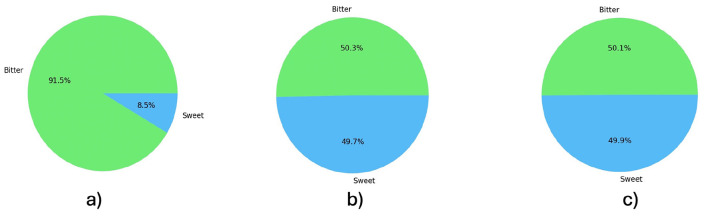 Figure 4
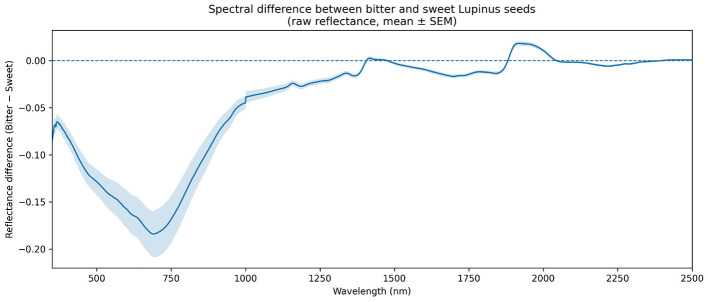 Figure 5
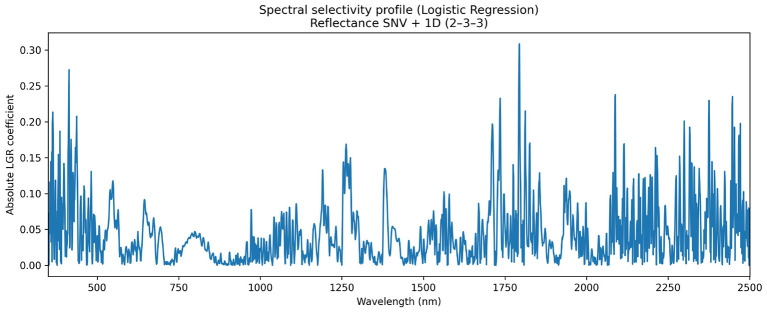 Figure 6
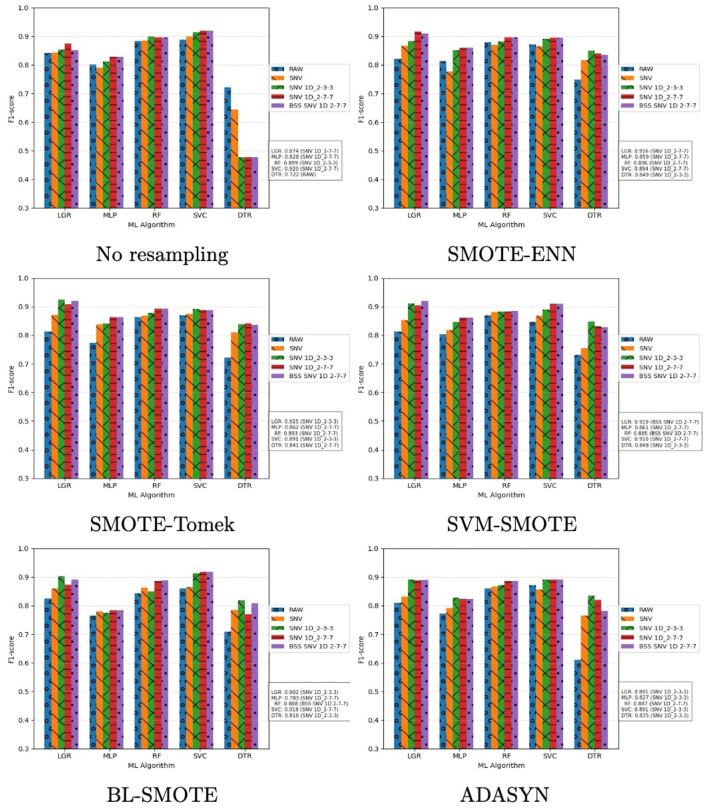 Figure 7
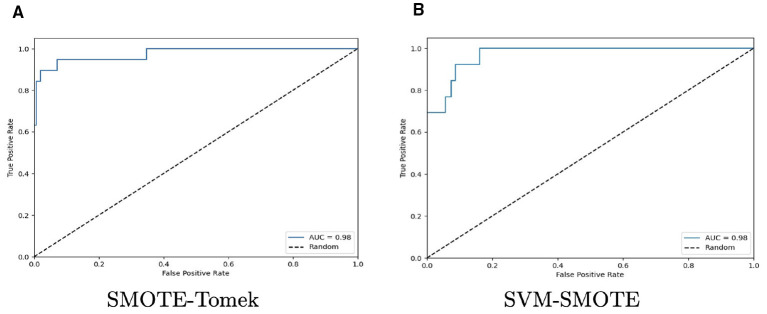 Figure 8
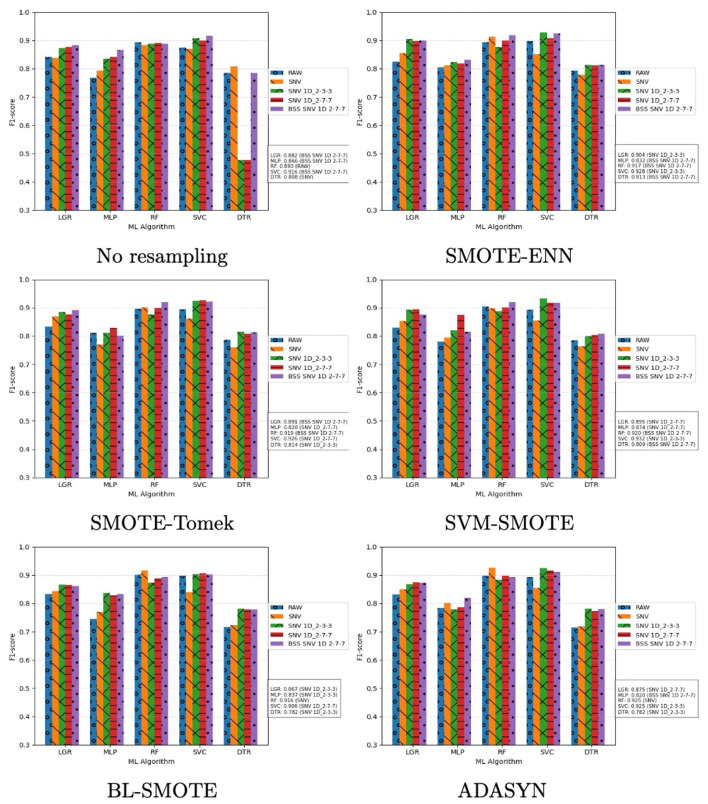 Figure 9
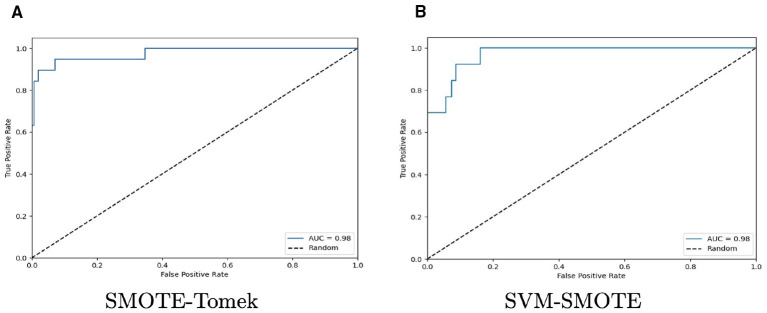 Figure 10
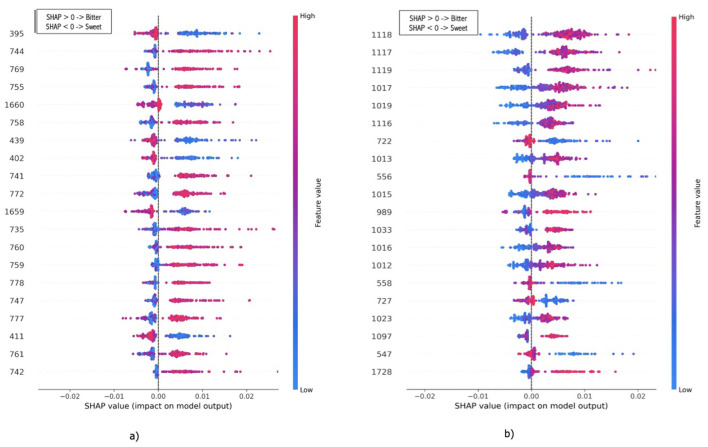 Figure 11
Peer Reviews
No public reviews on file for this paper yet. If you reviewed it on a platform where reviews are public (OpenReview, ICLR, NeurIPS, ICML), you can paste yours below so the community can read it here.
Videos
No videos yet. Explain this paper in a talk, walkthrough, or lecture? Add one.
Taxonomy
TopicsSpectroscopy and Chemometric Analyses · Spectroscopy Techniques in Biomedical and Chemical Research · Botanical Research and Chemistry