Prediction of site-specific drug deposition via dry powder inhaler using non-invasive real-time particle emission signal monitoring system
Sakiko Hatazoe, Daiki Hira, Tetsuri Kondo, Yuki Shigetsura, Natsuki Imayoshi, Yurie Katsube, Keiko Ikuta, Yuki Kunitsu, Keisuke Umemura, Satoshi Hamada, Satoshi Ueshima, Shunsaku Nakagawa, Masahiro Tsuda, Susumu Sato, Mikio Kakumoto, Tomohiro Terada

TL;DR
This paper introduces a non-invasive method to predict where inhaled drugs deposit in the lungs using real-time particle emission signals from dry powder inhalers.
Contribution
A novel non-invasive, real-time system using photo reflection to predict site-specific drug deposition from dry powder inhalers.
Findings
Particle emission signals strongly correlate with drug deposition in the lungs using a Hill model.
Oropharyngeal drug deposition correlates with flow rate at emission peak using a linear model.
The method enables personalized inhalation performance assessment beyond conventional flow metrics.
Abstract
Accurate evaluation of regional drug deposition within the respiratory tract is essential for optimizing inhalation therapy efficacy and minimizing adverse effects. However, non-invasive, real-time quantitative methods for site-specific drug delivery assessment remain limited. To develop mathematical models to predict site-specific drug deposition from a dry powder inhaler (DPI) using a non-invasive, real-time photo reflection method (PRM). Using Symbicort® Turbuhaler® as a model DPI, four inhalation patterns varying in peak flow rate (PFR: 30–60 L/min) and flow increase rate (FIR: 3.2–9.6 L/s2) were simulated using a human inhalation flow simulator. Aerodynamic particle deposition of budesonide was quantified as the fine particle fraction for the whole lung (FPFWL), peripheral airways (FPFPA), and oropharyngeal region using an Andersen Cascade Impactor. Particle emission signals were…
Genes, proteins, chemicals, diseases, species, mutations and cell lines named across the full text — each resolved to its canonical identifier and authoritative record.
Click any figure to enlarge with its caption.
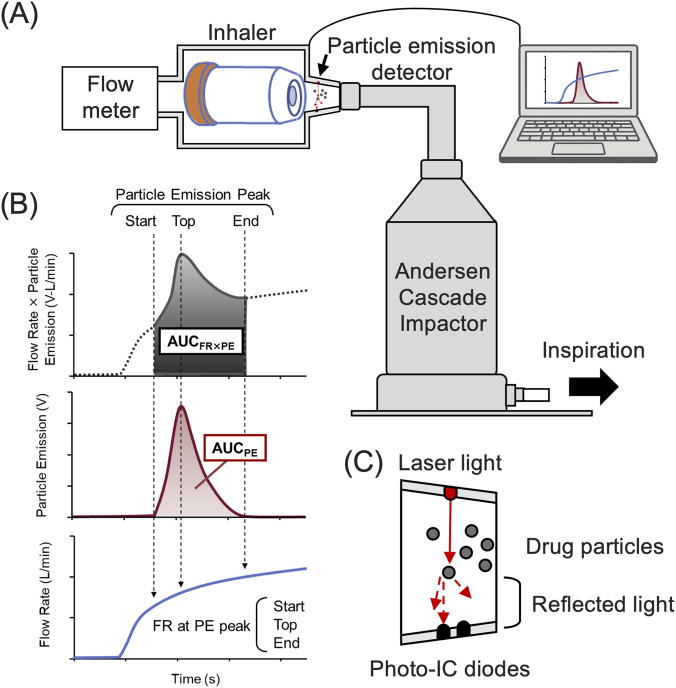 Figure 1
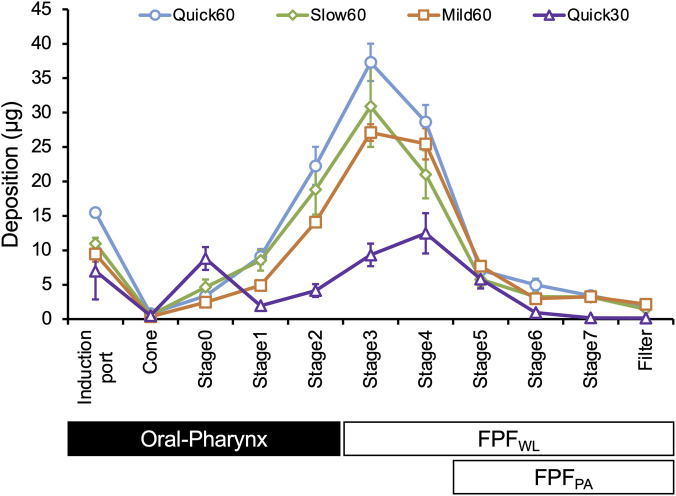 Figure 2
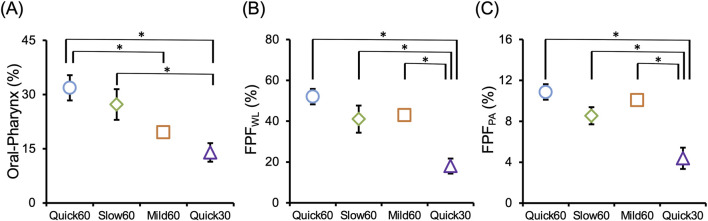 Figure 3
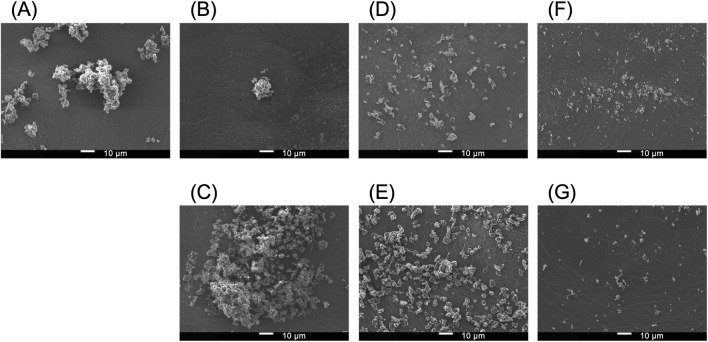 Figure 4
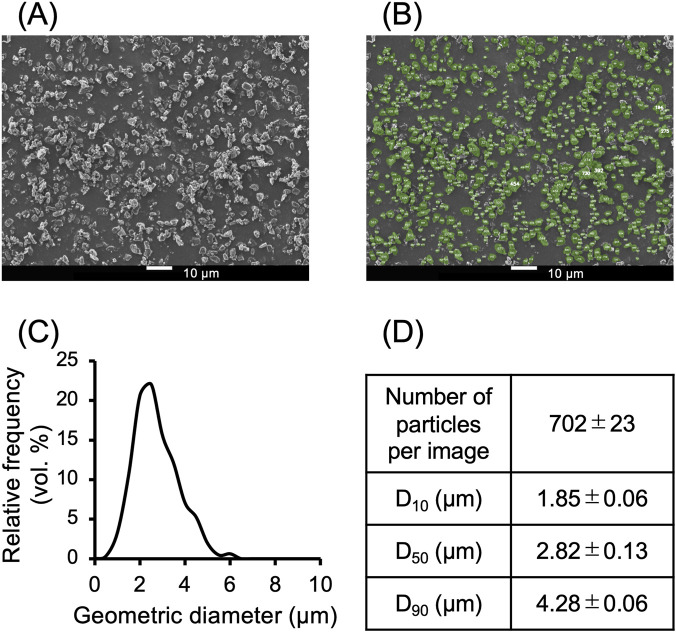 Figure 5
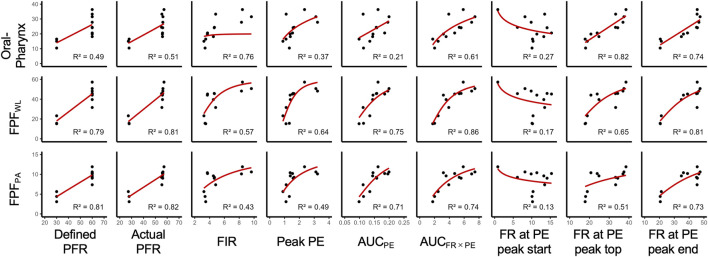 Figure 6
Peer Reviews
No public reviews on file for this paper yet. If you reviewed it on a platform where reviews are public (OpenReview, ICLR, NeurIPS, ICML), you can paste yours below so the community can read it here.
Videos
No videos yet. Explain this paper in a talk, walkthrough, or lecture? Add one.
Taxonomy
TopicsInhalation and Respiratory Drug Delivery · Asthma and respiratory diseases · Advancements in Transdermal Drug Delivery