Integrated metabolome and transcriptome analysis of castor oil accumulation during seed development in Ricinus communis
Xinxin Geng, Wenhua Tang, Maomao Ma, Chaoying Xu, Lijun Wang, Ying Wang, Mengling Huang, Yemei Sun, Liang Chen, Xiaomeng Xue

TL;DR
This study combines metabolomic and transcriptomic data to understand how castor oil accumulates in developing seeds of Ricinus communis, identifying key genes and metabolites involved in ricinoleic acid production.
Contribution
The study provides an integrated analysis of metabolome and transcriptome data to identify candidate genes and metabolites crucial for ricinoleic acid synthesis and oil accumulation in castor seeds.
Findings
Three key metabolites (hydroxy ricinoleic acid, ricinoleic acid methyl ester, and ricinoleic acid) showed increased abundance during seed development.
30 fatty acid biosynthesis genes and six oil body-related genes were identified as candidates for oil synthesis.
Five candidate genes co-upregulated with key metabolites, including FAH12 and OLE/PXG genes, were linked to ricinoleic acid biosynthesis and oil storage.
Abstract
Ricinoleic acid is a high-value hydroxy fatty acid with broad industrial applications, which is the main composition of castor oil (approximately 87%). Elucidating the molecular mechanisms underlying seed oil synthesis and identifying key candidate genes are essential for increasing ricinoleic acid production. In this study, we employed an integrated metabolomic and transcriptomic approach to investigate the dynamic synthesis of castor oil during seed development in Ricinus communis (R. communis). A total of 790 structurally identified metabolites were detected across 5 distinct developmental stages. These differentially abundant metabolites (DAMs) were classified into 19 clusters based on their expression trends throughout seed development. Annotation results highlighted three key DAMs, i.e., hydroxy ricinoleic acid, ricinoleic acid methyl ester and ricinoleic acid, associated with…
Genes, proteins, chemicals, diseases, species, mutations and cell lines named across the full text — each resolved to its canonical identifier and authoritative record.
Click any figure to enlarge with its caption.
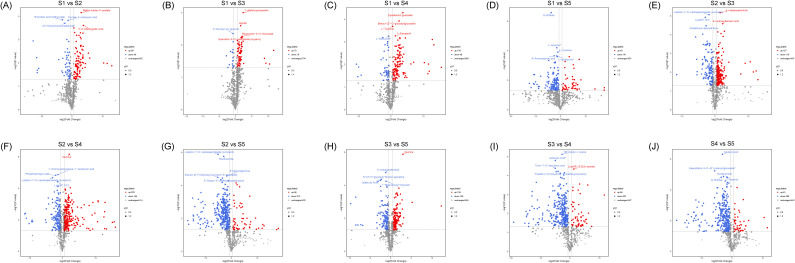 Figure 1
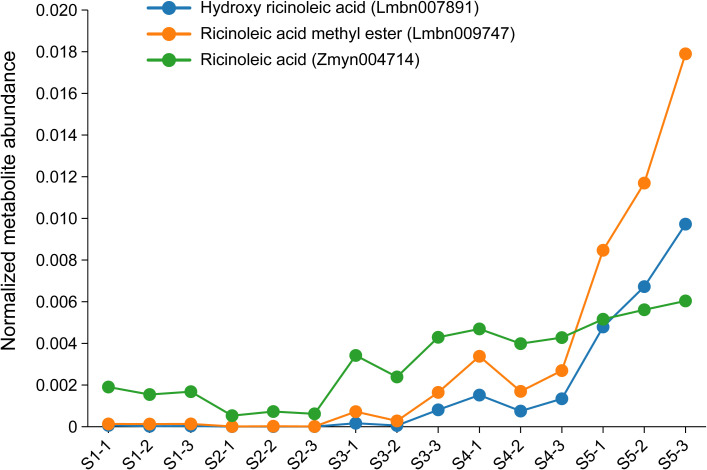 Figure 2
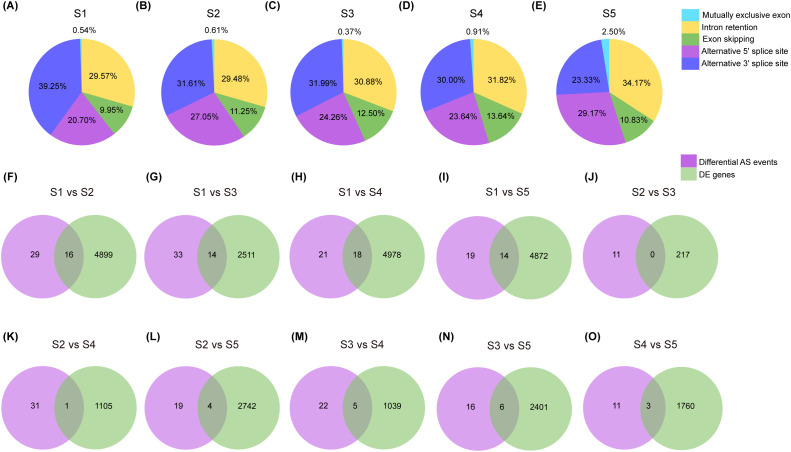 Figure 3
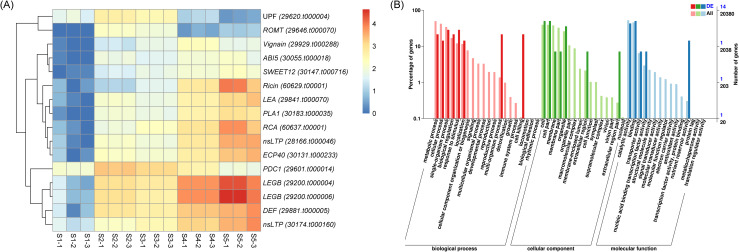 Figure 4
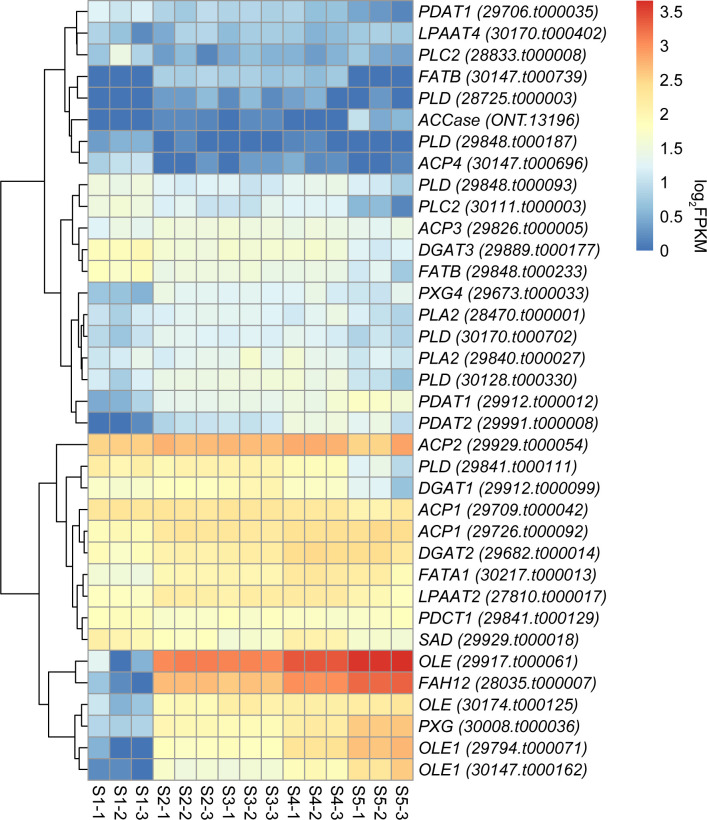 Figure 5
 Figure 6
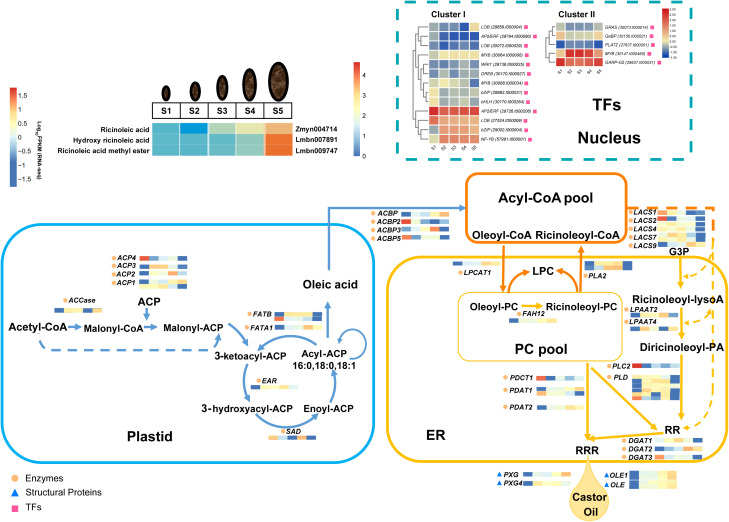 Figure 7
Peer Reviews
No public reviews on file for this paper yet. If you reviewed it on a platform where reviews are public (OpenReview, ICLR, NeurIPS, ICML), you can paste yours below so the community can read it here.
Videos
No videos yet. Explain this paper in a talk, walkthrough, or lecture? Add one.
Taxonomy
TopicsLipid metabolism and biosynthesis · Toxin Mechanisms and Immunotoxins · Plant Surface Properties and Treatments