Axonal tract-integrated finite element brain model for predicting mild traumatic brain injury based on axonal strain
Noritoshi Atsumi, Yuko Nakahira, Masami Iwamoto

TL;DR
This paper introduces a new brain model that predicts mild traumatic brain injury by analyzing strain in specific axonal fiber tracts during head impacts.
Contribution
The model integrates axonal fiber tracts into a finite element framework for more accurate mTBI prediction.
Findings
The model showed higher injury metrics in specific tracts like the posterior thalamic radiation and corpus callosum.
Horizontal head rotation had a greater impact on tract-level injury metrics than other rotations.
The model outperformed existing models in predicting brain deformation during impacts.
Abstract
Mild traumatic brain injury (mTBI), or concussion, is a prevalent public health issue that imposes a substantial economic and social burden on individuals and healthcare systems. Although mTBI is often attributed to brain deformation induced by angular acceleration of the head, its precise mechanisms, including the relationship between local deformations of the brain parenchyma or axonal fibers and clinical symptoms, have not yet been elucidated. Finite element (FE) models of the human brain have been widely used to estimate brain strain in various impact scenarios associated with mTBI. However, despite the possibility that mTBI-related neuropathological changes may involve disruptions of neural pathways connecting different brain regions, most existing models do not account for the architecture of axonal fibers at the anatomical tract level. This study proposes an advanced human brain…
Genes, proteins, chemicals, diseases, species, mutations and cell lines named across the full text — each resolved to its canonical identifier and authoritative record.
Click any figure to enlarge with its caption.
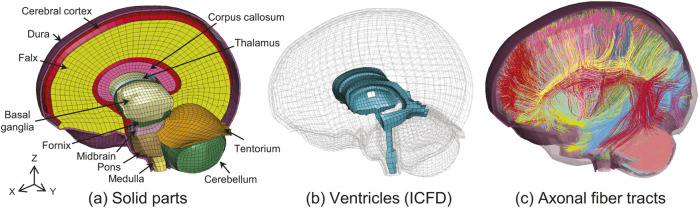 Figure 1
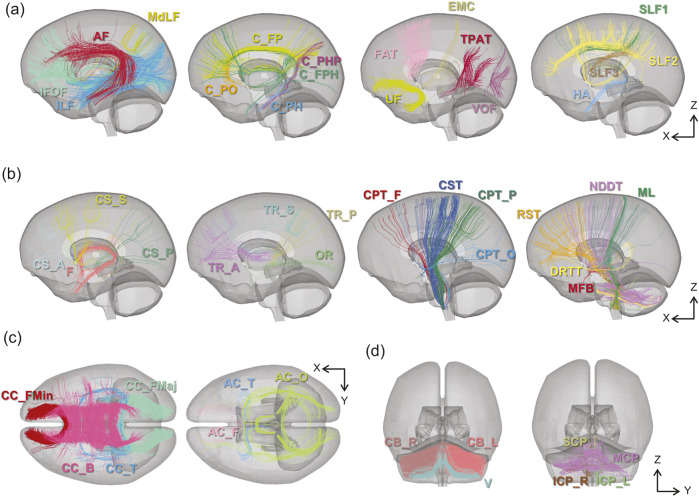 Figure 2
 Figure 3
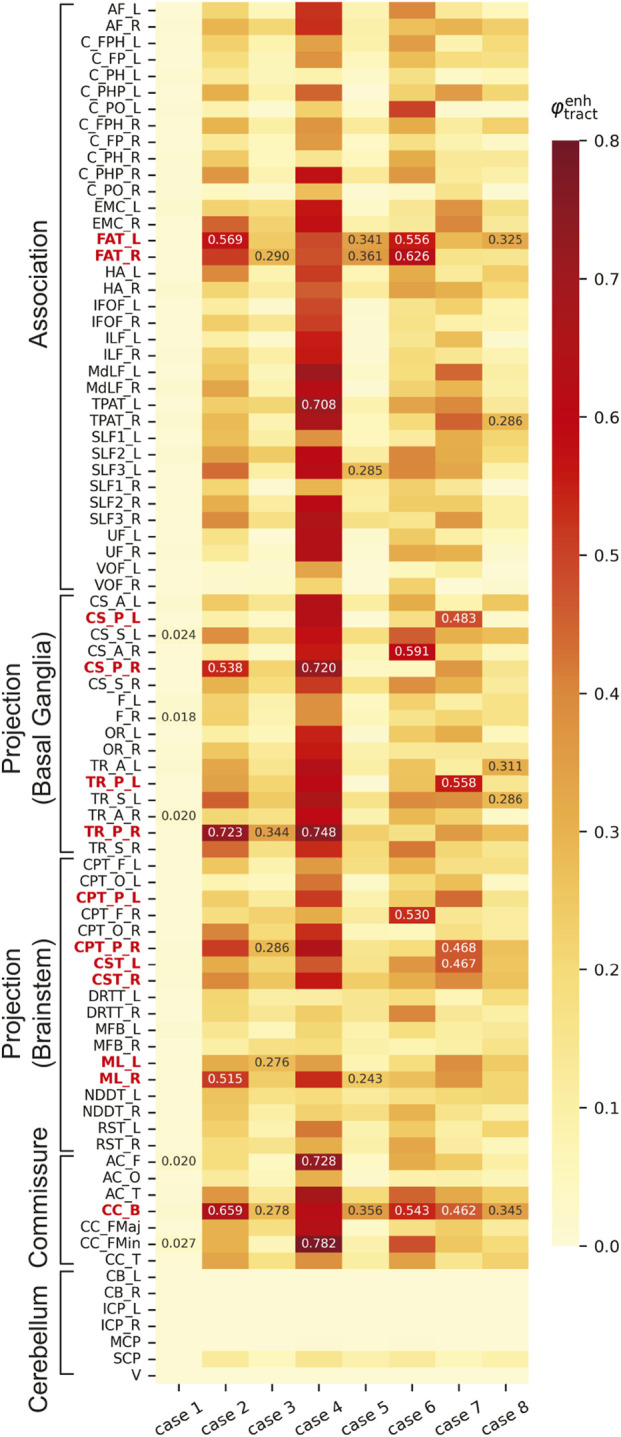 Figure 4
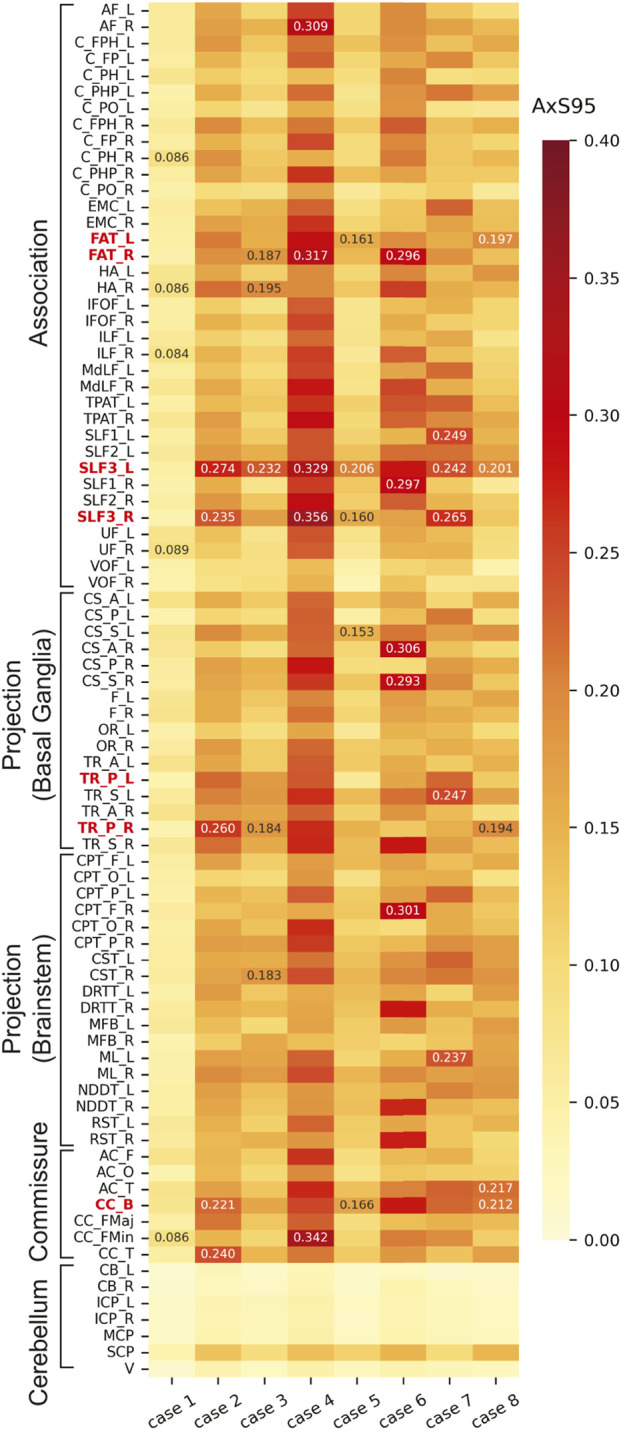 Figure 5
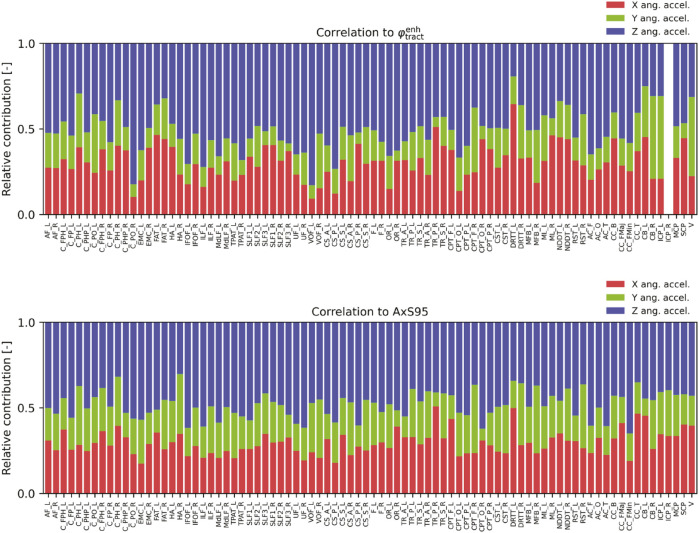 Figure 6
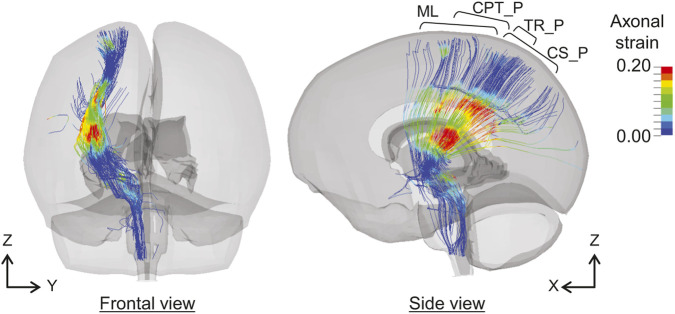 Figure 7
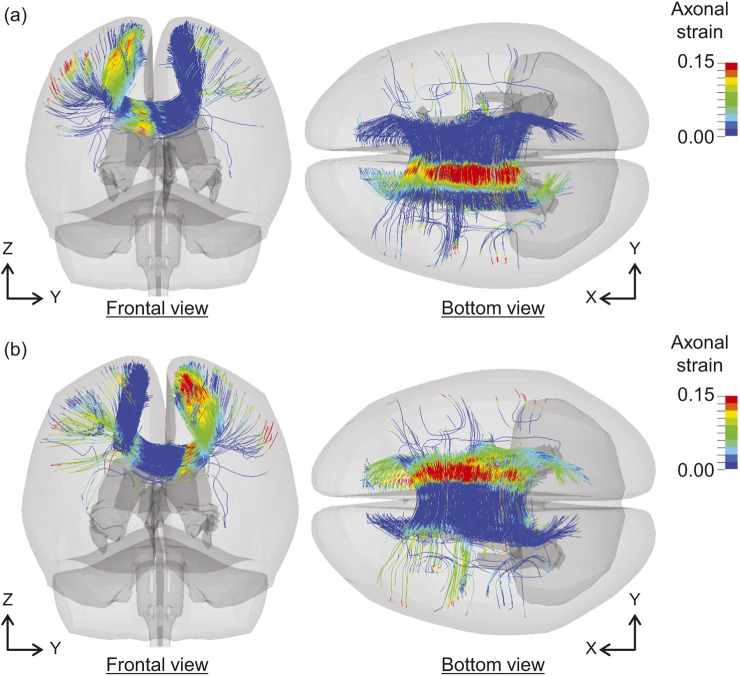 Figure 8
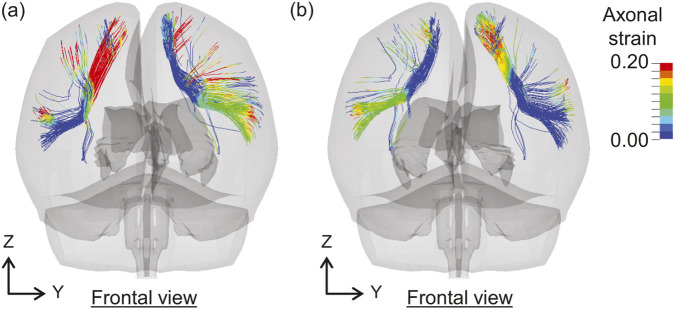 Figure 9
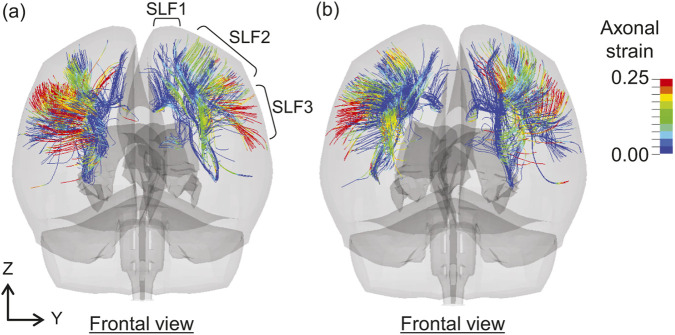 Figure 10
Peer Reviews
No public reviews on file for this paper yet. If you reviewed it on a platform where reviews are public (OpenReview, ICLR, NeurIPS, ICML), you can paste yours below so the community can read it here.
Videos
No videos yet. Explain this paper in a talk, walkthrough, or lecture? Add one.
Taxonomy
TopicsAutomotive and Human Injury Biomechanics · Traumatic Brain Injury Research · Traumatic Brain Injury and Neurovascular Disturbances