Synergistic activity of mupirocin in combination with protocatechuic acid ethyl ester against mupirocin-resistant MRSA
Li Shen, Jinjin Yang, Zhixuan Chen, Jiana Fu, Huilin Zhao, Jianbo Lv, Yu Huang, Xinru Yuan, Haojin Gao, Fangyou Yu, Chunchan Lin, Jingyi Yu

TL;DR
This study shows that combining mupirocin with protocatechuic acid ethyl ester can effectively treat mupirocin-resistant MRSA infections by enhancing antibiotic activity.
Contribution
The novel contribution is demonstrating that protocatechuic acid ethyl ester synergizes with mupirocin to overcome resistance in MRSA.
Findings
Combining mupirocin with EDHB reduced mupirocin MICs by 4-8-fold in most MRSA strains.
EDHB synergistically inhibits planktonic S. aureus and disrupts bacterial membrane integrity.
Combination therapy in ointment formulations improved in vivo efficacy against MRSA-infected wounds.
Abstract
The prevalence of mupirocin resistance in MRSA severely limits therapeutic options for skin and soft tissue infections. This study aimed to evaluate the potential synergistic activity between mupirocin and protocatechuic acid ethyl ester (EDHB) through in vitro and in vivo investigations. Clinical S. aureus isolates were characterized for antibiotic resistance profiles and molecular features via antimicrobial susceptibility testing, MLST, and spa typing. For MRSA isolates, checkerboard and time-kill assays were performed to assess in vitro synergy. The potential interference of EDHB with bacterial membrane integrity and efflux pumps was investigated using propidium iodide and ethidium bromide, respectively. The disk diffusion method was applied to test the retained antimicrobial activity of mupirocin and EDHB in ointment formulations. A murine dermal wound model was established to…
Genes, proteins, chemicals, diseases, species, mutations and cell lines named across the full text — each resolved to its canonical identifier and authoritative record.
Click any figure to enlarge with its caption.
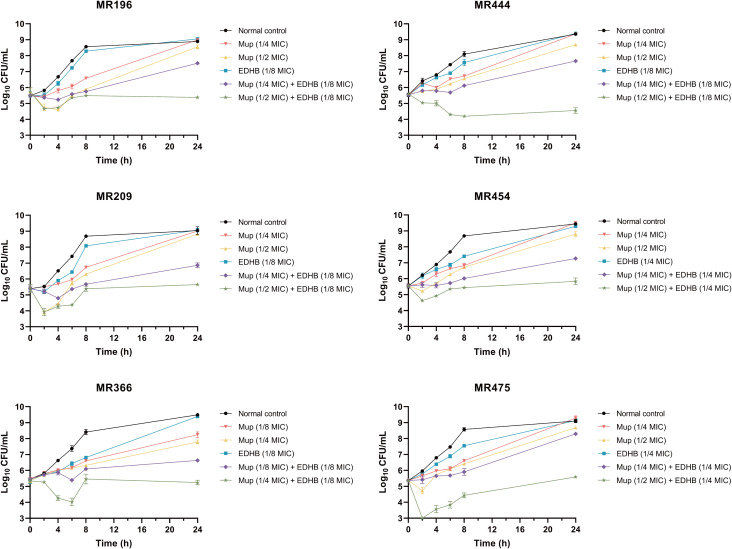 Figure 1
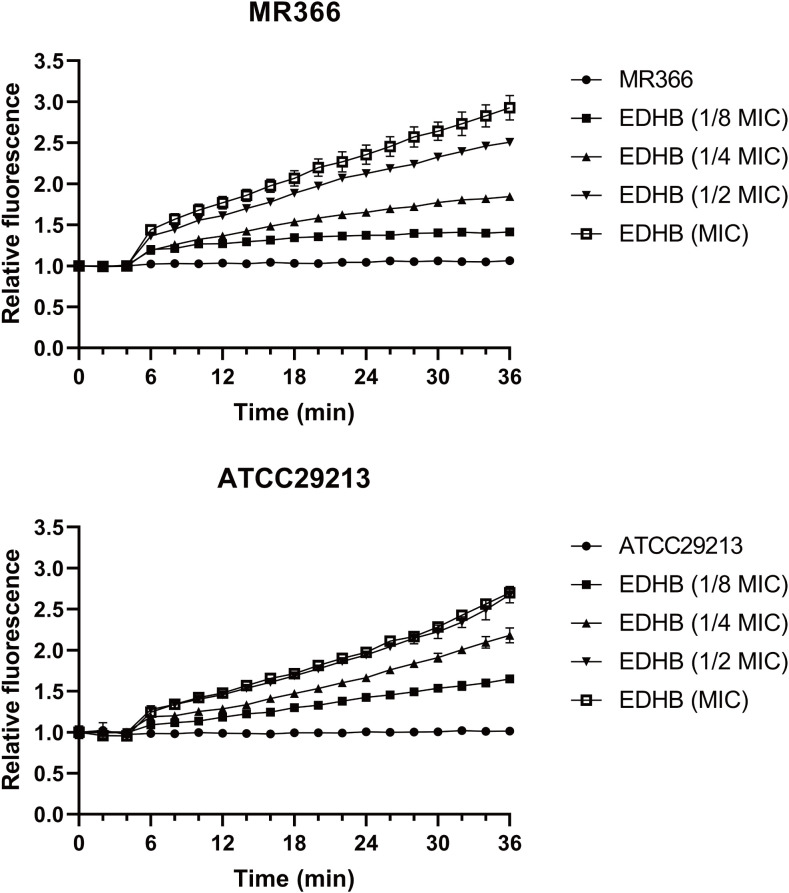 Figure 2
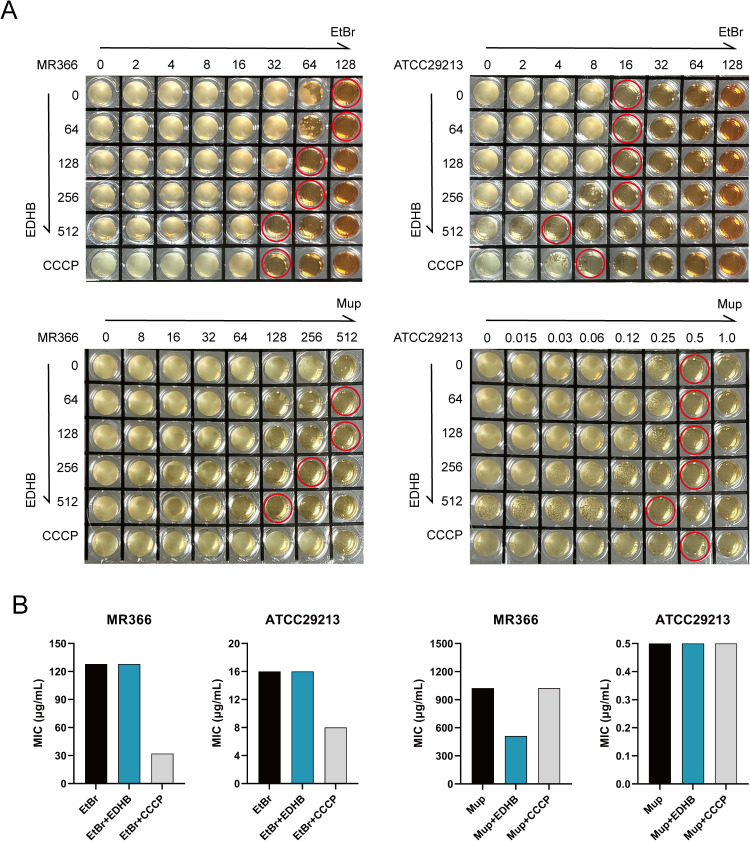 Figure 3
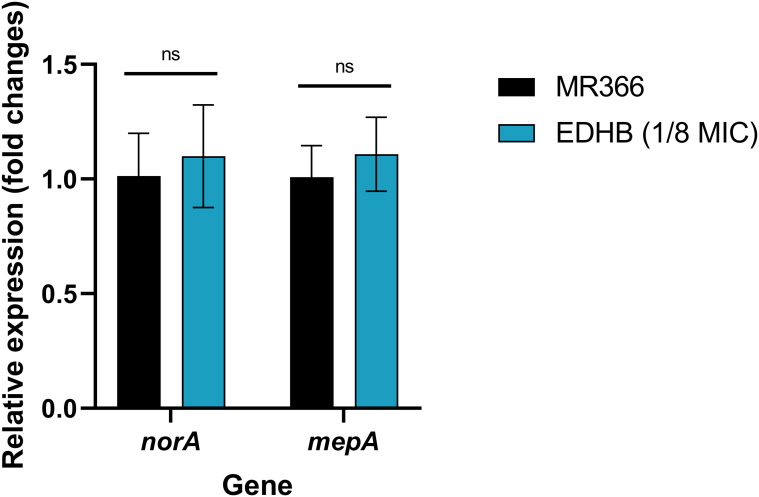 Figure 4
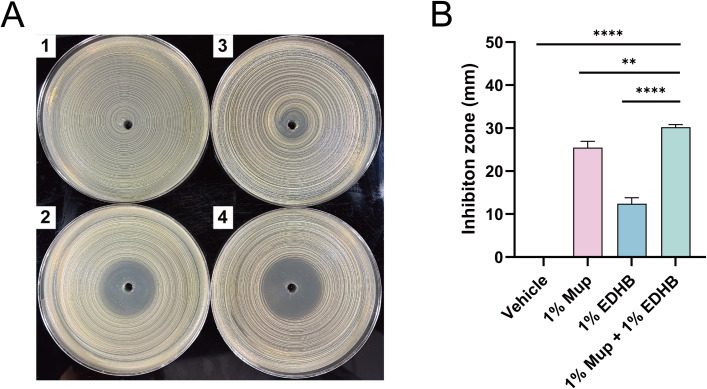 Figure 5
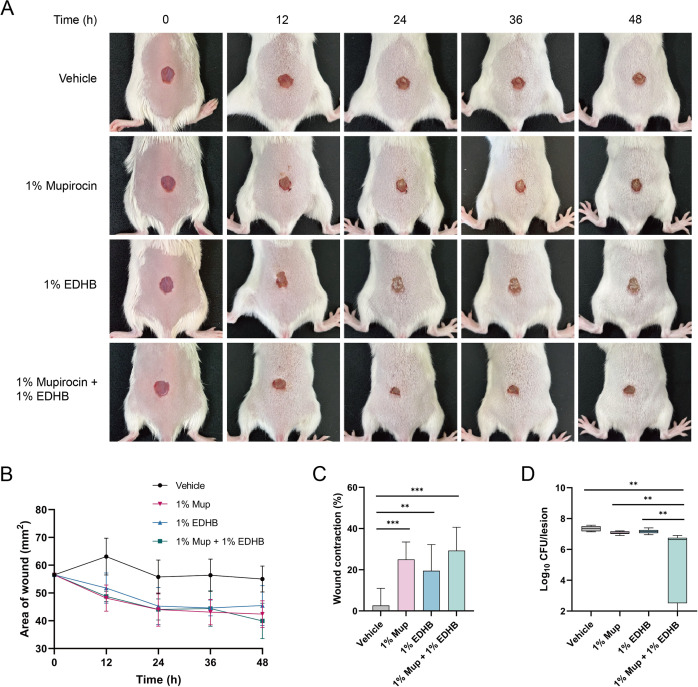 Figure 6
Peer Reviews
No public reviews on file for this paper yet. If you reviewed it on a platform where reviews are public (OpenReview, ICLR, NeurIPS, ICML), you can paste yours below so the community can read it here.
Videos
No videos yet. Explain this paper in a talk, walkthrough, or lecture? Add one.
Taxonomy
TopicsAntimicrobial Resistance in Staphylococcus · Antimicrobial Peptides and Activities · Antimicrobial agents and applications