RuBisCO-based CO2 fixation improves glutamate production in Corynebacterium glutamicum
Aiying Wei, Jingui Liu, Yulin Tang, Gang Meng, Chunguang Zhao, Houbo Su, Heyun Wu, Qian Ma, Xixian Xie

TL;DR
Scientists improved glutamate production in bacteria by adding a CO2-fixing pathway, making the process more efficient and environmentally friendly.
Contribution
A novel approach to enhance glutamate production by complementing native metabolism with a CO2-fixation pathway in C. glutamicum.
Findings
The complementation strategy improved glutamate titer by 13.94% and yield by 11.55% compared to the parental strain.
The engineered strain reduced glucose consumption by 5.24% while maintaining high productivity.
Replacement strategy impaired growth and production, while complementation enhanced metabolic performance.
Abstract
Efficiently harnessing CO2 for the bioproduction of chemicals stands as an important way to mitigate CO2 emissions and actively advance the achievement of carbon neutrality. Drawing inspiration from the natural Calvin-Benson-Bassham (CBB) cycle for CO2 fixation, the heterologous introduction of phosphoribulokinase (PRK) and ribulose-1,5-bisphosphate carboxylase/oxygenase (RuBisCO) into microbial cell factories emerges as a highly promising method for fully harnessing CO2 for bioproduction purposes. In this study, we engineered the industrial glutamate-hyperproducing strain Corynebacterium glutamicum YPGlu001 by introducing a heterologous RuBisCO-PRK pathway. Two metabolic configurations were evaluated: a “replacement” strategy, which blocked native glycolytic and pentose phosphate pathway (PPP) fluxes (via Δgap, ΔgapX, Δpgk, and Δzwf) to force carbon through the CBB shunt; and a…
Genes, proteins, chemicals, diseases, species, mutations and cell lines named across the full text — each resolved to its canonical identifier and authoritative record.
Click any figure to enlarge with its caption.
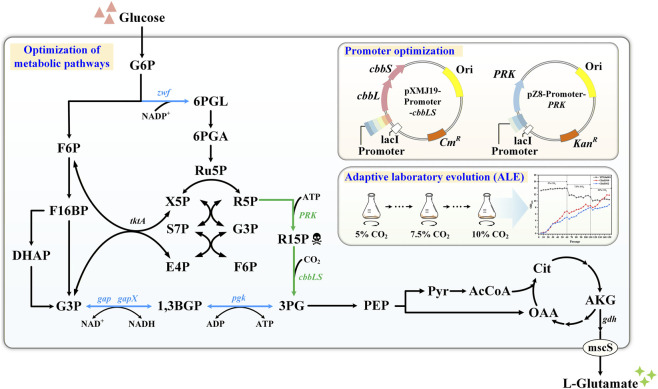 Figure 1
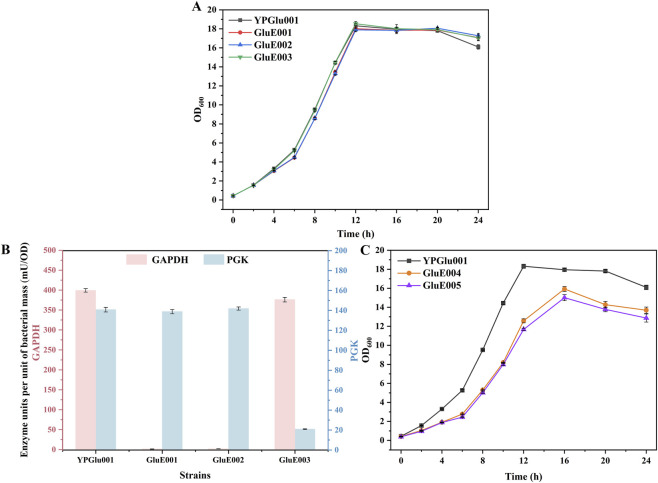 Figure 2
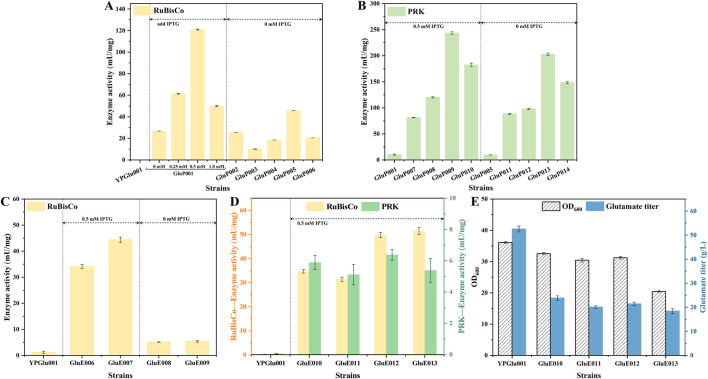 Figure 3
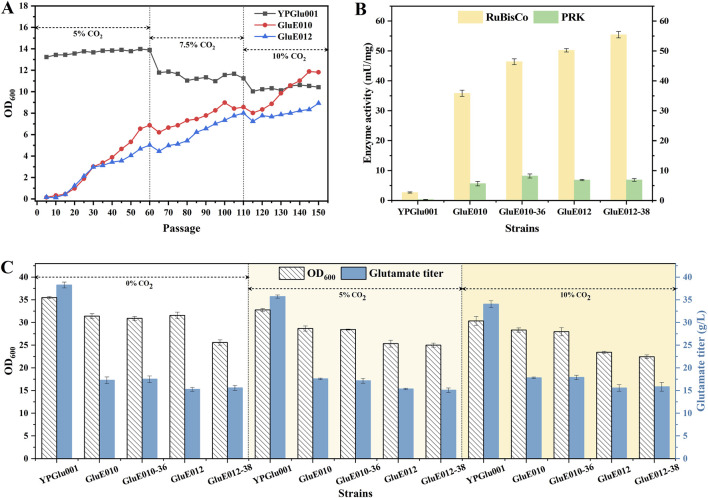 Figure 4
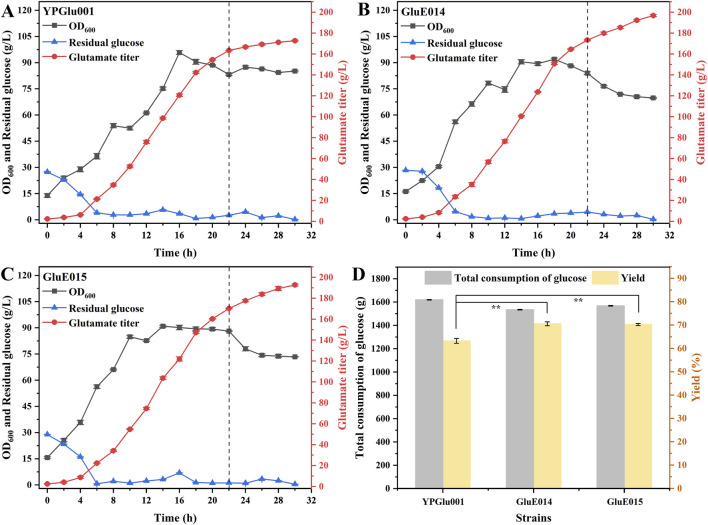 Figure 5
Peer Reviews
No public reviews on file for this paper yet. If you reviewed it on a platform where reviews are public (OpenReview, ICLR, NeurIPS, ICML), you can paste yours below so the community can read it here.
Videos
No videos yet. Explain this paper in a talk, walkthrough, or lecture? Add one.
Taxonomy
TopicsMicrobial Metabolic Engineering and Bioproduction · Biopolymer Synthesis and Applications · Cancer, Hypoxia, and Metabolism