Implications of Homologous Recombination Deficiency for Neoadjuvant Platinum-Based Chemotherapy in Pancreatic Cancer: A Narrative Review
Luigi Liguori, Marco Ventin, Giulia Cattaneo, Liti Zhang, Arsen Osipov, Francesco Sabbatino, Cristina R. Ferrone

TL;DR
This paper reviews how homologous recombination deficiency in pancreatic cancer patients may predict better responses to platinum-based chemotherapy, supporting personalized treatment approaches.
Contribution
The paper highlights HR deficiency as a potential biomarker for selecting pancreatic cancer patients for neoadjuvant platinum-based chemotherapy.
Findings
HR-deficient PDAC patients show higher response rates and longer survival with platinum-based chemotherapy.
HRD-PDAC patients may experience better tumor downstaging and resectability in neoadjuvant settings.
Incorporating HR deficiency testing could enable personalized treatment for early-stage PDAC patients.
Abstract
Pancreatic ductal adenocarcinoma (PDAC) remains a highly lethal malignancy, with a 5 year survival rate of approximately 13%. Survival is extended for the few patients who undergo surgical resection with curative intent, whereas most patients succumb to distant disease recurrence. Neoadjuvant platinum-based chemotherapy has emerged as a promising strategy to improve resectability rates and survival outcomes for PDAC patients. However, treatment-related toxicities, unpredictable clinical responses, and associated risk of tumor progression during neoadjuvant therapy may delay or preclude curative resection.As a result, predictive biomarkers are needed to identify patients most likely to benefit from neoadjuvant platinum-based chemotherapy. Alterations in the homologous recombination (HR) DNA repair pathway are reported in 3.0–19.5% of PDAC patients. These types of alterations can…
Genes, proteins, chemicals, diseases, species, mutations and cell lines named across the full text — each resolved to its canonical identifier and authoritative record.
Click any figure to enlarge with its caption.
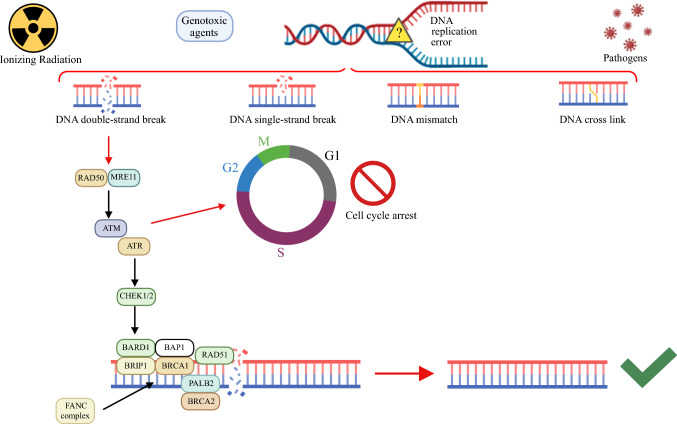 Figure 1
Peer Reviews
No public reviews on file for this paper yet. If you reviewed it on a platform where reviews are public (OpenReview, ICLR, NeurIPS, ICML), you can paste yours below so the community can read it here.
Videos
No videos yet. Explain this paper in a talk, walkthrough, or lecture? Add one.
Taxonomy
TopicsPancreatic and Hepatic Oncology Research · PARP inhibition in cancer therapy · Cancer Genomics and Diagnostics