Antibody kinetics and shedding dynamics of MERS-CoV in dromedary camels from different production systems in Kenya: a longitudinal cohort study
Rinah Sitawa Wangila, Thomas Nyariki, Dickson Machira Nyaguthii, Timothy Muthui Wachira, Joshua Kimutai, Allan Azegele, Romona Ndanyi, James Ngoci, Bridgit Muasa, George Njogu, Peter Baaro Gathura, Emma G. Gardener, El Masry Ihab, Joseph Kamau, Robert Ofwete, Chitwambi Makungu

TL;DR
This study tracks MERS-CoV antibody levels in Kenyan camels over time, showing how camel farming practices influence infection risk and immune responses.
Contribution
The study provides new insights into MERS-CoV antibody kinetics and shedding dynamics in camels across different production systems in Kenya.
Findings
Camels in pastoral systems had significantly higher odds of seropositivity compared to ranched camels.
Older camels (above 3 years) were more likely to be seropositive than younger ones.
The median duration of seropositivity varied significantly by geographical location, with Garissa and Soysambu showing longer durations.
Abstract
Understanding long-term antibody kinetics in different camel production systems is crucial for risk assessment for Middle East respiratory syndrome coronavirus (MERS-CoV), a zoonotic pathogen first detected in humans in Saudi Arabia. Though the virus is endemic in dromedary camels across Africa, the Middle East, and parts of South Asia, zoonotic transmission outside of the Arabian Peninsula is undocumented. A retrospective analysis of longitudinal surveillance data of MERS-CoV was conducted on 2460 serum samples collected from 174 camels in three high-risk counties of Kenya from April 2018 to March 2021. Data were analyzed using descriptive statistics, logistic regression, and survival analysis. A total of 93/174 (53.4%) camels were seropositive at least once (animal-level), while 882/2460 (35.85%) of all serum samples tested seropositive (sample-level). Data were analyzed using…
Genes, proteins, chemicals, diseases, species, mutations and cell lines named across the full text — each resolved to its canonical identifier and authoritative record.
Click any figure to enlarge with its caption.
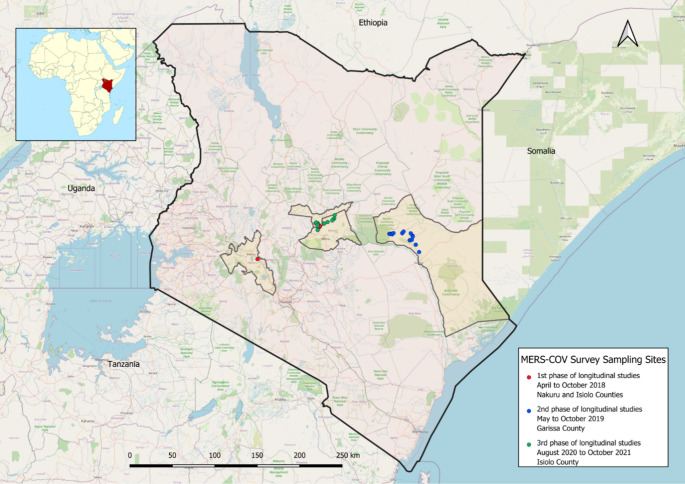 Figure 1
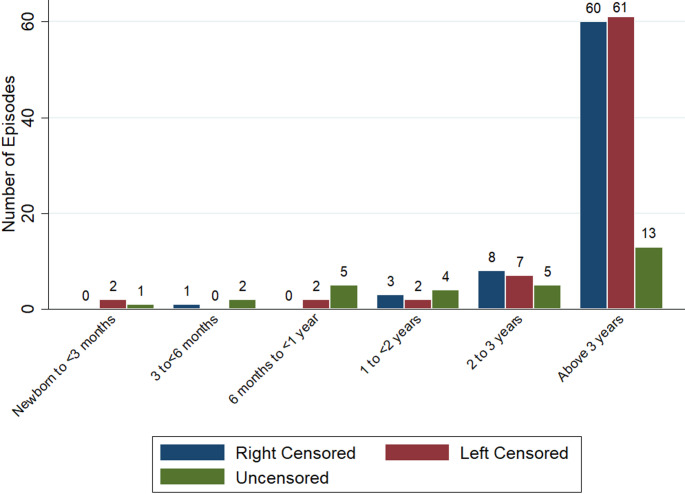 Figure 2
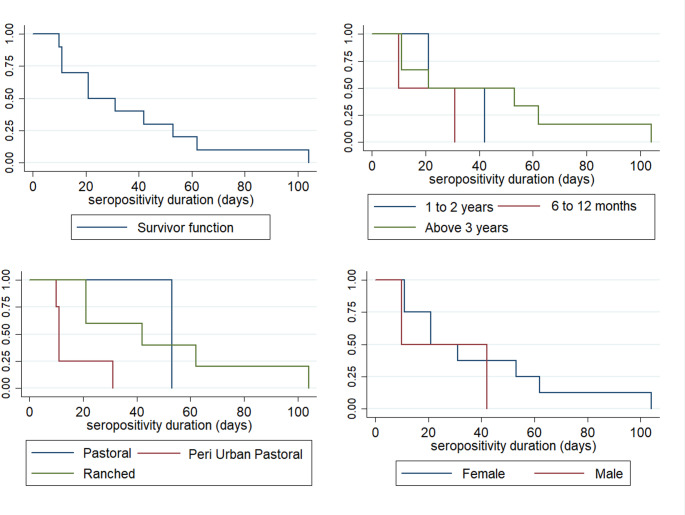 Figure 3
 Figure 4
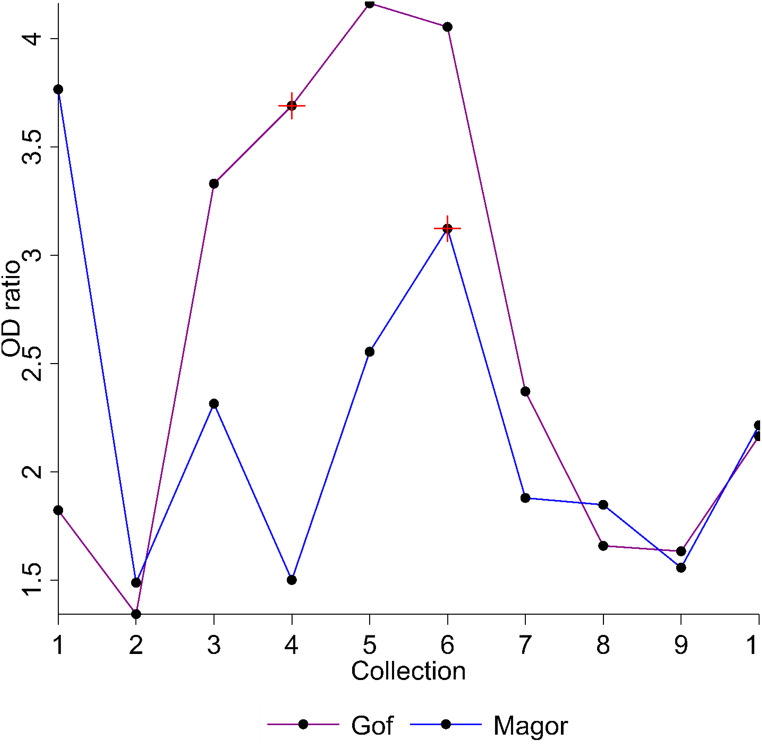 Figure 5
Peer Reviews
No public reviews on file for this paper yet. If you reviewed it on a platform where reviews are public (OpenReview, ICLR, NeurIPS, ICML), you can paste yours below so the community can read it here.
Videos
No videos yet. Explain this paper in a talk, walkthrough, or lecture? Add one.
Taxonomy
TopicsSARS-CoV-2 and COVID-19 Research · Animal Diversity and Health Studies · Animal Virus Infections Studies