APOE ε4 carriage is associated with olfactory-hippocampal tract functional connectivity
Toshikazu Ikuta, Taylor Bither

TL;DR
This study finds that carrying the APOE ε4 gene is linked to changes in brain connectivity between the hippocampus and olfactory regions, suggesting early signs of neurodegenerative risk.
Contribution
The study reveals a novel association between APOE ε4 carriage and functional connectivity in the olfactory-hippocampal tract, independent of clinical diagnosis.
Findings
Genetic risk (APOE ε4) is significantly associated with increased hippocampal-olfactory tract connectivity.
Olfactory bulb connectivity shows a nominal APOE ε4 effect, though not significant in overall models.
Clinical diagnosis does not significantly predict connectivity in any region examined.
Abstract
Olfactory dysfunction often emerges before cognitive symptoms and may signal early vulnerability to neurodegenerative processes. This study examined whether genetic risk, specifically the presence of the epsilon 4 allele in apolipoprotein E, is associated with altered functional connectivity between the hippocampus and olfactory regions. Resting-state functional imaging data from 126 participants (mean age = 71.8 years, SD = 6.9; 67 females) across a range of clinical stages were analyzed. Functional connectivity was computed between the hippocampus and four olfactory-related regions: anterior piriform cortex, posterior piriform cortex, olfactory bulb, and olfactory tract. Multiple regression models assessed whether genetic risk, age, sex, and clinical diagnosis predicted connectivity strength. Genetic risk was significantly associated with increased connectivity between the hippocampus…
Genes, proteins, chemicals, diseases, species, mutations and cell lines named across the full text — each resolved to its canonical identifier and authoritative record.
Click any figure to enlarge with its caption.
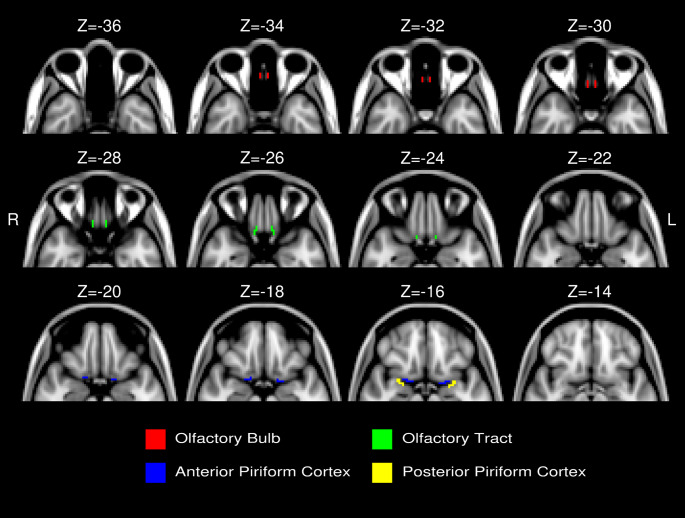 Figure 1
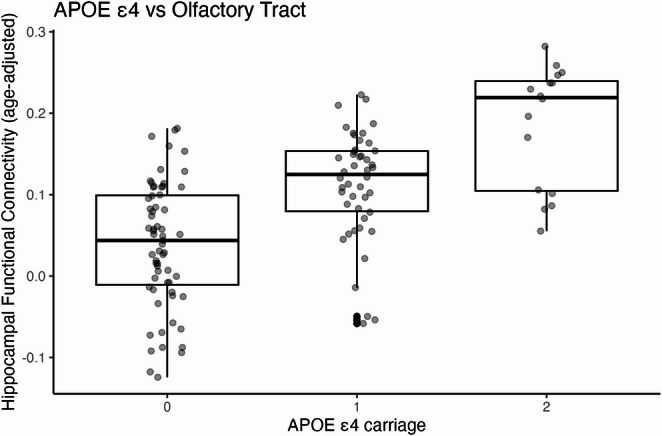 Figure 2
Peer Reviews
No public reviews on file for this paper yet. If you reviewed it on a platform where reviews are public (OpenReview, ICLR, NeurIPS, ICML), you can paste yours below so the community can read it here.
Videos
No videos yet. Explain this paper in a talk, walkthrough, or lecture? Add one.
Taxonomy
TopicsOlfactory and Sensory Function Studies · Neurological Disease Mechanisms and Treatments · Barrier Structure and Function Studies