Impaired Bicarbonate Transport via SLC26A3 and CFTR Downregulation Promotes Mucous Cap Formation in Sessile Serrated Lesions
Hiroyoshi Ota, Miharu Suzuki, Heiwa Tanabe, Yukiko Kusama, Ayako Seki, Etsuo Hara, Takeshi Uehara

TL;DR
This study explores how reduced bicarbonate transport in certain colon lesions may lead to the formation of a mucous cap, a key feature of these lesions.
Contribution
The study identifies impaired bicarbonate transport via SLC26A3 and CFTR downregulation as a potential mechanism for mucous cap formation in SSLs.
Findings
SLC26A3 and CFTR expression is markedly reduced or absent in sessile serrated lesions.
Goblet cells in SSLs coexpress MUC2 and MUC5AC with a mutually exclusive distribution.
Reduced bicarbonate transport may impair mucin hydration, leading to adhesive mucous caps.
Abstract
Sessile serrated lesions (SSLs) are recognized as precursors in the serrated neoplastic pathway leading to microsatellite instability-high colorectal cancer. A hallmark feature of SSLs on endoscopic examination is the mucous cap. We aimed to investigate the expression of the bicarbonate transporters SLC26A3 and CFTR in SSLs, using immunohistochemistry to elucidate their potential involvement in the pathogenesis of mucous cap formation. We analysed 14 SSLs from 12 patients using formalin-fixed, paraffin-embedded tissue sections. Histochemical staining with high-iron diamine-Alcian blue (HID-AB) and immunohistochemistry for MUC2, MUC5AC, SLC26A3, and CFTR were conducted. In normal colonic mucosa, MUC2 was strongly expressed in goblet cells, whereas MUC5AC was absent. SLC26A3 was expressed on the apical membrane and in the cytoplasm of surface epithelial and upper crypt cells, while…
Genes, proteins, chemicals, diseases, species, mutations and cell lines named across the full text — each resolved to its canonical identifier and authoritative record.
Click any figure to enlarge with its caption.
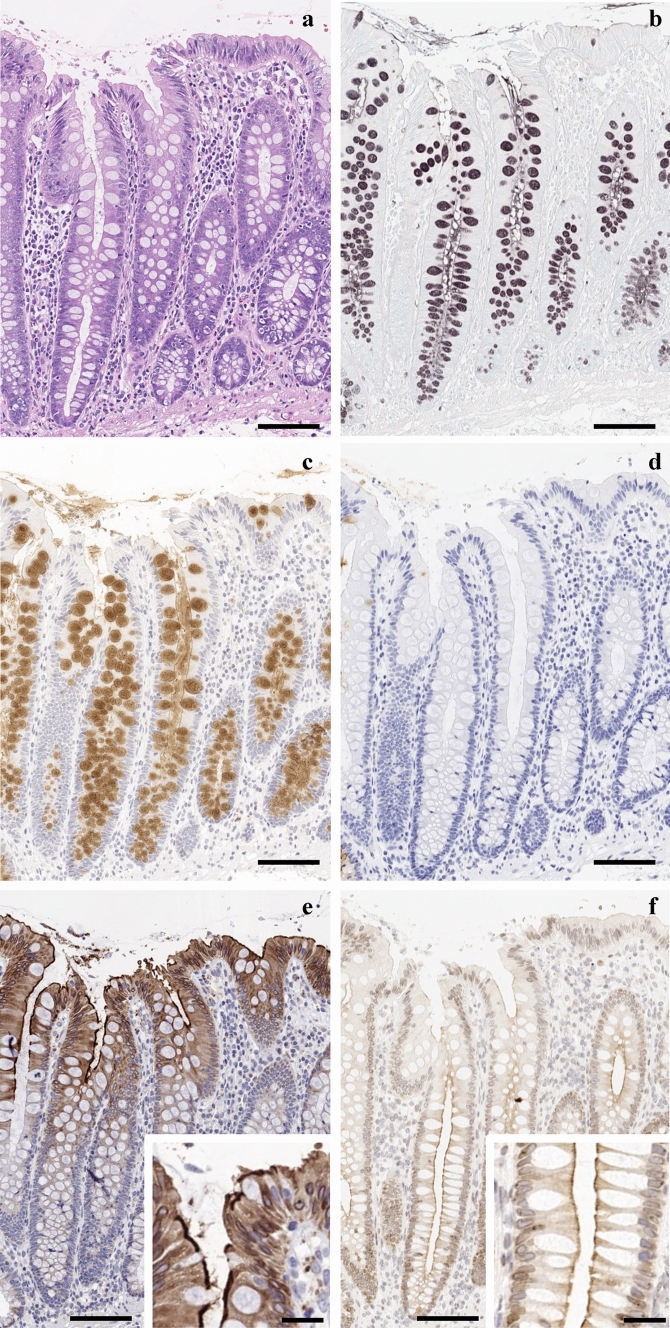 Figure 1
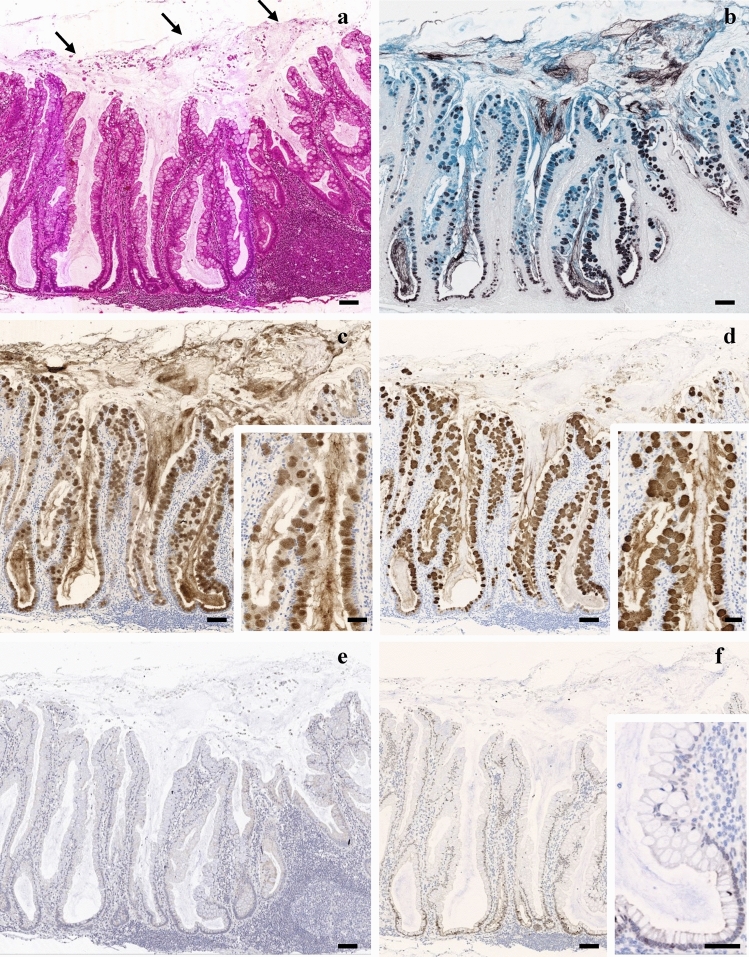 Figure 2
Peer Reviews
No public reviews on file for this paper yet. If you reviewed it on a platform where reviews are public (OpenReview, ICLR, NeurIPS, ICML), you can paste yours below so the community can read it here.
Videos
No videos yet. Explain this paper in a talk, walkthrough, or lecture? Add one.
Taxonomy
TopicsColorectal Cancer Screening and Detection · Gastric Cancer Management and Outcomes · Genetic factors in colorectal cancer