PancreaSeq Genomic Classifier (PancreaSeq GC) Improves Pancreatic Cyst Classification and Detection of Advanced Neoplasia: A Multi-institutional Validation Study
Aatur D. Singhi, Abigail I. Wald, Katelyn Smith, Lynn Wolkenstein, Robert D. Bubar, Ricardo Diaz-Aragon, Maria Grupillo, Danielle Guckin, Yi-Tak Lai, Randall E. Brand, Kevin McGrath, Walter G. Park, Patrick R. Pfau, Patricio M. Polanco, Nisa Kubiliun, John DeWitt

TL;DR
A new genomic test called PancreaSeq GC improves the diagnosis of pancreatic cysts and detection of cancerous changes compared to existing methods.
Contribution
PancreaSeq GC, a DNA/RNA-based test, shows higher accuracy than previous DNA-only tests for classifying pancreatic cysts and detecting advanced neoplasia.
Findings
PancreaSeq GC achieved 94.6% sensitivity and 96.4% specificity for mucinous cysts, outperforming traditional methods and its DNA-only predecessor.
For advanced neoplasia, PancreaSeq GC had 86.6% sensitivity and 97.9% specificity, with statistically significant improvements over prior tests.
The test demonstrated high accuracy in classifying rare pancreatic tumors like IOPNs, ITPNs, and cPanNETs.
Abstract
The preoperative classification of pancreatic cysts and detection of advanced neoplasia (high-grade dysplasia/pancreatic ductal adenocarcinoma [PDAC]) represents a significant diagnostic challenge. A prospective, multi-institutional study found that DNA-based testing (PancreaSeq) of pancreatic cyst fluid (PCF) improved the assessment of pancreatic cysts. Notable imitations to PancreaSeq necessitated the development of a DNA/RNA-based panel called PancreaSeq Genomic Classifier (GC). We validated PancreaSeq GC on a prospective patient cohort. PancreaSeq GC was blindly tested on a prospective cohort of 241 patients with diagnostic follow-up. The performance of PancreaSeq GC in this cohort, which included 186 mucinous cysts (97 with advanced neoplasia), was benchmarked against traditional diagnostics and its DNA-only predecessor, PancreaSeq. PancreaSeq GC achieved 94.6% sensitivity and…
Genes, proteins, chemicals, diseases, species, mutations and cell lines named across the full text — each resolved to its canonical identifier and authoritative record.
Click any figure to enlarge with its caption.
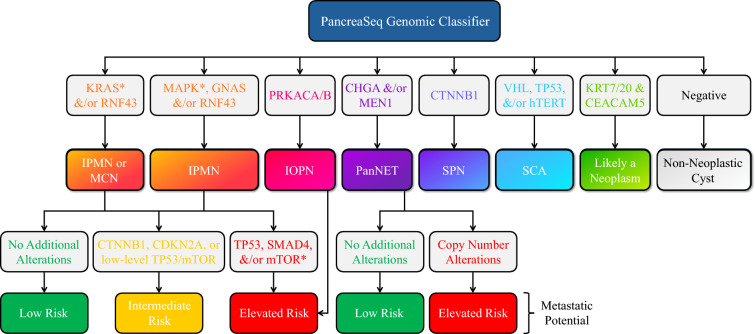 Figure 1
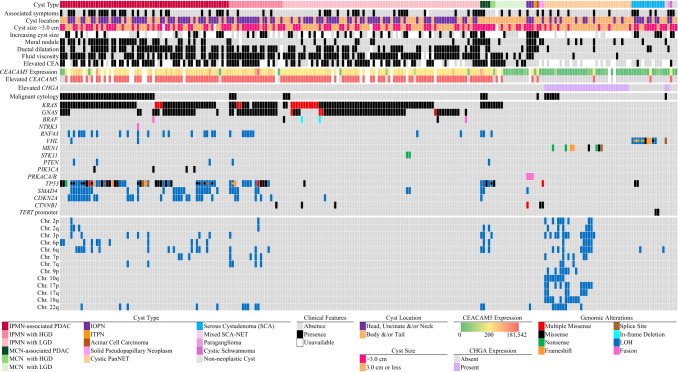 Figure 2
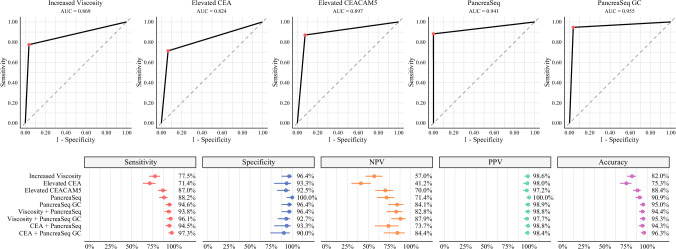 Figure 3
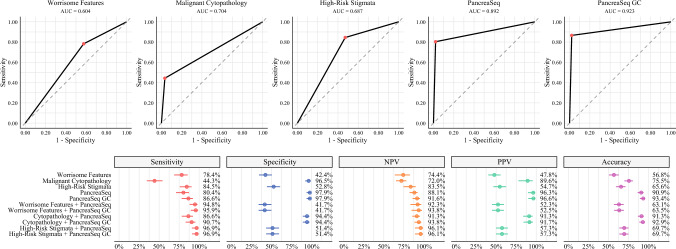 Figure 4
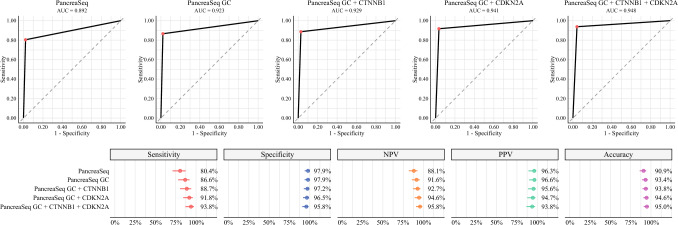 Figure 5
Peer Reviews
No public reviews on file for this paper yet. If you reviewed it on a platform where reviews are public (OpenReview, ICLR, NeurIPS, ICML), you can paste yours below so the community can read it here.
Videos
No videos yet. Explain this paper in a talk, walkthrough, or lecture? Add one.
Taxonomy
TopicsPancreatic and Hepatic Oncology Research · Pancreatitis Pathology and Treatment · Genetics, Bioinformatics, and Biomedical Research